Connect with us

Business

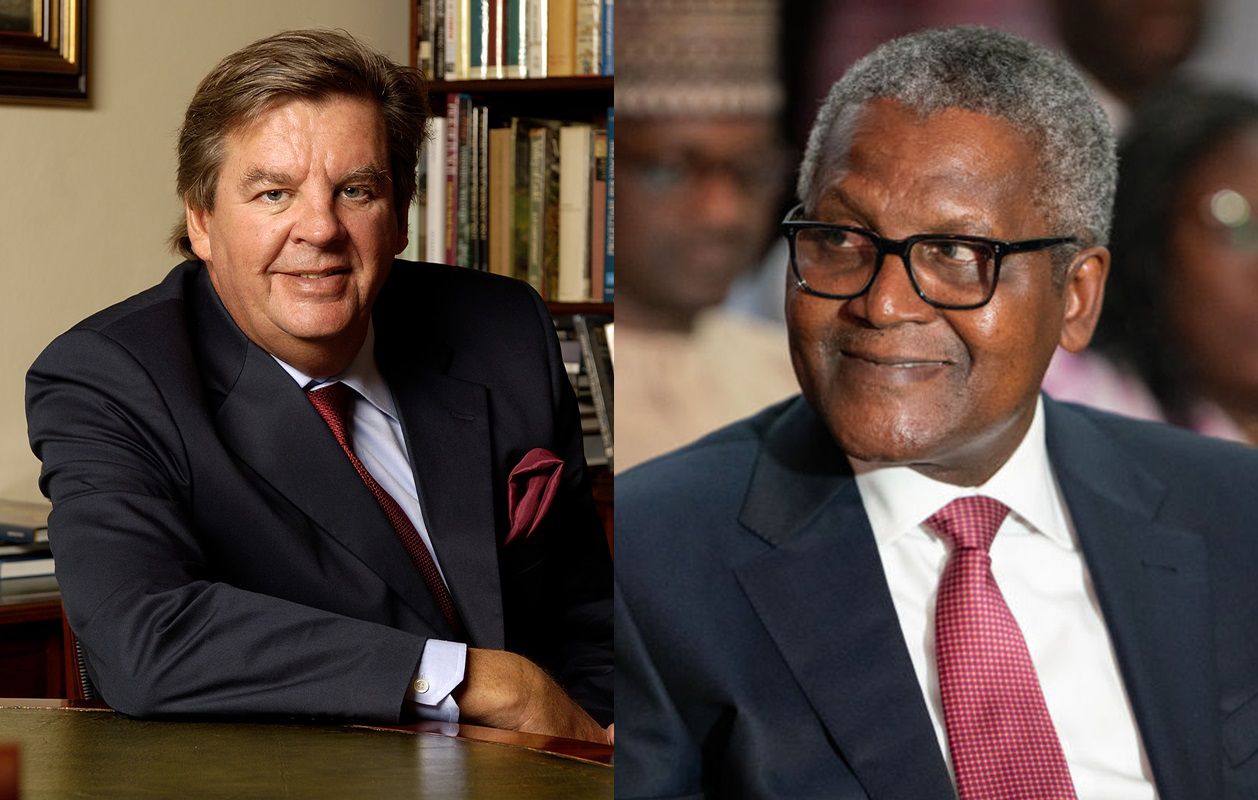
South Africa’s Johann Rupert becomes Africa’s richest man as Dangote’s net worth drops by over $1 billion.

Published

on

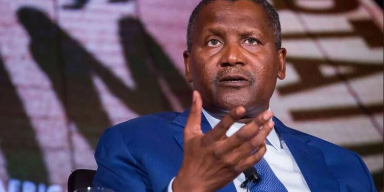
Johan Rupert, the South African billionaire and chairman of Richemont, the luxury goods conglomerate, has reclaimed his title as Africa’s richest man.

This comes after Aliko Dangote, the Nigerian industrialist and owner of the Dangote Group, saw his net worth decline by over $1 billion.

According to the latest data from the Bloomberg Billionaires Index, Rupert’s net worth now stands at $14.3 billion, surpassing Dangote’s $13.4 billion. Year-to-date, Rupert has gained $1.87 billion, while Dangote has lost approximately $1.69 billion.

Dangote’s losses are largely attributable to Nigeria’s challenging macroeconomic environment, where his conglomerate primarily operates.

The Dangote Group, which has faced setbacks at its refinery due to production delays and other industrial issues, has been further impacted by the Nigerian naira’s steep depreciation.

Two weeks ago, Bloomberg ranked Dangote as the 145th richest person globally, but he has since dropped to the 160th position.

What to know

Last year, Rupert was named Africa’s richest man by Forbes after the Nigerian naira experienced significant devaluation and a shift to a free-floating exchange rate. This currency turmoil severely impacted Dangote, whose wealth is heavily tied to naira-denominated assets.

The naira has lost over 43% of its value this year alone, making it one of the worst-performing currencies in Africa. Since President Bola Tinubu took office and partially lifted fuel subsidies while relaxing currency controls to attract foreign investment, the naira has depreciated by about 70%. This has significantly affected Dangote’s net asset value, given his exposure to the local currency.

Dangote Industries Limited (DIL) reported a substantial foreign exchange loss of $1.07 billion in 2023. In addition to existing supply chain issues at its Nigerian refinery, the company has also suffered from a recent downgrade by Fitch Ratings. Despite these challenges, the Dangote Group has ambitious plans to generate roughly $30 billion in revenue by 2025, focusing on expanding its influence in the foreign exchange market.

Aliko Dangote outlined a strategic pivot for the group, including reducing its reliance on the Central Bank of Nigeria for currency supply and diversifying its revenue streams.

He has also revealed plans to decrease his stake in the cement business from 75% to 15% and to balance the group’s earnings with a 50% contribution from foreign sources.

By 2025, the Dangote Group aims for 90% of its revenue to come from foreign exchange earnings, underscoring its commitment to international expansion amidst Nigeria’s ongoing economic volatility.

Business

IMO OPENS NEW ECONOMIC FRONTIER AS UZODIMMA COMMISSIONS NOVA BANK REGIONAL OFFICE IN OWERRI.

Published

on


By Prince Uwalaka Chimaroke
16- DEC- 2025

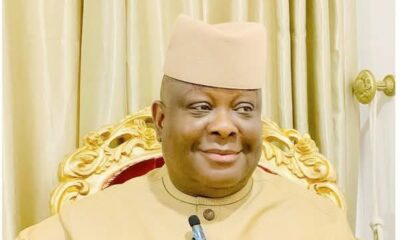
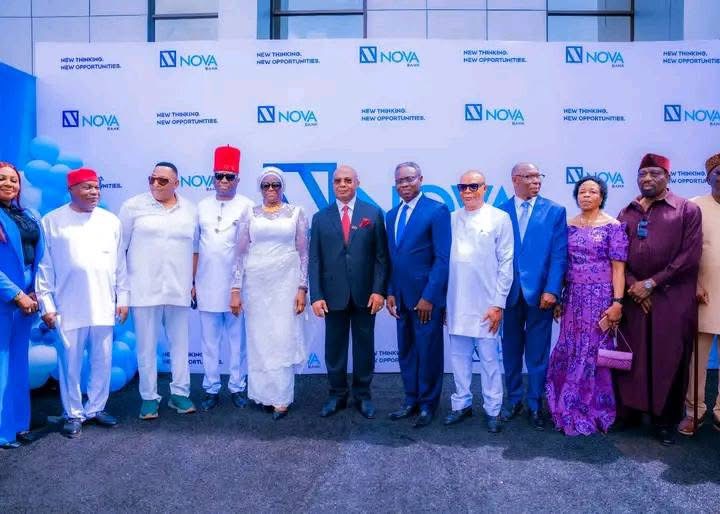
Imo State took another decisive step toward economic expansion on Monday, December 15, 2025, as Governor Hope Uzodimma formally inaugurated the regional headquarters of Nova Bank in Owerri, signalling the state’s growing appeal as an investment destination.

While addressing guests at the commissioning ceremony, the governor noted that deliberate reforms, sustained infrastructural development, and a more business-friendly policy environment have steadily repositioned Imo State to attract credible investors. He described Nova Bank’s choice of Owerri as a strategic endorsement of the state’s economic viability and long-term growth prospects.

Governor Uzodimma praised the Chairman of Nova Bank, Mr. Philip Oduozor, for his experience and leadership within the financial sector, assuring the institution of continued government collaboration. He added that the arrival of Nova Bank, alongside the recent establishment of Access Bank’s regional headquarters in the state, reflects increasing confidence by the private sector in Imo’s economic direction.

Reiterating his administration’s vision, the governor emphasized ongoing efforts to transition Imo from a largely leisure-based economy into a competitive commercial centre. He pointed to significant investments in road networks, security architecture, digital systems, power supply, and overall ease of doing business, while encouraging Nova Bank to expand its footprint in the state, including consideration of Owerri for its corporate headquarters.

In his remarks, Mr. Oduozor explained that Nova Bank, which began operations in 2018 as a merchant bank, has now secured a full commercial banking licence. He stated that the bank intends to play a critical role in financing small and medium-scale enterprises across Imo State and the wider South East region by improving access to credit.

The commissioning ceremony ended with a guided inspection of the new facilities by Governor Uzodimma and top executives of the bank, marking another milestone in Imo State’s economic transformation drive.


Continue Reading

Business

Aliko Dangote Reacts to Reports that Donald Trump Is Unhappy With the Launch Of Dangote Refinery (Video)

Published

on

Alhaji Aliko Dangote, President of Dangote Refinery, has denied claims that U.S. President Donald Trump is displeased with the launch of the $20 billion refinery.

There were claims on social media suggesting that Trump’s recent threat to attack certain locations in Nigeria could be linked to Africa’s largest refinery.

Trump had threatened to strike terrorists targeting Christians at various locations in Nigeria, which led to the spread of various propaganda and social media reactions.

Addressing the press, Dangote said that the USA has been a major supplier of crude to the refinery, adding that the talk about Trump being angry over its establishment “does not hold water.”

“The US has been one of our major suppliers of crude, which is why when someone says Trump is not happy with our refinery, it’s not true,” he said.

“Trump is more than happy with our refinery, because on average for a year, we do not buy more than 100 million barrels from the US.”

Dangote also said Nigerians now have the option of buying high-quality, locally refined petrol at a cheaper price or opting for blended imported fuel at a higher cost.

Dangote stated that fuel importers could continue to incur losses while Nigerians enjoy more affordable petrol prices.

According to him, the availability of locally refined petrol gives consumers a clear choice between quality fuel sold at a lower rate and blended premium motor spirit (PMS) sold at higher prices by importers.

https://www.instagram.com/reel/DSR-Ew5glpI/?igsh=MWxwYWJxcXhoYm51MQ==

Continue Reading

Business

CBN returns to S4 platform for N365 billion T-Bills Auction

Published

on

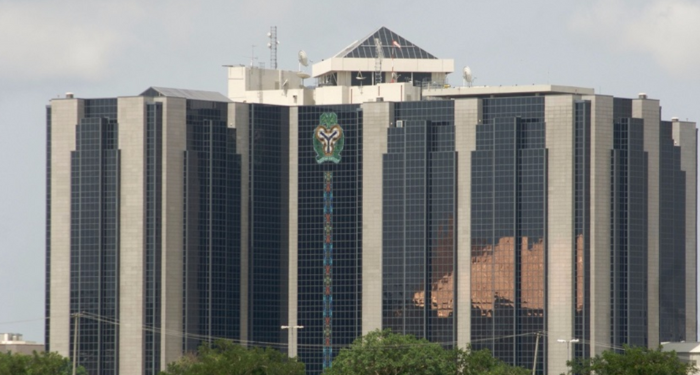
The Central Bank of Nigeria (CBN) has reverted to the use of its Scruples Securities Settlement System (S4) for the electronic submission of Treasury Bills auction bids, following a brief suspension after its initial test-run in November.

Ekwutosblog understands the system was suspended following a glitch, which has now been resolved.

The latest move comes ahead of a N365 billion Treasury Bills auction scheduled for Thursday, December 17 – 18, 2025, reinforcing the apex bank’s resolve to tighten controls, enhance transparency and improve price discovery in the primary fixed income market.

The bids are to be submitted on Wednesday, December 17, 2025, while successful bidders will be required to settle their obligations on Thursday, December 18.

Market participants see the decision as a signal that the CBN is pressing ahead with reforms despite earlier operational inconsistencies. According to Mr. Tajudeen Olayinka, CEO of Wyoming Capital Partners, the move signals a renewed push for transparency in primary market auctions as the apex bank advances fixed income reforms.

Auction Details: N365 billion across three tenors 

According to auction guidelines issued last weekend, the CBN will offer a total of N365 billion across three short-dated tenors:

  • 91-day bills: N100 billion
  • 182-day bills: N100 billion
  • 364-day bills: N165 billion

The auction will be conducted using the Dutch auction system, with bids to be submitted exclusively via the S4 web interface between 8:00 a.m. and 11:00 a.m. on Wednesday, December 17, 2025.

Each bid must be made in multiples of N1,000, subject to a minimum subscription of N50.001 million, while successful bidders are required to settle by 11:00 a.m. on Thursday, December 18.

Second attempt after November test-run 

This December auction marks the second activation of mandatory S4 usage, following the first implementation at the November 20, 2025 Treasury Bills auction, when the CBN raised over N700 billion.

Although the S4 system was briefly suspended in subsequent issuances—where bids were routed through Money Market Dealers (MMDs)—sources close to the apex bank said the pause reflected a work-in-progress transition, not a policy reversal.

Nairametrics gathered that the CBN expects to conclude the reform process before year-end, after which S4 will become fully operational for all government securities.

CBN seeks visibility, not market takeover 

Speaking at a Premium Times Academy workshop in Lagos recently, Mr. Zeal Akariwe, CEO of Graeme Blaque Advisory, said the CBN’s objective is real-time visibility, not a takeover of the control of the fixed income market.

“Did CBN take over? No. What the CBN wants is transparency and visibility over the market, not takeover. That visibility did not exist,” Akariwe said.

Akariwe, whose firm provides advisory services to CBN, stressed that the Securities and Exchange Commission (SEC) remains the statutory regulator, while the CBN’s actions are corrective measures to address structural weaknesses in the market.

Why transparency matters to CBN 

Akariwe highlighted how loopholes in the old system enabled profit concealment. He cited cases where banks and pension funds routed bond trades through brokers to hide gains from regulators.

In one illustration, Akariwe said a pension fund holding a 10% coupon bond bought at N100 could sell via an intermediary at N120, allowing the N20 profit to be shared discreetly among parties without regulatory visibility. “The CBN says we can’t have this where we cannot see it,” he noted.

Concerns had earlier emerged over inconsistent use of issuance platforms, with some auctions conducted via S4 and others through MMDs. Akariwe acknowledged this but described it as part of a transition phase.

Beyond auctions, the S4 rollout aligns with Governor Olayemi Cardoso’s broader reform agenda, spanning financial markets, banking supervision, compliance, and FX reforms, aimed at embedding transparency-driven systems that outlast the current administration.

With the return to S4 for the December auction, the CBN appears set to make electronic bidding the new normal in Nigeria’s government securities market.

Continue Reading

Trending