
Politics
Edo guber: Ighodalo, Akpata, Okpebholo in fierce battle to succeed Obaseki

Edo State governorship election is approaching its final stages, with the three major candidates in the race striving to secure enough votes to emerge victorious.
In this analysis, DAILY POST reviews the chances of the candidates ahead of Saturday’s election.
Although INEC listed 17 candidates for Saturday’s election, the contest has taken the form of a three-horse race, with Asue Ighodalo of the Peoples Democratic Party, PDP, Olumide Akpata of the Labour Party, and Senator Monday Okpebholo of the All Progressives Congress, APC, leading the charge.
Apart from these three candidates and others who will appear on the ballot on Saturday, several key figures have significant stakes in the race.
Former Governor Adams Oshiomhole and incumbent Governor Godwin Obaseki are engaged in an open battle to deliver their respective candidates.
Mr Obaseki paved the way for his longtime associate, Ighodalo, in a tightly contested primary, while Oshiomhole is backing his colleague in the Senate, Okpebholo.
This race bears similarities to the 2020 governorship election. However, the emergence of the Labour Party as a third force has introduced an element of uncertainty that could shift the election in a different direction.
Politics of Rotation
Edo State, like other states in Nigeria, is divided into three senatorial districts: Edo South, Edo North, and Edo Central.
In terms of the number of local governments, Edo South has the largest, with seven LGAs, followed by Edo North with six, and Edo Central with five.
Since 1999, there has been an informal power rotation arrangement in the state.
In 2007, the ruling party in the state nominated Oserheimen Osunbor from Edo Central after eight years of Lucky Igbinedion.
Meanwhile, the main opposition party, the ACN, nominated Oshiomhole from Edo North.
INEC subsequently announced Osunbor as the winner of the election; however, the Court of Appeal nullified the result after one year and five months.
In 2016, Oshiomhole supported Obaseki, a candidate from Edo South, when he faced Ize Iyamu, a popular candidate also from Edo South.
Following their fallout, in 2020, Mr Oshiomhole backed Mr Iyamu against his former protégé, but they were defeated.
In the lead-up to the primaries for the current election, there appeared to be a consensus that power should shift to the Central district.
However, Mr Oshiomhole still pushed for an Edo South candidate by supporting Dennis Idahosa during the primaries, but Idahosa was outmatched by Mr Okpebholo. After some reconciliation, Mr Oshiomhole succeeded in having his candidate join the ticket as the running mate.
The outcome of the APC and PDP primaries set up a potential Edo Central matchup.
However, the Labour Party opted for an Edo South candidate, Olumide Akpata.
Akpata’s emergence has divided the Obidient movement, particularly those from Edo Central who believe power should be zoned to their district for equity.
“The three major parties are aware of Edo State’s political inclination. The APC gave their ticket to Edo Central, and the PDP did the same, so why didn’t the LP follow suit?
“There are good men in the LP from Edo Central who worked for Peter Obi during the last election,” FS Yusuf, a prominent Peter Obi supporter, posted on his X handle as he declared support for Mr Ighodalo, the PDP candidate.
Fallout from Primaries
All the major parties experienced fallout from their primaries. In the APC, two candidates claimed the ticket, and it took the intervention of the party hierarchy to prevent an inconclusive primary.
Following the election, President Bola Tinubu also intervened before Oshiomhole’s camp settled for the running mate slot. Since then, Oshiomhole has played a leading role in the campaign.
On the other hand, the PDP had a much more significant fallout, particularly involving Philip Shuaibu, who was later impeached as deputy governor after defying his boss to contest the primary and declaring himself the candidate of a parallel primary. Mr Shuaibu, who is from Edo North, is backing the APC candidate.
The responsibility of countering Shuaibu falls on Omobayo Godwin, a 38-year-old appointed as deputy governor by Mr Obaseki.
Senatorial District Permutations
The APC and PDP have similar arrangements regarding their candidates and running mates. Mr Ighodalo’s running mate is Osarodion Ogie, who hails from Edo South. Similarly, Idahosa, the APC running mate, is also from Edo South.
In contrast, the Labour Party is fielding a Christian-Muslim ticket, pairing Edo South with Edo North. Kadiri Asamah, an Auchi prince, is expected to attract the Muslim vote from Edo North.
Edo Central, with its five local governments, is expected to be a battleground between the PDP and APC.
Similarly, both parties view Edo South as contested territory, despite the presence of Mr Akpata, the sole candidate from the district.
The APC may consider itself dominant in Edo North. In the last governorship election, the party won only five LGAs, all in Edo North.
However, the Labour Party’s decision to choose Asamah as running mate may appeal to Muslims in Edo North, who have frequently complained of marginalisation.
The PDP may use the outcome of the State House of Assembly elections in 2023 as an indicator of its strength in this election.
Although the party suffered defeats in the presidential and National Assembly elections, it secured a landslide victory in the state assembly election.
With Peter Obi not being on the ballot, the Obidient movement may not have the same impact as in the 2023 general election.
Meanwhile, the APC candidate has been criticised by some observers for his lack of eloquence, with some even describing him as ‘not too lettered’ due to his public gaffes.
The state of the economy may also play a significant role in the election, as many Nigerians are angry over the current economic condition.
However, the ruling party benefits from the advantage of “federal might,” a factor that opposition parties, particularly the PDP, have raised concerns about.
It could be recalled that Governor Obaseki refused to sign the peace accord and declared the election a “do or die affair.”



Politics
Engineers Farouk Ahmed, Gbenga Komolafe resign, President Tinubu nominates successors to the Senate for approval
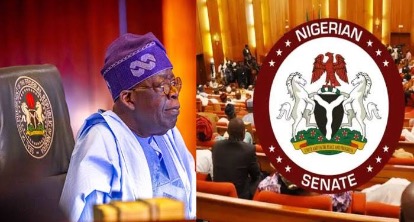
President Bola Ahmed Tinubu has asked the Senate to approve the nominations of two new chief executives for the Nigerian Midstream and Downstream Petroleum Regulatory Authority (NMDPRA) and the Nigerian Upstream Petroleum Regulatory Commission (NUPRC).
The requests followed the resignation of Engineer Farouk Ahmed of the NMDPRA and Gbenga Komolafe of the NUPRC. Both officials were appointed in 2021 by former President Buhari to lead the two regulatory agencies created by the Petroleum Industry Act (PIA).
To fill these positions, President Tinubu has written to the Senate, requesting expedited confirmation of Oritsemeyiwa Amanorisewo Eyesan as CEO of NUPRC and Engineer Saidu Aliyu Mohammed as CEO of NMDPRA.
The two nominees are seasoned professionals in the oil and gas industry.
Eyesan, a graduate of Economics from the University of Benin, spent nearly 33 years with the NNPC and its subsidiaries. She retired as Executive Vice President, Upstream (2023–2024), and previously served as Group General Manager, Corporate Planning and Strategy at NNPC from 2019 to 2023.
Engineer Saidu Aliyu Mohammed, born in 1957 in Gombe, graduated from Ahmadu Bello University in 1981 with a Bachelor’s in Chemical Engineering. He was announced today as an independent non-executive director at Seplat Energy.
His prior roles include Managing Director of Kaduna Refining and Petrochemical Company and Nigerian Gas Company, as well as Chair of the boards of West African Gas Pipeline Company, Nigeria LNG subsidiaries, and NNPC Retail.
He also served as Group Executive Director/Chief Operating Officer, Gas & Power Directorate, where he provided strategic leadership for major gas projects and policy frameworks, including the Gas Masterplan, Gas Network Code, and contributions to the Petroleum Industry Act (PIA).
Engineer Mohammed played a pivotal role in delivering key projects such as the Escravos–Lagos Pipeline Expansion, the Ajaokuta–Kaduna–Kano (AKK) Gas Pipeline, and Nigeria LNG Train.
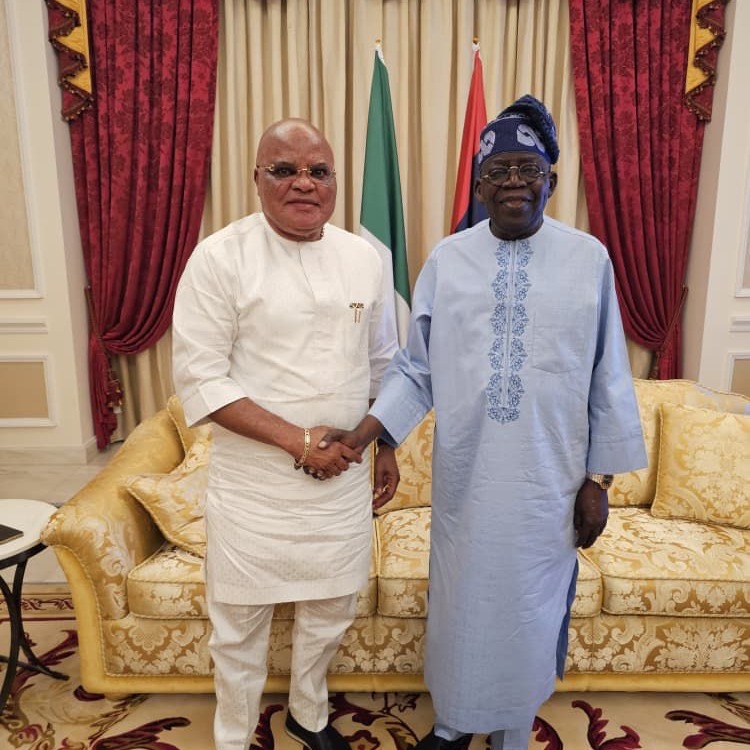
President Bola Tinubu felicitates Senator Ifeanyi Godwin Ararume, astute politician and accomplished businessman, on his birthday, December 16.
Senator Ararume’s odyssey in politics began in the late 1980s, when he served as the State Treasurer of the Liberal Convention in old Imo State. He later joined the National Finance Committee of the defunct National Republican Convention.
He represented Imo North in the 9th National Assembly. He was first elected in May 1999 and re-elected in April 2003. He also served on several committees and held other official roles.
President Tinubu commends the former senator for his years of service to the nation and contributions to its peace, unity, and progress.
The President describes Senator Ararume as a resolute and shrewd politician, highlighting his courageous and remarkable political journey through the years.
President Tinubu wishes Senator Ararume a happy 67th birthday and prays that God Almighty will grant him more years of good health and strength.
Politics
Ndigbo are no longer spectators in the Nigerian project- Minister Dave Umahi dismisses calls for Biafra under Tinubu’s administration
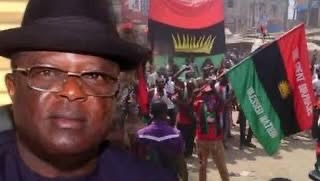
The Minister of Works, David Umahi, says the all-inclusive style of governance being practiced by President Bola Tinubu has made the agitation for Biafra an unnecessary clamour.
While speaking at the inspection of the Enugu-Anambra road last Saturday, December 13, Umahi said the Tinubu administration had given Ndigbo what they had sought for decades, not through secession, but through what he described as unprecedented inclusion in national governance and development.
He explained that the agitation for Biafra was historically driven by neglect, exclusion and underrepresentation at the federal level, but insisted that the situation had changed under the current administration.
“When a people are fully integrated, respected and empowered within the structure of the nation, the dream they once chased through agitation has already been achieved through cooperation.
The push for Biafran secession over the years was borne out of neglect, exclusion and underrepresentation but today the narrative has changed dramatically under President Bola Tinubu.
The President has deliberately opened the doors of national development to the South-East. Appointments, policy inputs and infrastructure priorities now reflect true federal balance.
Every sector now bears visible Igbo footprints. The emergence of Igbo sons and daughters in strategic positions is a testament to this inclusion.
Biafra was never about breaking Nigeria; it was about being counted in Nigeria. Through inclusion, equity and concrete development, Ndigbo are no longer spectators in the Nigerian project; they are co-authors of its future. When justice finds a people, agitation loses its voice.”he said

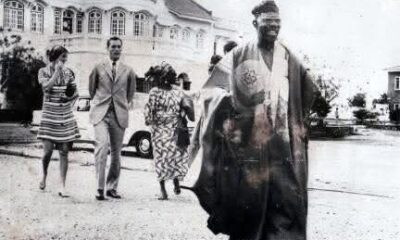
Chief Timothy Adeola Odutola (1902–1995): Pioneer Industrialist, Nationalist and Philanthropist of Ijebu-Ode

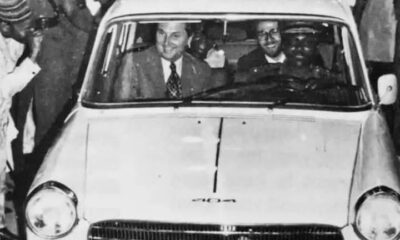
General Yakubu Gowon and Nigeria’s First Locally Assembled Peugeot

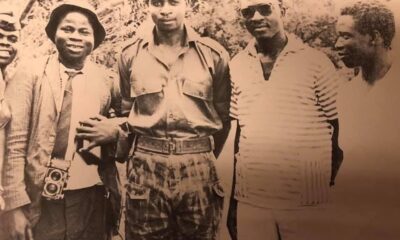
Peter Obe and the Lens of History

-
Business1 year ago
US court acquits Air Peace boss, slams Mayfield $4000 fine
-

 Trending1 year ago
NYA demands release of ‘abducted’ Imo chairman, preaches good governance
-

 Politics1 year ago
Mexico’s new president causes concern just weeks before the US elections
-

 Politics1 year ago
Putin invites 20 world leaders
-

 Politics1 year ago
Russia bans imports of agro-products from Kazakhstan after refusal to join BRICS
-
Entertainment1 year ago
Bobrisky falls ill in police custody, rushed to hospital
-
Entertainment1 year ago
Bobrisky transferred from Immigration to FCID, spends night behind bars
-
Education1 year ago
GOVERNOR FUBARA APPOINTS COUNCIL MEMBERS FOR KEN SARO-WIWA POLYTECHNIC BORI