
News
Bobrisky to face fresh criminal charges as panel indicts four prison officers


Controversial crossdresser, Idris Okuneye, aka Bobrisky, may face fresh criminal charges over claims that he served his jail term in a private apartment and bribed officials of the Economic and Financial Crimes Commission to drop money laundering charges against him.
Ekwutosblog on Sunday exclusively gathered that a panel set up to investigate the claims recommended that he should face defamation and criminal charges.
Bobrisky was sentenced to six months’ imprisonment on April 12 for abusing the naira. He was released from prison on August 5.
A few weeks after his release, controversial social critic, Martins Otse, aka VeryDarkMan, shared a voice note of a conversation purportedly between Bobrisky and another person, where the crossdresser allegedly stated that he bribed EFCC officers with N15m to drop money laundering charges against him. He also claimed to have bribed officials of the Nigerian Correctional Service to serve his six-month sentence in a private apartment.
The Minister of Interior, Olubunmi Tunji-Ojo, subsequently constituted an investigation panel, chaired by the Permanent Secretary of the ministry, Magdalena Ajani, on September 30, to probe the claims.
The panel, while presenting its report, said there was no evidence that Bobrisky slept outside the Kirikiri Custodial Centre during his six-month sentence.
Details of the report, exclusively obtained by Ekwutosblog on Friday, stated that Bobrisky tarnished the image of the correctional service with false claims.
The panel also asked the Department of State Services to investigate whether, directly or through a proxy, he bribed the EFCC or the correctional service.
If the allegations of bribery by Bobrisky are substantiated, the panel said he should be charged with corrupt practices.
“The Nigerian Correctional Service should file defamation suits against Bobrisky under sections 373-375 of the Criminal Code Act for his false claims about bypassing the prison system, tarnishing the institution’s reputation.
“The DSS should be requested to investigate whether Bobrisky, directly or through a proxy, bribed EFCC or NCoS officials. If substantiated, Bobrisky should face charges under the Corrupt Practices and Other Related Offences Act for bribing public officials,” the report partly read.
The panel also indicted four correctional officers who were recommended for disciplinary action as outlined in the NCoS’s condition of service, civil service, and applicable laws.
One of those recommended for sanctions is a former Controller of Corrections, Ben Rabbi-Freeman.
He was accused of “effecting the transfer of Okuneye Idris Olarenwaju without proper documentation of Form 5 and Form 5A from the Medium-Security Custody Centre to the Maximum-Security Custodial Centre on April 22, 2024, after over four months of the transfer date, and after the inmate had ended his imprisonment term; backdating the transfer documentation in relation to 1a and 1b above.
The Minister of Interior, Olubunmi Tunji-Ojo, subsequently constituted an investigation panel, chaired by the Permanent Secretary of the ministry, Magdalena Ajani, on September 30, to probe the claims.
The panel, while presenting its report, said there was no evidence that Bobrisky slept outside the Kirikiri Custodial Centre during his six-month sentence.
Details of the report, exclusively obtained by Sunday PUNCH on Friday, stated that Bobrisky tarnished the image of the correctional service with false claims.
The panel also asked the Department of State Services to investigate whether, directly or through a proxy, he bribed the EFCC or the correctional service.
If the allegations of bribery by Bobrisky are substantiated, the panel said he should be charged with corrupt practices.
“The Nigerian Correctional Service should file defamation suits against Bobrisky under sections 373-375 of the Criminal Code Act for his false claims about bypassing the prison system, tarnishing the institution’s reputation.
“The DSS should be requested to investigate whether Bobrisky, directly or through a proxy, bribed EFCC or NCoS officials. If substantiated, Bobrisky should face charges under the Corrupt Practices and Other Related Offences Act for bribing public officials,” the report partly read.
The panel also indicted four correctional officers who were recommended for disciplinary action as outlined in the NCoS’s condition of service, civil service, and applicable laws.
One of those recommended for sanctions is a former Controller of Corrections, Ben Rabbi-Freeman.
He was accused of “effecting the transfer of Okuneye Idris Olarenwaju without proper documentation of Form 5 and Form 5A from the Medium-Security Custody Centre to the Maximum-Security Custodial Centre on April 22, 2024, after over four months of the transfer date, and after the inmate had ended his imprisonment term; backdating the transfer documentation in relation to 1a and 1b above.
“Causing the in-charge Ikoyi Custodial Centre, in-charge Medium-Security Custodial Centre, and in-charge Maximum-Security Custodial Centre to sign backdated transfer documents in relation to Okuneye Idris Olarenwaju.”
In addition, the Deputy Controller of Corrections who was in charge of the Kirikiri Medium Security, Micheal Anugwa, who claimed during a parliamentary inquiry that he had not been suspended despite an official order from the Minister of Interior, was recommended for disciplinary action.
He was indicted for receiving Bobrisky into the Medium Security Custodial Centre without the relevant documentation on April 12, 2024, and without the necessary transfer documentation.
“DCC Balogun Sikiru (retd) — formerly in-charge of Maximum Security Custodial Centre for receiving Bobrisky into the Maximum Security Custodial Centre without the relevant documentation on April 22, 2024, and without the necessary transfer documentation, and DCC Sikiru Kamoru Adekunle who was in charge of the Maximum Security Custodial Centre for backdating the transfer documentation in relation to receiving of Okuneye Idris into the Maximum Security Custodial Centre on April 22, 2024, which was a period he was yet to resume as the in-charge of the Maximum Security Custodial Centre.”
The panel further recommended an audit of all inmates and detainees in all custodial centres of the NCoS, their warrants, and other records. It asked that a mechanism be set up to do this and sustain it as an effective oversight weekly.
It demanded “decommercialisation of all welfare and support services to inmates with immediate effect and ensuring that adequate funding and oversight are put in place to ensure the continuation of these. This will also include building sustainable partnerships with civil society organisations (example, with relevant NGOs and professional associations) on some or all of these.”
“Facilitate the effective implementation of non-custodial measures across the entire country to help reduce the number of people in custodial centres by utilising imprisonment only as a last resort,” the report added.
Special facilities in custodial centres
A senior management officer of the NCoS told Ekwutosblog that what people called VIP treatment for certain prisoners was a special facility that had existed for years.
According to the high-ranking officer, custodial centres have different facilities and prisoners’ conditions (health, age, sex) determine which facility they stay in to serve their jail term.
The officer said, “There are different facilities in the custodial centres across the country, and it is not out of place to treat some of the prisoners according to their health conditions, sex, age, and category of the sentence. Importantly, the prison authority also considers human rights and the treatment of the prisoners.
“The case of Bobrisky is an eye-opener for us. The NCoS authority confirmed that he is a woman from the middle upward, while he is a man from the middle downward. We had never had such a person in our custody, and there is no facility for such a situation. He had to be placed in a separate cell so that he wouldn’t be abused. That facility is what he ignorantly called a private apartment.
“Whether VIP or not, the condition of a prisoner will determine the facility he/she is going to stay in. We can’t put a prisoner who has high blood pressure in a cell without enough ventilation.”
Activists make case for crossdressers
Okuneye’s case has sparked debate on human rights and recognition of crossdressers, transgenders, and transsexual individuals in the country’s laws, institutions, and facilities.
Some activists, who spoke with Ekwutosblog, argued that the government and its institutions should be aware of the presence of these individuals and make provisions for them.
The activists believe that sexual orientation is part of the human rights to be respected by the Nigerian government.
An activist, Femi Adeyeye, said the Kirikiri Custodial Centre where Bobrisky served his jail term was not befitting of his sexual orientation.
Adeyeye urged the Federal Government to respect the rights of individuals regardless of their sexual orientation. He also called on the government to provide special facilities for transgender inmates.
“A special cell for transgender persons is a welcome development; it’s something the government should look into,” he stated.
Another activist, Michael Adaramoye, noted that the Nigerian society had not come to terms with the reality of a growing transgender population.
However, Adaramoye said, “While we must recognise the right of individuals to sexual freedom, as long as it does not infringe on the rights of others, we must also be sensitive to the concerns of other members of society.
He advocated the provision of facilities to accommodate transgender individuals in prisons and cells.
“It is important to note that our correctional centres are organised in a way that dehumanises inmates. Under such vicious conditions, it is difficult for any positive character reform to occur. The prison system in Nigeria is in dire need of deep reform and overhaul,” the activist added.
Also, human rights lawyer, Toyin Taiwo-Ojo, said the Federal Government’s position on homosexuality was ambiguous.
“The Nigerian government must re-evaluate Bobrisky’s detention and consider the long-term implications of their decisions,” she concluded.





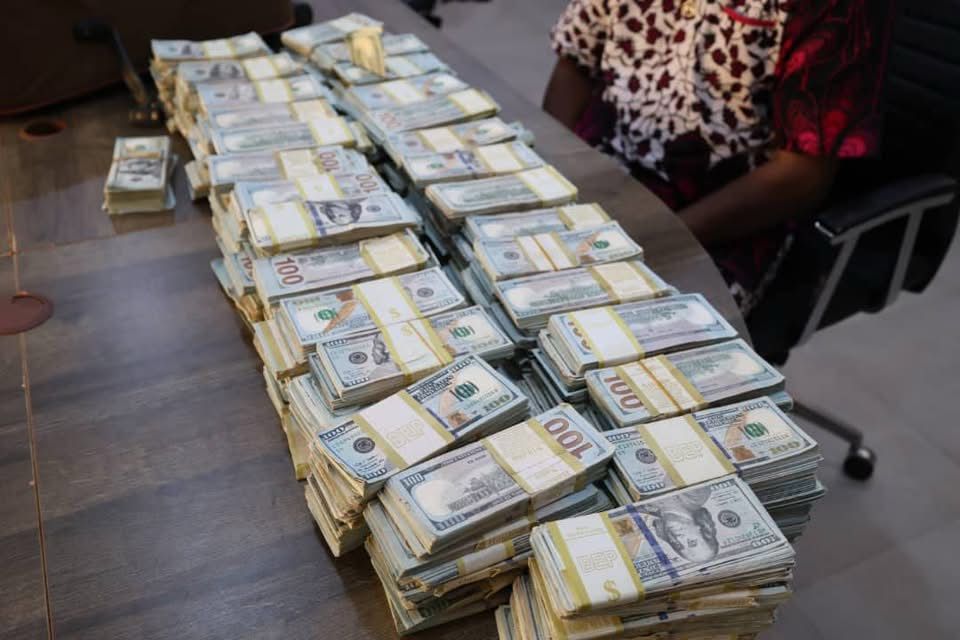
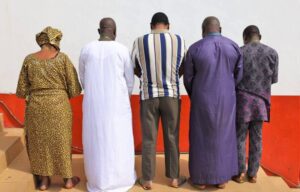
Operatives of the Ibadan Zonal Directorate of the Economic and Financial Crimes Commission, EFCC, have uncovered huge counterfeit foreign notes to the tune of $3, 430, 000 (Three Million, Four Hundred and Thirty Thousand United States Dollars) and €280, 000 (Two Hundred and Eighty Thousand Euros) in possession of a five-member syndicate arrested for allegedly swindling one Halima Sanni the sum of N26, 550, 000 (Twenty-Six Million, Five Hundred and Fifty Thousand Naira).
The herbalists: Akingbola Omotayo, Adeola Funsho Ogunrinde, Yahaya Amodu, Kubratu Babalola Olaitan (female) and Familola Sunday Olaitan. were arrested on December 7 and 8, 2025 at their shrines in Osun and Lagos States respectively, following a thorough surveillance and intelligence on their fraudulent activities
Investigation revealed that the suspects were allegedly defrauding unsuspecting individuals of their legitimate earnings under the pretence of providing spiritual cleansing and solutions to different ailments.
They also allegedly assured their victims of their powers to conjure several currency notes which must be cleaned up by a genie through spiritual sacrifice before spending the money. They did all these by hypnotizing their victims to provide money for the sacrifice.
Other items recovered from them include two exotic cars and mobile phones.
The suspects will be charged to court as soon as investigations are concluded.
News
HAPPENING NOW: US Air Force Takes Over Benin-Nigeria Border Airspace, Wipes Out ISWAP Terrorists’ Armory

Without taking chances, the United States Air Force entered the airspace of Benin-Nigeria border without using the Nigerian airport, stepped up reconnaissance and massive attack against militants and it had begun the operation now in blasting the armory of the terrorists.
According to Standard Newspaper Inc USA, Corroborating this view, Bryant Philip, a top American security operative with specialty in West Africa law enforcement confirmed the latest development by explaining that the United States Air Force ISR aircraft is on an on-going mission above
His words: “The United States Air Force ISR aircraft is currently operating above the Babana strategic crossing on the Benin-Nigeria border. This route has long been used by armed groups, particularly JNIM, for smuggling supplies. In August, the Nigerian army clashed with unidentified gunmen.


“The United States resumes ISR missions today in Nigeria, targeting ISWAP zones of influence in Borno State, northeast Nigeria, on the fringes of Lake Chad. It took off from Accra, Ghana. Still not using a Nigerian airport.”
Meanwhile, the Nigerian Army Elite Group, Maroon Beret famously described as Boko Haram’s nightmare stormed the secret enclave of the terrorists’ group and killed over 50 members of the notorious sect inside their make-shift huts in the forest.

As at press time, some 200 West African soldiers, mainly from Nigeria and Ivory Coast, are in Benin Republic to support the government following the failed coup, Benin’s foreign minister says.
Remember, the attempt was foiled after Nigeria deployed fighter jets to drive the mutineers out of a military base and state TV headquarters, where they had declared a takeover.
This is the first time that officials have said how many foreign soldiers were deployed to the country, although it is not clear if some have been withdrawn.

Benin’s Foreign Affairs Minister Olushegun Adjadi Bakari on Thursday said some of the regional troops sent to help had remained in the country “as part of the sweep and clean-up operation”.
The West African regional bloc, ECOWAS, deployed troops from Nigeria, Ghana, Sierra Leone, and Ivory Coast to secure key installations and prevent any resurgence of the violence.
Nigeria, Benin’s large neighbour to the east, said its soldiers had reached there since a few days ago, describing the coup attempt as a “direct assault on democracy”.
Security intelligence showed 50 soldiers from the country had been sent as part of the regional deployment.
“There are currently around 200 soldiers present, who came to lend a hand at the end of the day to the Beninese defence and security forces as part of the sweep and clean-up operation,” said Bakari, while addressing journalists in Nigeria’s capital, Abuja, on Thursday.
Bakari, who was speaking alongside Nigeria’s Foreign Affairs Minister Yusuf Maitama Tuggar, said that by the time the Beninese forces called for help, the coup “was already a failure”.
“When we started discussions for the intervention of Nigeria and the others, under ECOWAS protocol, our military had already pushed them back,” he added.
According to Bakari, what was required was “precise aerial back-up to carry out a surgical operation that targeted the enemy’s key positions without risking civilian casualties”.
Tuggar said that fast diplomatic, military, and intelligence actions between Nigeria and Benin had helped to foil the coup.
Discussions are continuing over how long the regional forces would remain, but Bakari said any decision “will be taken in close collaboration with Benin’s defence and security forces, who have demonstrated their bravery”.
It is not clear if the French special forces who also reportedly helped loyalist troops thwart the coup are still in Benin.
Under intense pressure after a string of successful coups in the region, Ecowas is signaling that it is no longer willing to watch democratically elected governments be toppled by the military.
Bakari praised ECOWAS as “an important tool that allows us to defend democracy and the values of democracy in our regional space”.
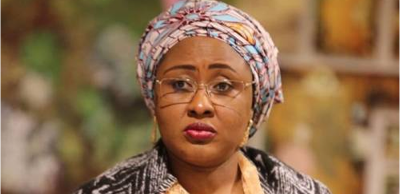
Former First Lady Aisha Buhari has disclosed that her late husband, former President Muhammadu Buhari, locked himself inside his room after believing rumors within Aso Rock that she planned to kill him.
The revelation was contained in a new biography titled From Soldier to Statesman: The Legacy of Muhammadu Buhari, written by Dr Charles Omole and launched at the State House on Monday, December 16, 2025.
The book follows Buhari’s life journey from his early years in Daura, Katsina State, to his final days in a London hospital in mid-July 2025.
According to the account, Aisha Buhari said gossip and fear inside the Presidential Villa created tension that affected her husband’s daily life.
She stated that for about a week, Buhari believed the rumours, became cautious, changed his habits, and started locking his room.
During this period, his meals were delayed or missed, and the supplements he depended on were stopped.
She explained that this disruption marked the beginning of the health crisis that later forced Buhari to take long medical leave in 2017.
She maintained that the illness was not caused by poisoning or any hidden disease but by the breakdown of a feeding and nutrition routine she had managed for years.
The book stated that Aisha Buhari had always supervised her husband’s meals and supplements at fixed times, even before he became president.
She described Buhari as someone with a long history of nutrition-related weakness who depended on a strict routine to stay strong.
After moving into Aso Villa, she reportedly met with close aides, including security and medical officials, to explain the importance of the plan.
However, the routine gradually collapsed. Aisha Buhari said that for nearly a year, her husband stopped eating lunch and his meals were poorly managed.
His condition worsened and led to two extended medical trips to the United Kingdom in 2017, lasting a total of 154 days. During his absence, Vice President Yemi Osinbajo handled presidential duties.
After returning to Nigeria, Buhari admitted that he had never been that ill before and confirmed receiving blood transfusions.
The book said that his prolonged absence led to widespread rumours and speculation across the country.
Aisha Buhari rejected claims that there were attempts to poison her husband, insisting that the real cause of the crisis was the loss of his nutrition routine.
In London, doctors placed Buhari on a stronger supplement plan.
At first, he was afraid and reluctant to take them, but she took charge of his care and ensured he received the prescribed supplements through his meals.
She described the recovery as rapid, saying that within days Buhari no longer needed support to walk and soon began receiving visitors.
The book stated that this marked both the beginning and the end of the illness.
Dr Omole also addressed criticism over Buhari’s repeated medical treatment abroad, saying that an elderly man in his seventies may require specialised care not easily available in Nigeria due to years of weak investment in healthcare.
He added that Buhari’s habit of formally handing over power during absences showed respect for due process.
The book further described an atmosphere of mistrust around the Presidency. Aisha Buhari alleged that the President’s office was monitored and private conversations replayed, adding that fear within the system affected his wellbeing. She also dismissed claims that Buhari had a body double, describing the story as false and blaming poor communication for allowing such rumors to grow.

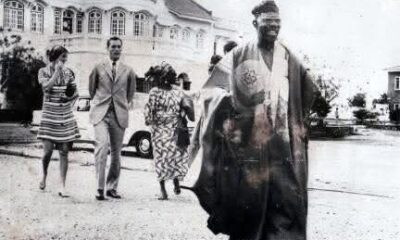
Chief Timothy Adeola Odutola (1902–1995): Pioneer Industrialist, Nationalist and Philanthropist of Ijebu-Ode

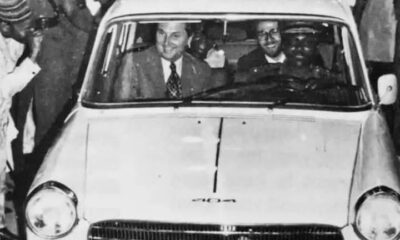
General Yakubu Gowon and Nigeria’s First Locally Assembled Peugeot

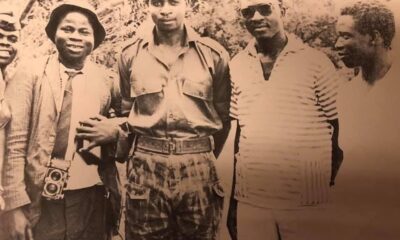
Peter Obe and the Lens of History

-
Business1 year ago
US court acquits Air Peace boss, slams Mayfield $4000 fine
-

 Trending1 year ago
NYA demands release of ‘abducted’ Imo chairman, preaches good governance
-

 Politics1 year ago
Mexico’s new president causes concern just weeks before the US elections
-

 Politics1 year ago
Putin invites 20 world leaders
-

 Politics1 year ago
Russia bans imports of agro-products from Kazakhstan after refusal to join BRICS
-
Entertainment1 year ago
Bobrisky falls ill in police custody, rushed to hospital
-
Entertainment1 year ago
Bobrisky transferred from Immigration to FCID, spends night behind bars
-
Education1 year ago
GOVERNOR FUBARA APPOINTS COUNCIL MEMBERS FOR KEN SARO-WIWA POLYTECHNIC BORI