
News
Anambra 2025: INEC warns political parties against sudden change of primary elections venues, dates


The Independent National Electoral Commission, INEC, has called on political parties to adhere strictly to their proposed schedules—dates, venues, and modes of primaries—ahead of the Anambra governorship election scheduled to be held on 8th November 2025.
It noted that changes to the dates, venues, and modes of primaries lead to avoidable demobilisation and remobilisation of its monitoring staff, thereby disrupting the Commission’s workflow.
INEC National Commissioner and Chairman of the Information and Voter Education Committee, Sam Olumekun, in a statement issued on Thursday, noted that this also adds to the cost of monitoring primaries and the overall conduct of elections and electoral activities.
He revealed that only 12 out of the 19 registered political parties have submitted the detailed schedules of their primaries.
Olumekun therefore urged the seven parties that have yet to submit the required information to do so immediately.
He recalled that, in line with the provisions of Section 28(1) of the Electoral Act 2022, the Commission published the Notice of Election on 13th November 2024, over 360 days before the date fixed for the election.
Olumekun explained that, according to the timetable and schedule of activities for the election, the conduct of primaries for the nomination of candidates by political parties is set to commence in the next two weeks—on 20th March 2025—and will end on 10th April 2025.
He said: “As agreed at our last consultative meeting with political parties held in January, doing so early will enable the Commission to plan for the effective monitoring of the primaries in line with the provisions of Section 84 of the Electoral Act 2022.
“The seven parties that have yet to submit the required information are hereby reminded to do so in earnest.”









News
UK Will Pay With Blood If It Doesn’t Take Putin’s WW3 Warning Serious – Ukrainian Major Warns (Details)
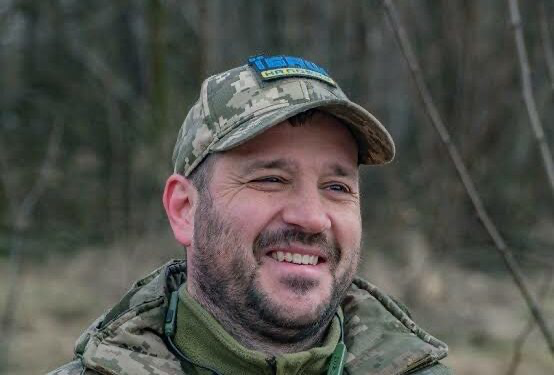
A senior Ukrainian military officer has warned that Britain is dangerously unprepared for a major war and could pay a “high price” if Russian President Vladimir Putin expands the conflict in Ukraine to Europe.
Viktor Andrusiv, a major in the Ukrainian armed forces and former presidential adviser, said the UK must urgently learn from Ukraine’s experience before it is too late. His warning comes amid growing concern across NATO that Russia could escalate hostilities if diplomatic efforts fail.
Speaking against the backdrop of renewed calls by NATO Secretary General Mark Rutte for Europe to prepare for war “like our grandparents endured,” Andrusiv said the greatest danger lies in disbelief. According to him, many people in Western countries still struggle to accept that large-scale war on European soil is a real possibility.
“The biggest problem is that people don’t believe this can happen,” Andrusiv said. He noted that Ukraine faced a similar mindset before Russia’s full-scale invasion, when the idea of tank columns and missile strikes seemed unthinkable in the 21st century.
Putin has recently warned that Russia is prepared to go to war with Europe if peace talks over Ukraine collapse, raising fears of a direct confrontation with NATO. Such a scenario would automatically draw in the UK under the alliance’s collective defence commitments.
British defence chiefs have already cautioned that the country’s armed forces have been “hollowed out” after decades of reduced military spending following the Cold War. Andrusiv agreed with that assessment, arguing that the UK’s military structure and equipment are outdated.
“I am sure you are not prepared,” he said. “That doesn’t mean you would lose for sure, but if you are not prepared, you will pay a higher price.”
News
“Bandits Who Killed My Husband Threatening To Kill Me If I Dont Marry Their Leader” – Plateau Widow Cries Out For Help
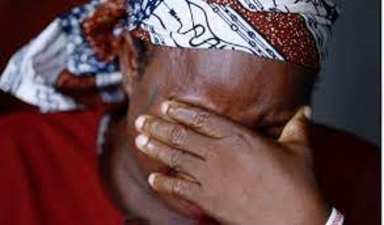
A young widow in Plateau State has raised the alarm over persistent death threats allegedly issued by terrorists who killed her husband and are now pressuring her to marry one of their leaders or risk being murdered alongside her children.
The woman, who identified herself simply as Nanbam, disclosed her ordeal on Friday during an interview with the international non-governmental organisation, Equipping the Persecuted. She said her husband was among 40 residents killed during a brutal attack on Mushere community in Bokkos Local Government Area in August.
According to Nanbam, the assailants stormed the village, surrounded residents and carried out mass killings. She alleged that her husband was gruesomely murdered, claiming that his attackers mutilated his body before disposing of it in a nearby pond.
She further revealed that shortly after the attack, the same group began contacting her, insisting that their leader wanted to marry her. Nanbam said the calls started on the very day her husband was killed, allegedly made using her late husband’s phone number.
“They told me their leader wanted to marry me,” she said, adding that she rejected the proposal outright, stating she would never marry someone responsible for killing her husband and the father of her children.
Nanbam alleged that since then, the threats have intensified, with the callers warning that she and her three children would be killed if she continued to refuse the marriage and decline conversion to Islam. She said the callers frequently use different phone numbers, making it difficult to block or trace them.
In a bid to escape the threats, the widow said she relocated to her hometown in Mangu Local Government Area. Despite changing her SIM card on the advice of family members, she said the calls resumed weeks later, with the callers claiming they had tracked her location and threatening to attack not only her but also her children and extended family members.
She described her situation as desperate, noting that she is still grieving her husband while struggling to raise her children alone amid constant fear for their lives.
Nanbam also alleged that her attempt to seek help from the police yielded no meaningful response. She claimed officers told her the callers could not be traced due to the use of multiple phone numbers and allegedly asked her to provide money to support tracking efforts, a request she said she could not afford.
“I don’t know where to run to anymore,”she lamented, appealing for urgent help and protection as she fears that her life and those of her children remain in imminent danger.

The Chief Justice of Nigeria, CJN, Justice Kudirat Kekere-Ekun, has confirmed that the presidential directive mandating the withdrawal of police officers assigned to Very Important Personalities, VIPs, as part of efforts to curb rising insecurity in the country does not extend to judges.
This clarification was provided on Saturday by the CJN’s media aide, Tobi Soniyi.
The announcement follows concerns raised earlier by the Chief Judge of Taraba State, Justice Joel Agya, who reported that police orderlies attached to judges in the state had been withdrawn, describing the move as a serious security risk.
Justice Agya explained that judges, along with governors, were explicitly exempted from the security withdrawal order, in recognition of their statutory right to police protection.
However, he noted that police officers assigned to judicial officers across Taraba were removed on December 8 without any prior notification.
“Removing security details from judges handling sensitive criminal, political, terrorism, and corruption cases exposes them to considerable danger,” Justice Agya said.
He further emphasised that stripping judicial officers of their protection could compromise judicial independence.
“Judicial independence is not only about freedom from interference but also about safeguarding judges from intimidation. Without security personnel, courtrooms may become unsafe, and judicial proceedings could be disrupted,” he added.
Responding to the concerns, Tobi Soniyi stated that the CJN’s office was not aware of any withdrawal of police orderlies from judges and questioned why such action would have been taken, given that judges are exempted from the directive.
Soniyi also noted that other judges had not reported similar issues regarding the removal of their security personnel.

FG Bans Admission, Transfer Of SS3 Students

“It took me getting married and giving birth to realise marriage benefits men more” — Woman shares emotional thoughts

Private jet crash lands at Kano airport

-
Business1 year ago
US court acquits Air Peace boss, slams Mayfield $4000 fine
-

 Trending1 year ago
NYA demands release of ‘abducted’ Imo chairman, preaches good governance
-

 Politics1 year ago
Mexico’s new president causes concern just weeks before the US elections
-

 Politics1 year ago
Putin invites 20 world leaders
-

 Politics1 year ago
Russia bans imports of agro-products from Kazakhstan after refusal to join BRICS
-
Entertainment1 year ago
Bobrisky falls ill in police custody, rushed to hospital
-
Entertainment1 year ago
Bobrisky transferred from Immigration to FCID, spends night behind bars
-
Education1 year ago
GOVERNOR FUBARA APPOINTS COUNCIL MEMBERS FOR KEN SARO-WIWA POLYTECHNIC BORI