
Columns
Trump’s tariffs: Why won’t countries buy US meat products?

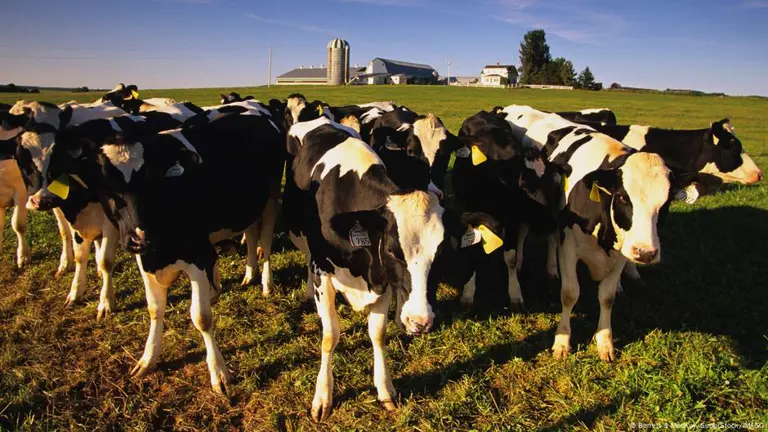
US President Donald Trump wants other countries to import more American beef and poultry. Several countries restrict importing these products for decades because they don’t meet their food safety regulations.
In an announcement on April 2, Trump called out Australian restrictions on US beef, saying: “We imported $3 billion of Australian beef from them just last year alone. They won’t take any of our beef.”
His administration also singled out the UK and EU for “non-science-based” restrictions on importing US beef, and Argentina for its ban of live US cattle exports.
Trump has used these import bans as part of his rationale to impose new trade tariffs.
Who do countries ban US beef imports?
There are different reasons why Australia, Argentina, the EU and the UK don’t import some American beef products.
For Australia and Argentina, the restrictions date back to 2003 when bovine spongiform encephalopathy (BSE) was detected in US cattle. BSE is a disease which affects the nervous system of cattle caused by misfolded proteins known as prions. It’s also known as Mad Cow Disease.
Humans can become infected with the disease when they eat meat contaminated with BSE. It is known as Creutzfeldt-Jakob disease in humans. Globally, a total of 233 people have died from Creutzfeldt-Jakob disease after eating BSE-infected.
US health authorities reduced the spread of BSE among US cattle sufficiently to see the ban on beef exports to Australia lifted in 2019.
“There may be a feeling from some producers or companies in the US that Australia is banning US beef, but there’s no ban in place,” said Robyn Alders, a veterinary scientist at the Australian National University.
But US imports are still restricted if they don’t meet Australia’s strict biosecurity laws. For US beef to be allowed into Australia, US cattle farmers must prove their cattle are entirely bred, grown and slaughtered in the US.
“To do that [tracing] in a way that would still make their product a cost-efficient thing to ship that product across to Australia, there are very few companies — virtually none at the moment — that are willing to take that on,” Alders said.
Argentina lifted its BSE ban on American beef products in 2018 but has maintained the restriction on live cattle imports until the two countries finalize a new “sanitary certificate”.
No added hormones for Europe and the UK
The EU and UK have restricted US beef imports since 1989 because the US cattle industry sometimes uses growth hormones to increase meat and milk yields. The EU does import non-hormone-treated beef from the US.
US dairy and cattle farmers routinely use hormones like estradiol 17ß and testosterone to promote faster growth and improve feed efficiency.
The EU’s ban rationale, which is also maintained by the UK post-Brexit, is based on its own scientific evaluation showing that daily intake of growth hormones can have negative health impacts, including evidence that estradiol 17ß can cause cancerous tumor growth.
The US cattle industry has argued against the EU’s restrictions, saying food safety testing in the US shows no risk to adult health.
“[However], the European perspective is that the entire population does not consist only of health adults, but [also] of infants, children, the elderly, the immunologically compromised,” said Erik Millstone, an expert in food and science policy at the University of Sussex, UK.
“EU authorities have done a much more comprehensive assessment of the risk of consuming hormone-treated beef [compared to US authorities],” Millstone said.
Chlorinated chicken banned in Europe too
The US has also criticized EU bans on importing US poultry that has been cleaned in chlorine.
US poultry farmers wash poultry meat in chlorine solutions to kill harmful bacteria such as campylobacter, which commonly causes food poisoning.
The European Food Safety Authority (EFSA) has said that chemical substances in poultry meat are unlikely to pose a health risk for consumers.
However, European authorities are concerned that rinsing chicken in chlorine at the end of the food production process allows lower standards of hygiene and animal welfare in earlier stages. EU regulations legislate animal welfare at all stages of the “farm to fork” process.
Millstone also that some research shows that chlorine rinsing may not actually have the intended effect of decontaminating meat.
“The chlorinated water was not an effective disinfectant. The bacteria remained in place, remained pathogenic, remained dangerous, infectious, but were just not detected,” Millstone said.
As a result, rates of bacterial food poisoning in the US are substantially higher than they are in the European Union or UK, said Millstone.
What do US producers need to do?
For the time being, US animal farming practices are either incompatible or too impractical to meet the food safety demands of export markets.
Australia and Argentina are open to importing US beef, but US producers must meet their regulatory standards.
For the UK and EU, it’s a more difficult path, which would require US producers to cease using growth hormones in beef production and end the practice of chlorine washing in poultry.
Polling data suggest Europeans are against allowing US meat products in — a 2020 poll found 80 per cent of the British public are against allowing imports of chlorinated chicken.






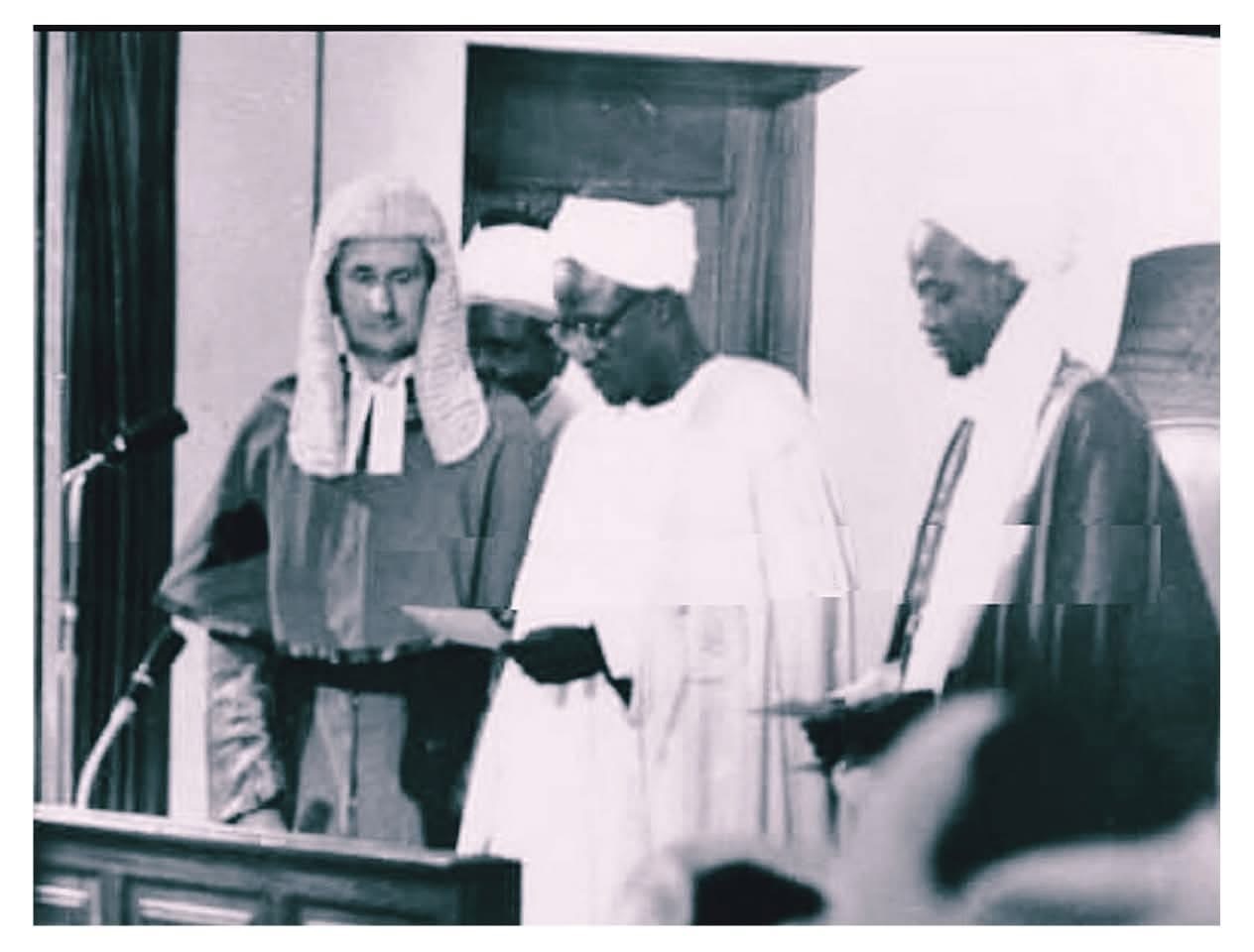
A defining moment in the transition from colonial rule to indigenous leadership in Northern Nigeria.
The image depicts Sir Kashim Ibrahim during his swearing-in ceremony as Governor of the Northern Region of Nigeria, an event that marked a significant milestone in Nigeria’s political evolution. While the photograph is often dated to the late 1950s, historical records confirm that Sir Kashim Ibrahim assumed office in October 1960, shortly after Nigeria attained independence from British colonial rule.
Sir Kashim Ibrahim was appointed Governor of the Northern Region from 1960 to 1966, becoming the first indigenous Nigerian to hold the office. His appointment symbolised the transfer of political authority from colonial administrators to Nigerians and reflected the emerging autonomy of the regions within the newly independent federation.
Born in 1909 in Maiduguri, present-day Borno State, Kashim Ibrahim was a distinguished educator, administrator, and politician. Before entering politics, he had a notable career in education, serving as Provincial Education Officer and later as Minister of Education for the Northern Region, where he played a key role in expanding access to Western education in Northern Nigeria.
The office of Governor during this period was largely ceremonial but politically significant. It represented the Crown at the regional level while reinforcing constitutional governance under Nigeria’s federal structure. As governor, Sir Kashim Ibrahim worked closely with the Northern Region’s political leadership, particularly the government of Sir Ahmadu Bello, the Sardauna of Sokoto, who served as Premier.
His tenure coincided with a formative period in Nigeria’s post-independence history, characterised by efforts at nation-building, regional development, and managing the complexities of ethnic and political diversity. Sir Kashim Ibrahim remained in office until January 1966, when Nigeria’s First Republic was overthrown following the military coup that ended civilian governance.
Beyond politics, Sir Kashim Ibrahim is remembered for his enduring contributions to education and public service in Northern Nigeria. His legacy continues through institutions named in his honour, most notably Sir Kashim Ibrahim College of Education in Maiduguri, which stands as a testament to his lifelong commitment to learning and leadership.
The photograph remains a powerful historical record, capturing a moment when Nigeria formally embraced indigenous leadership at the highest levels of regional governance.
Sources
Falola, Toyin & Matthew Heaton. A History of Nigeria. Cambridge University Press.
Coleman, James S. Nigeria: Background to Nationalism. University of California Press.
Nigerian National Archives, Kaduna – Records of Northern Regional Government (1960–1966).
Columns
Davido’s baby mama, Sophia Momodu, claps back at Snapchat user who accused her of flaunting a replica bag

Sophia Momodu has responded sharply after a Snapchat user tried to drag her over an alleged replica designer bag.
The user accused Sophia of “flaunting a replica” and warned her that this is an era where fake items are easily detected, advising her to stop “setting herself up for drags.”
Sophia was clearly not having it.
In a blunt response, she fired back, telling the user to “hold your chest and say God release me from witchcraft,” adding a sarcastic “you wish?” to shut down the allegation.
https://www.instagram.com/reel/DSMmzu8jMMN/?igsh=dDR3d2Q3ZXgxYWJu
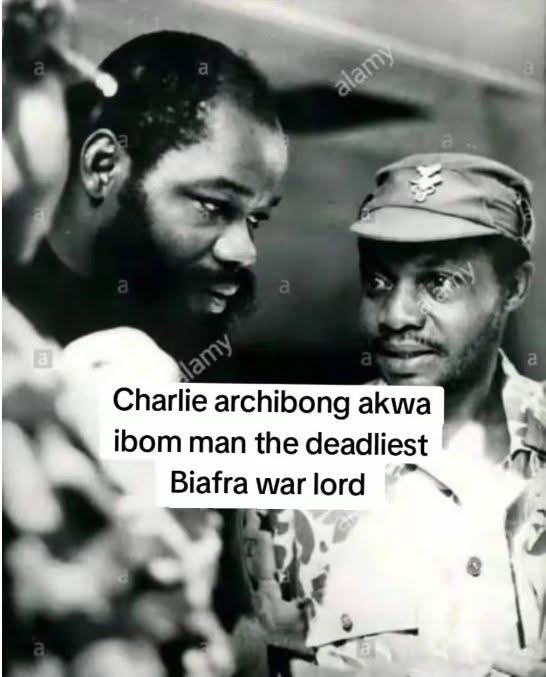
“Brigadier Archong” (also referred to as Colonel Charlie Archibong) was a prominent Biafran commander during the Nigerian Civil War (1967-1970), known for his bravery and key role in the Biafran invasion of the Midwest region.
Key Activities During the War
Midwest Invasion Commander: Colonel Archibong was the lead commander of the Biafran forces that invaded Nigeria’s Midwest region on August 9, 1967. His orders were to advance rapidly through the West and capture Dodan Barracks in Lagos within 48 hours. The advance was halted by a controversial retreat order from Brigadier Victor Banjo at Ore, which ultimately led to the failure of the offensive.
Ojukwu blamed himself for not letting achuzie or Charlie archibong lead the troops to capture Nigeria capital city Lagos after the Biafran capital city Enugu was attacked by the Nigerian, even after Charlie archibong territory fell to the Nigerian military Charlie archibong and his people mostly lead to lay a deadly ambush against the Nigerian army in Calabar and akwa ibom and pH and this action Also lead to the killing of innocent civilians by Nigeria army not only Asaba experienced massacred south south of today veteran can testify
Key Biafran Fighter: Archibong was considered one of General Odumegwu Ojukwu’s most trusted and gallant fighters. He was known by the nickname “Charlie Bazooka” and was respected for his zeal and determination.
Further Action: After the Midwest campaign, he saw more action around Ikot Ekpene.
Disappearance/Death: Archibong was reported missing after an officer-led reconnaissance operation, and his command headquarters waited in vain for his return. Sources suggest he may have been killed through internal sabotage within Biafra.
Archibong is remembered as a significant figure in the Biafran military, often appearing in historical photos alongside Ojukwu as a “war hero.

Tinubu, ECOWAS leaders meet in Abuja over Benin coup, regional stability

Otti Throughs a Lavish Banquet to Celebrate music Icon, Zigima King, Bright Chimezie

FG Bans Admission, Transfer Of SS3 Students

-
Business1 year ago
US court acquits Air Peace boss, slams Mayfield $4000 fine
-

 Trending1 year ago
NYA demands release of ‘abducted’ Imo chairman, preaches good governance
-

 Politics1 year ago
Mexico’s new president causes concern just weeks before the US elections
-

 Politics1 year ago
Putin invites 20 world leaders
-

 Politics1 year ago
Russia bans imports of agro-products from Kazakhstan after refusal to join BRICS
-
Entertainment1 year ago
Bobrisky falls ill in police custody, rushed to hospital
-
Entertainment1 year ago
Bobrisky transferred from Immigration to FCID, spends night behind bars
-
Education1 year ago
GOVERNOR FUBARA APPOINTS COUNCIL MEMBERS FOR KEN SARO-WIWA POLYTECHNIC BORI