
Politics
Anioma People are Of Igbo Descent and must be used to balance South East region- Ned Nwoko

Anioma People are Of Igbo Descent and must be used to balance South East region- Ned Nwoko
Let AniomaState be written by Ned Nwoko.
The recent revival of the demand for the creation of Anioma State,
essentially driven by Senator Ned Nwoko, is in keeping with the
aspiration of our people. The demand for the creation of Anioma state
has been long-standing and must rank as one of the oldest agitations
in the political history of Nigeria. Political detractors would want you to believe that Senator Nwoko’s interest in the Anioma State movement is just for his politics. Nothing could be farther from the truth.
The agitation has always been driven by the Anioma people who are of Igbo descent and reside in the northern part of Delta State. The
Anioma people, though located in Delta State, share a distinct Igbo
cultural identity that is remarkably different from the Urhobo and
Itsekiri ethnic groups in the state. This distinctive demand has
enjoyed the support of all well-meaning persons in that enclave. The very term, Anioma, coined by the illustrious Chief (Dr) Dennis
Osadebay as far back as 1951, has remained the unchanging acronym by
which this area has been identified.
So, the inspired poet and politician, the only Premier of the defunct
Mid-West Region, Dennis Osadebay, was the uncontestable founding
father of the Anioma state movement. Down the decades since then,
Anioma people have remained wedded to this ideal that has remained
Osadebay’s greatest bequest to his people as they struggle to find a befitting foothold in the Nigerian commonwealth as well as a plank on
which to build a fast and stable development that should show other
African peoples the way to follow.
Here, one remembers with nostalgia, the role played by proud Anioma
sons and daughters in the early 1980s. Of particular note was the late
Chief Sony Odogwu (Ide Ahaba) and Chief (Hon) Willy Ikolodo (Uwolo of
Ibusa) dual leadership of the Bendel East Cultural Association (BECA),
the activism of Dr. Amadi Emina, Sen. Nosike Ikpo, Ambassador Raph
Uwechue, Chief Andrew Monye, Mr. I. S. Moemeke, Chief Philip Asiodu, Professor B. I. C. Ijeoma, Ambassador Orewa and
Professor Onianwa, just to mention but a few. Creating Anioma State
would provide the Anioma people with a unique platform to preserve,
promote, and develop their cultural heritage. The recognition of
Anioma as a distinct political entity would fulfill their aspirations
for self-determination and ensure their traditions and values are
fully represented at a state level.
The case for creating Anioma State is grounded in several key
arguments, which include cultural identity, equitable representation,
administrative efficiency, and socio-economic development. There is a
historical argument that Anioma lands were arbitrarily merged with
non-Igbo regions during state creation exercises in Nigeria’s colonial
and post-colonial eras. This administrative decision ignored the
cultural and ethnic affinities of the Anioma people with the wider
Igbo community. Rectifying this historical oversight would not only
address a long-standing grievance but also reaffirm the Nigerian
government’s commitment to justice and fairness.
Yet, commentators, including self-styled Anioma experts often failed to mention the lost parts of Anioma, which the British
colonialists carved up and threw to different directions that should
be brought back to their Anioma family. So, Anioma state, when
created should unify the entire Anioma people who were so dastardly
punished by the British for the Ekumeku revolution that lasted all of 31 years—from 1883 to 1914.
By 1870, the crisis between Anioma and Britain had degenerated as the colonialists invaded Ndoni, an Anioma community now in Rivers state,
to gain control of their market. The Royal Niger Company invaded Atani
another Anioma community (now in Anambra state) in 1880; it was pure
genocide. On November 2, 1897, Onicha-Ado (Onitsha) an Anioma
community was bombarded. The following year, Ibusa felt the sting of
the British, in a surprise attack. The Ibusa forces retreated and the
British was still savouring an easy victory when Ibusa
counter-attacked in the first battle of the Ekumeku war. Writing in
1898, Father Zappa emphasized that rather than surrender, “the
Ekwumekwu soldiers continued to resist as the Ibusa forces
reinforced.” The British Commander, Major Festings, appealed for
reinforcement of troops from Lokoja to help subdue Ibusa.
On February 11, 1904, Owa (near Agbor), had to defend herself against
the British. W. E. B. Crawford Coupland, the Divisional Commissioner
ordered for 4 Connaught Rangers, 2.95 artillery and other weapons. Ekute provided military support to the Ekumeku soldiers. The
Commander, Lt H. C. Moorhouse would later defend himself on why he sustained casualties; he said Owa had well-trained soldiers and their
geographical knowledge was an advantage. Mr. S. O. Crewe lost his life
in the battle. This has been rated as one of the fiercest resistances
the Ekumeku warriors put up as the fight raged for weeks.
The battle of Ogwashi-Uku began on November 2, 1909 with a mandate to
the British Forces to kill everybody on their way. Yet, the British
invaders sustained 34 casualties, most notably Captain H. C. Chapman.
In 1910, the British made Ogwashi the Asaba Division Headquarters
(Nigeria’s first LGA Headquarters) and built a prison there to contain the Ekumeku insurgency. Ekumeku fighters rallied from Onicha-Ugbo,
Onicha-Olona, Ubulu-Uku, Obomkpa, Idumuje and other towns to help
Ogwashi in that battle. So the British deliberately balkanized Anioma;
and Anioma territories such as Onicha-Ado and Oguta were permanently
lost to the Easterners. Onitsha’s changed spelling disassociated it
from their Onicha-Olona, Onicha-Ukwu, Onicha-Uku or Onicha-Ugbo kins
in Anioma. Anioma was divided into four and thrown to other groups
who would lord it over them. Asaba Division was joined to the Benin
Province and Aboh Division were joined with Urhobo, Ijaws and
Itsekiris to make up the Delta Province. Onitsha, Oguta and environs
were joined to the Eastern provinces.
This made political unity nearly impossible. This disunity continues
to this day. All that is needed to connect Aboh and or Isiagwu with Oguta is just a bridge; during the Nigerian Civil war, the “Afia Attack”, (War market) was conducted along that axis as inspired
individuals traded with both the Nigerians and Biafrans on both sides of the River Niger leading the Nigerian troops to massacre 400 Ishiagwu people in one night. Boundary adjustment will bring Igbanke,
Ute-Oheze, Iru, Owariozor, Obagie N’Oheze, Ekpon, Owanikeke, Iyenle
people of Edo State, Abuetor and Osekwenike of Bayelsa home, Ndoni of
Rivers, Anambra’s Onitsha, Ozobulu, Obosi, Oraifite and Imo state’s
Oguta to Anioma.
State creation has historically been a tool for promoting unity,
addressing ethnic grievances, and fostering development. Examples
include the creation of Ebonyi State from parts of Abia and Enugu
States, which addressed similar demands for political inclusion and
economic development. The success of these past state creation
exercises provides a valid precedent for the creation of Anioma State,
showing that new states can lead to greater peace, equity, and
prosperity. The push for Anioma State has garnered significant support
from various quarters, including local leaders, cultural groups, and
political representatives. There is a strong consensus within the
Anioma community and a commitment to peaceful advocacy for their
cause. Nationally, the creation of Anioma State would reflect
Nigeria’s commitment to listening to the demands of its diverse
population, ensuring that marginalized groups are given a platform for
development.
By addressing historical grievances and creating a more efficient
administrative unit, Anioma State could serve as a model for future
governance in Nigeria, after all, through the Ekumekwu war, the first
open rebellion against white colonialists in Africa, Anioma taught the entire Africa to fight for political freedom. Anioma state should teach Nigerian states economic viability lessons.
*Prof Sylvester Monye MFR, a proud son of Anioma, was Executive Secretary of the National Planning Commission and Policy Adviser to former President Goodluck Ebele Jonathan, GCON, GCFR.





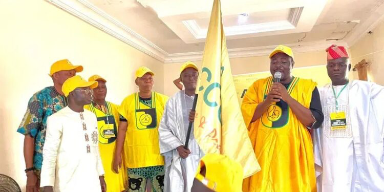
A faction of Accord Party has held its own governorship primary, where Mr. Clement Bamigbola emerged as the faction’s governorship candidate for the 2026 Osun State election.
This is coming just four days after the emergence of Governor Ademola Adeleke as the party’s flag-bearer.
Recall that the party under the leadership of Maxwell Mgbudem, on Wednesday, held a similar exercise which produced Governor Ademola Adeleke as the party’s candidate.
However, a faction of the party rejected his emergence, insisting that Barrister Maxwell Mgbudem is not the legally recognized national chairman of the Accord Party.
In a fresh development on Sunday, about 300 delegates of the Accord Party from across Osun State elected Bamigbola as the factional candidate during a primary held at Regina Suite, Osogbo.
Bamigbola emerged through a voice vote conducted by the delegates, after which the Chairman of the Primary Committee, Hon. Olufemi Ogundare, declared him the party’s candidate for the 2026 Osun State governorship election.
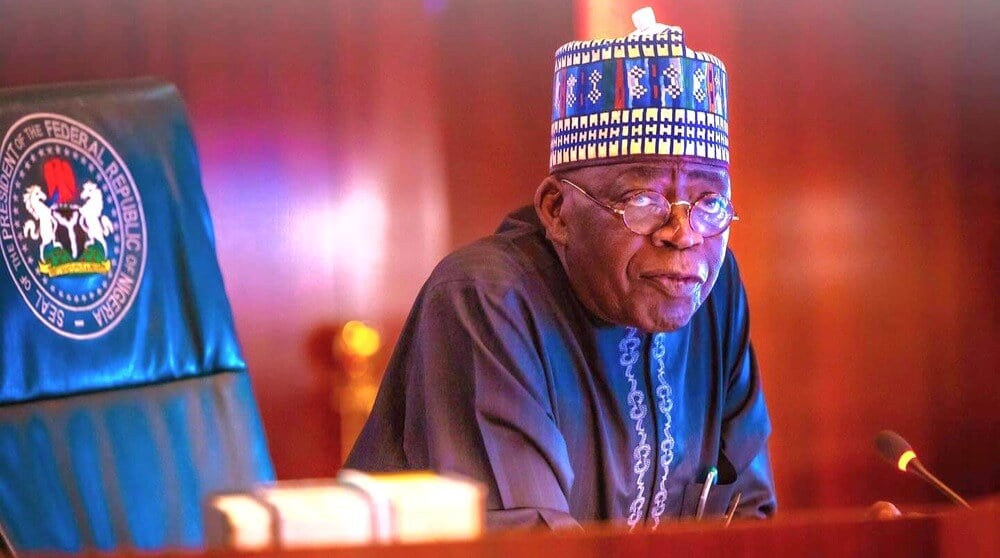
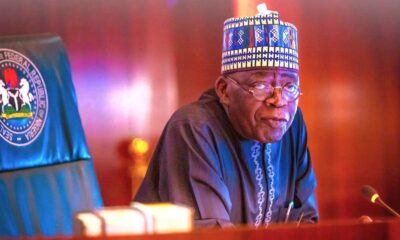
President Bola Tinubu and leaders of ECOWAS countries are currently meeting in Abuja.
The 68th Ordinary Session of the ECOWAS Authority of Heads of State and Government is taking place at the State House Conference Centre, in Abuja.
Leaders of West African countries at the meeting include President Julius Bio (Sierra Leone, ECOWAS Chair), President Patrice Talon (Benin), José Maria Neves (Cabo Verde) and Alassane Ouattara (Côte d’Ivoire).
Others are Adama Barrow (The Gambia), John Mahama (Ghana), Umaro Embaló (Guinea-Bissau), Joseph Boakai (Liberia), Bassirou Faye (Senegal) and Faure Gnassingbé (Togo).
The meeting is coming against the backdrop of five turbulent years for West Africa, which saw coups in Mali (2020, 2021), Burkina Faso (twice in 2022), and Niger (2023).
The latest incidents include an attempted coup in Benin on December 7, 2025, and renewed instability in Guinea-Bissau.
At the time of filing this report, details of the meeting are yet to be disclosed.
Politics
Breaking: Diri Orders Autopsy on Bayelsa Deputy Governor’s Death, Warns Against Politicisation
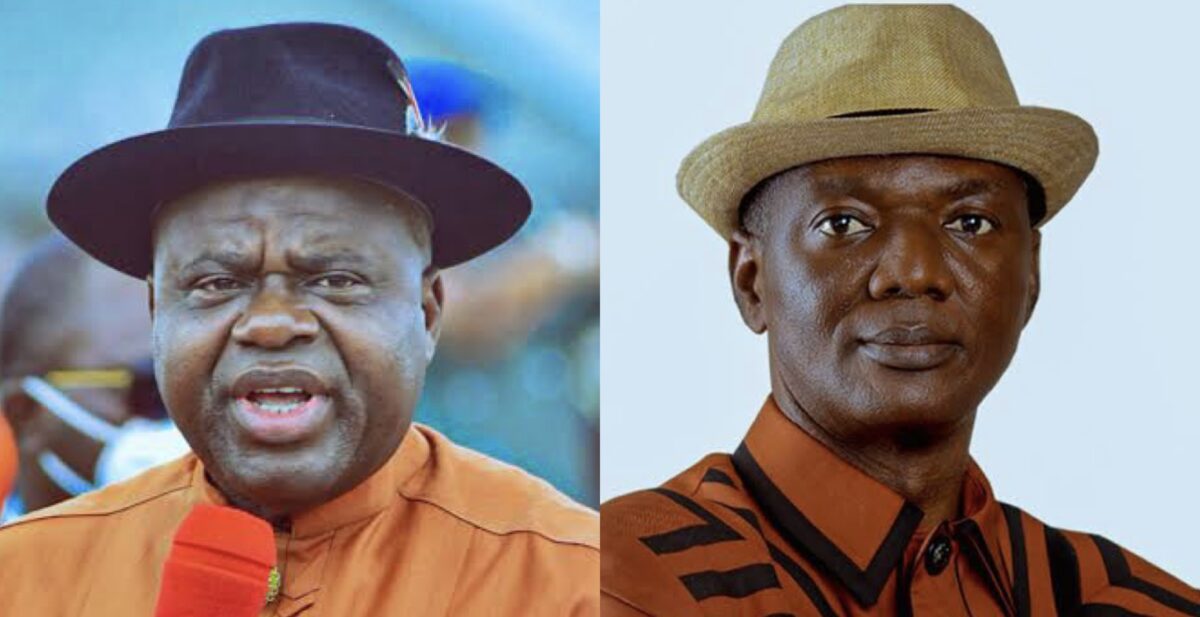
Bayelsa State Governor, Senator Douye Diri, has ordered an autopsy to determine the cause of death of the state’s Deputy Governor, Lawrence Ewhrudjakpo.
Governor Diri gave the directive on Saturday while receiving former President Goodluck Jonathan at the Government House in Yenagoa.
Reacting to the incident, the governor condemned what he described as widespread misinformation and speculation on social media, warning against any attempt to politicise the deputy governor’s death.
“I want to make an appeal. I have seen people politicise his death. In Ijaw land, there is no enmity in death. Let nobody politicise the passing of our dearly beloved deputy governor,” Diri said.
“If anyone truly loves him, this is the time to show it. I have directed that an autopsy be carried out to reveal the cause of his death. There is a lot of nonsense going on on social media.”
The governor further urged the public to focus on mourning and honouring the late deputy governor, noting that the state government had declared three working days of mourning in his honour.
“If anyone is issuing statements to eulogise him, let it end there. Let us mourn him because Bayelsa State is in a mourning mood,” he added.
Governor Diri also called for unity and love among the people, reminding them of the inevitability of death.
Speaking during the condolence visit, former President Goodluck Jonathan described the late Ewhrudjakpo as a committed and dedicated individual who played a key role in the activities of his foundation.
“For me, he was someone my foundation and I will never forget. He represented the governor in all our programs,” Jonathan said, adding that Ewhrudjakpo worked tirelessly in that role, even more than when he served as deputy governor.

The man who tackled a gunman to the floor and saved people from getting sh0t at Bondi Beach in Australia has been identified as Ahmed al Ahmed.

John Cena Retires From Wrestling (Video)

Female Student Missing For 8 Days Found Chilling At Boyfriend’s House

-
Business1 year ago
US court acquits Air Peace boss, slams Mayfield $4000 fine
-

 Trending1 year ago
NYA demands release of ‘abducted’ Imo chairman, preaches good governance
-

 Politics1 year ago
Mexico’s new president causes concern just weeks before the US elections
-

 Politics1 year ago
Putin invites 20 world leaders
-

 Politics1 year ago
Russia bans imports of agro-products from Kazakhstan after refusal to join BRICS
-
Entertainment1 year ago
Bobrisky falls ill in police custody, rushed to hospital
-
Entertainment1 year ago
Bobrisky transferred from Immigration to FCID, spends night behind bars
-
Education1 year ago
GOVERNOR FUBARA APPOINTS COUNCIL MEMBERS FOR KEN SARO-WIWA POLYTECHNIC BORI