
Politics
Can China fill the gap as next US president tackles loss of influence in Middle East?

Analysts say both Donald Trump and Kamala Harris will have to come to terms with Beijing seeking a greater role as Washington loses sway
The presidential race between Donald Trump and Kamala Harris comes at a time of rising geopolitical tensions on multiple fronts. In the third of an in-depth series, Zhao Ziwen looks at how the election will affect Middle East policy and China-US rivalry in the region.
The widening conflict in the Middle East is one of the main issues dominating the current US debate about foreign policy, with the decision to send troops and advanced missile defences to Israel prompting Iran to warn that Washington is putting its own troops’ lives at risk.
It may even have a direct impact on the result of the presidential election with anger at the White House’s pro-Israel stance threatening Vice-President Kamala Harris’s prospects of taking Michigan, a key swing state that has a significant proportion of Arab-American voters.
Do you have questions about the biggest topics and trends from around the world? Get the answers with SCMP Knowledge, our new platform of curated content with explainers, FAQs, analyses and infographics brought to you by our award-winning team.
But many observers believe that no matter what the result, the next president will face the stark truth that US influence in the region will be increasingly limited and it will feel an increasing need to focus more resources on the Asia-Pacific and its growing rivalry with China.
However, Beijing’s growing role in the Middle East could also turn the region into another battleground in the US-China rivalry, potentially reshaping the contours of Washington’s foreign policy, according to experts.
John Calabrese, a senior fellow at the Middle East Institute in Washington, noted that the policy differences between a Donald Trump administration and a Harris administration might be smaller than many expect. He said that both would be constrained by the same reality: the narrowing scope of US influence in the region.
“The range of policy options available to the US in the Middle East has become narrower, and there is a clearer understanding of the limits of American influence,” Calabrese said.
“Addressing the war in Gaza, redefining relations with the Gulf Arab states, and managing Iran” will be the three main issues for the US, he added.
In the Republican Party’s 28-page platform, Trump’s vision of governance mentions the Middle East only twice, and with scant details. It calls for Washington to “stand with Israel” and “seek peace in the Middle East” but does not give any specifics.
Harris, for her part, has not released a comprehensive foreign policy outline. However, she has consistently emphasised support for Israel in her campaign while also voicing concerns about the plight of the Palestinians.
Despite the lack of clarity in their official platforms, the policies of both candidates align in key areas. Trump’s four years in office were marked by robust support for Israel, along with his administration’s “maximum pressure” sanctions on Iran.
Harris is expected to continue US President Joe Biden’s approach to the Middle East: backing Israel while maintaining a focus on humanitarian aid for Palestinians, and working with regional partners to counter Iranian influence.
“A Trump administration will likely be based on a set-up that is more committed to Israeli positions, as evidenced by his 2020 peace plan and the recognition of Jerusalem as Israel’s capital,” said Clemens Chay, a research fellow at the National University of Singapore’s Middle East Institute.
“Vice-President Kamala Harris has largely stuck to the [Biden] administration line, which has demonstrated a current lack of political will in Washington to restrain Israel.”
“Compounded by the fact that in an election year, the Biden administration’s room to operate is limited if he is to avoid exacerbating the domestic political impact of war,” Chay added.
“How a Harris administration would perhaps go further, from what is deemed at the moment a low baseline, is to achieve a ceasefire.”
Although both sides are likely to continue to support Israel, there is a growing consensus that Washington’s direct involvement in Middle Eastern conflicts – including the Israel-Gaza war – is becoming unsustainable.
Ahmed Aboudouh, an associate fellow at British think tank Chatham House and head of the China Studies unit at the Emirates Policy Centre in Abu Dhabi, suggested that the US would increasingly prioritise its competition with China in the Asia-Pacific region, reducing its direct engagement in the Middle East.
“In the long run, I still see the US recalibrating its posture in the region in a way that allows it to balance its strategic priorities towards keeping China in check in Asia and simultaneously maintaining the bare minimum security stability in the Middle East,” he said.
“This means reducing the cost of its involvement by shifting from a micromanagement approach to offshore balancing.”
Both the Trump and Biden administrations have played a role in this shift. Trump pulled the US out of the Iran nuclear deal, while Biden withdrew troops from Afghanistan.
This “offshore balancing” strategy has also been evident in Washington’s efforts to normalise relations between Israel and Arab states, particularly in the Persian Gulf region, to counter Iran’s influence.
The Abraham Accords, a landmark diplomatic achievement initiated during Trump’s presidency, were among the few foreign policy successes inherited by the Biden administration. However, the potential for a historic Saudi-Israeli normalisation deal has since stalled because of the Gaza conflict.
Aboudouh noted that the Israel-Gaza war and the rising hostilities between Israel and its neighbours had essentially closed the door on any significant US withdrawal from the region in the near future.
“As the war in Gaza and the regional escalation have taught since [Hamas’ October 7 attack on Israel], the door for the US to exit the region is completely shut,” he said
“Washington is being taken captive by the region,” he said. “As much as the region has always been shaped by the US preferences. This means that withdrawing from the Middle East in a strategic sense is not on the table.”
Washington has stepped up its deployment in the region because of the Gaza war and its spillover into Iran and Lebanon. Biden was also directly involved in ceasefire negotiations for nearly a year, showing a political commitment that has not been seen in the region for years.
“It is unlikely the case where Washington will reduce its involvement in the Middle East in the near future, given the fact that the Pentagon has been extremely rapid in deploying its forces – naval, air, or otherwise – since the start of the Gaza war,” Chay said.
While Washington grapples with these challenges, China is stepping up its influence in the Middle East, positioning itself as a counterpoint to US dominance.
In addition to brokering a deal to resume diplomatic relations between Saudi Arabia and Iran last year, China helped broker a unity deal among 14 Palestinian factions, including Hamas, in July.
Beijing’s diplomatic manoeuvring in the region has been aimed at positioning itself as a vital voice – particularly among Global South countries – in the Israel-Hamas conflict.
“China has shown it is ready to challenge the US position in the region. The Gaza conflict has been the biggest opportunity since [Chinese President] Xi Jinping came to power to do so,” Aboudouh said.
“Beijing could skilfully undermine Washington’s credibility and image across the Global South by siding with the Palestinians and consistently demanding a ceasefire,” he added.
Calabrese said that a major battleground in the rivalry between Beijing and Washington could be the Gulf region, given China’s cooperation with US allies there.
This is especially true of Saudi Arabia and the United Arab Emirates, whose cooperation with China in sensitive hi-tech and military fields is viewed by Washington as an unprecedented risk.
“Washington will closely monitor China’s engagement in the Gulf, particularly efforts to prevent Beijing from establishing a military presence or making advances in artificial intelligence and other critical technologies,” Calabrese said.
“Success in this area will depend on the US’ ability to strengthen its security and tech commitments to offset Gulf states’ growing ties with China.”
China’s growing influence in Iran – Washington’s biggest regional enemy – is also being closely watched by the West.
Since the Israel-Gaza war started, Beijing – the biggest buyer of Iranian oil – has maintained close communication with Tehran on regional issues ranging from the Red Sea crisis to Israel’s strikes against Hezbollah in Lebanon.
According to Calabrese, Washington insiders – and especially Trump’s supporters – still believe that “Iran is central to all the challenges facing American interests in the Middle East”.
“These voices will likely push for tighter sanctions enforcement and a stronger retaliatory stance against actions by Iran and its proxies,” he added.
Some observers noted there was still a gap between Beijing’s aspirations and its capabilities.
Chay said that while China’s competition with Washington in the Middle East was largely economic, its willingness to become an active regional mediator remained limited.
“Beijing’s activist approach has been largely constrained to small diplomatic wins,” he said.
“But when it comes to taking on significant security or mediation roles, there is a lack of political will to intervene at the scale the US has historically done.”
Aboudouh agreed, pointing out that Beijing’s moves were primarily aimed at undermining Washington’s standing in the region, without shouldering the same security responsibility or diplomatic costs.
“China’s strategy is to position itself as an alternative to the US, but without engaging in the heavy lifting required to de-escalate regional tensions,” he said.
More Articles from SCMP
Renewal of US-China science pact said to be close, but may hold until after Election Day
Hong Kong to set up HK$10 billion I&T fund in bid to bring in HK$100 billion in investments
Hong Kong extends multi-entry mainland China visa for non-permanent residents to 5 years





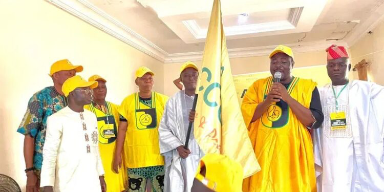
A faction of Accord Party has held its own governorship primary, where Mr. Clement Bamigbola emerged as the faction’s governorship candidate for the 2026 Osun State election.
This is coming just four days after the emergence of Governor Ademola Adeleke as the party’s flag-bearer.
Recall that the party under the leadership of Maxwell Mgbudem, on Wednesday, held a similar exercise which produced Governor Ademola Adeleke as the party’s candidate.
However, a faction of the party rejected his emergence, insisting that Barrister Maxwell Mgbudem is not the legally recognized national chairman of the Accord Party.
In a fresh development on Sunday, about 300 delegates of the Accord Party from across Osun State elected Bamigbola as the factional candidate during a primary held at Regina Suite, Osogbo.
Bamigbola emerged through a voice vote conducted by the delegates, after which the Chairman of the Primary Committee, Hon. Olufemi Ogundare, declared him the party’s candidate for the 2026 Osun State governorship election.
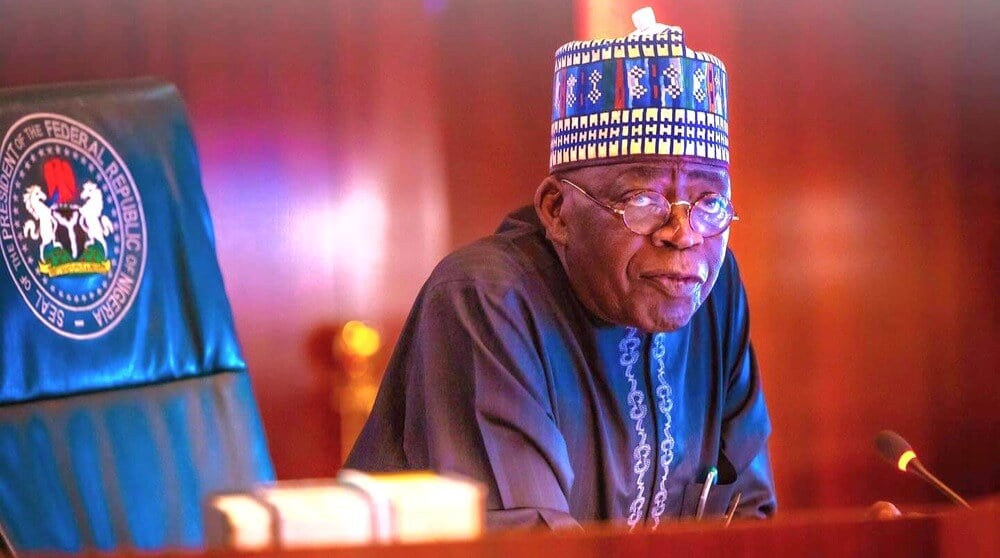
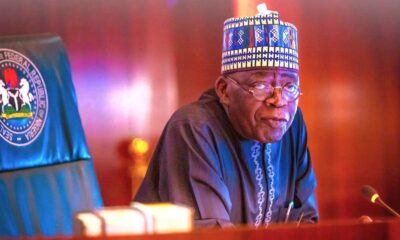
President Bola Tinubu and leaders of ECOWAS countries are currently meeting in Abuja.
The 68th Ordinary Session of the ECOWAS Authority of Heads of State and Government is taking place at the State House Conference Centre, in Abuja.
Leaders of West African countries at the meeting include President Julius Bio (Sierra Leone, ECOWAS Chair), President Patrice Talon (Benin), José Maria Neves (Cabo Verde) and Alassane Ouattara (Côte d’Ivoire).
Others are Adama Barrow (The Gambia), John Mahama (Ghana), Umaro Embaló (Guinea-Bissau), Joseph Boakai (Liberia), Bassirou Faye (Senegal) and Faure Gnassingbé (Togo).
The meeting is coming against the backdrop of five turbulent years for West Africa, which saw coups in Mali (2020, 2021), Burkina Faso (twice in 2022), and Niger (2023).
The latest incidents include an attempted coup in Benin on December 7, 2025, and renewed instability in Guinea-Bissau.
At the time of filing this report, details of the meeting are yet to be disclosed.
Politics
Breaking: Diri Orders Autopsy on Bayelsa Deputy Governor’s Death, Warns Against Politicisation
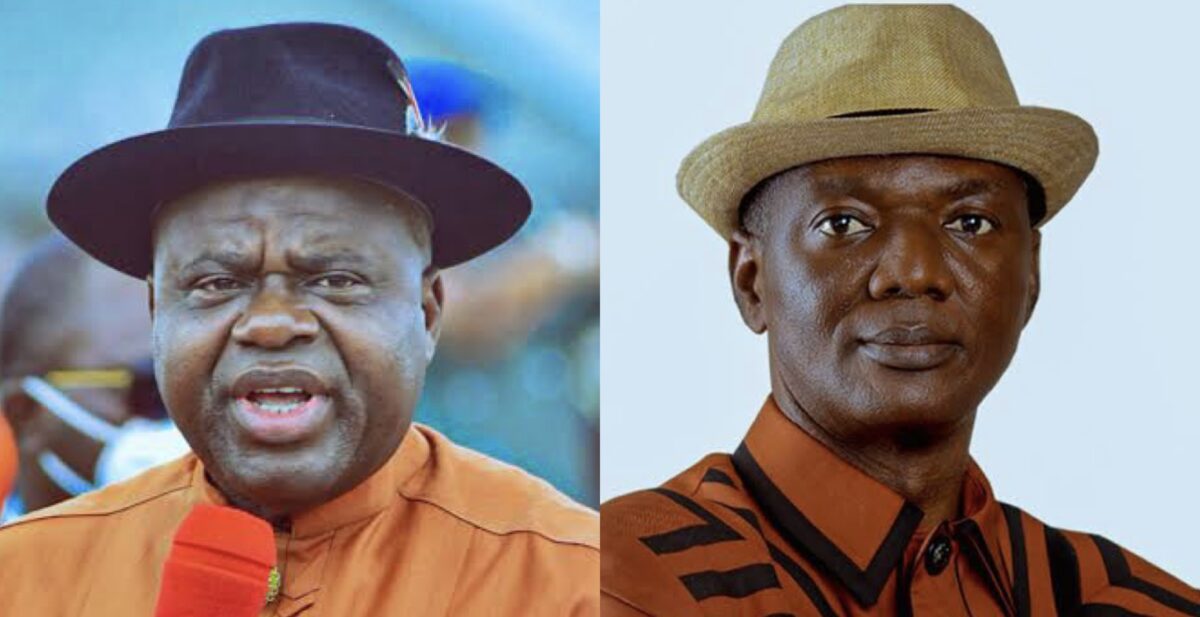
Bayelsa State Governor, Senator Douye Diri, has ordered an autopsy to determine the cause of death of the state’s Deputy Governor, Lawrence Ewhrudjakpo.
Governor Diri gave the directive on Saturday while receiving former President Goodluck Jonathan at the Government House in Yenagoa.
Reacting to the incident, the governor condemned what he described as widespread misinformation and speculation on social media, warning against any attempt to politicise the deputy governor’s death.
“I want to make an appeal. I have seen people politicise his death. In Ijaw land, there is no enmity in death. Let nobody politicise the passing of our dearly beloved deputy governor,” Diri said.
“If anyone truly loves him, this is the time to show it. I have directed that an autopsy be carried out to reveal the cause of his death. There is a lot of nonsense going on on social media.”
The governor further urged the public to focus on mourning and honouring the late deputy governor, noting that the state government had declared three working days of mourning in his honour.
“If anyone is issuing statements to eulogise him, let it end there. Let us mourn him because Bayelsa State is in a mourning mood,” he added.
Governor Diri also called for unity and love among the people, reminding them of the inevitability of death.
Speaking during the condolence visit, former President Goodluck Jonathan described the late Ewhrudjakpo as a committed and dedicated individual who played a key role in the activities of his foundation.
“For me, he was someone my foundation and I will never forget. He represented the governor in all our programs,” Jonathan said, adding that Ewhrudjakpo worked tirelessly in that role, even more than when he served as deputy governor.

The man who tackled a gunman to the floor and saved people from getting sh0t at Bondi Beach in Australia has been identified as Ahmed al Ahmed.

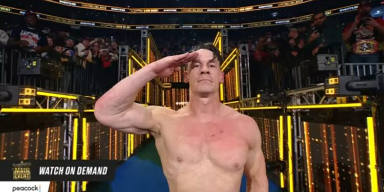
John Cena Retires From Wrestling (Video)

Female Student Missing For 8 Days Found Chilling At Boyfriend’s House

-
Business1 year ago
US court acquits Air Peace boss, slams Mayfield $4000 fine
-

 Trending1 year ago
NYA demands release of ‘abducted’ Imo chairman, preaches good governance
-

 Politics1 year ago
Mexico’s new president causes concern just weeks before the US elections
-

 Politics1 year ago
Putin invites 20 world leaders
-

 Politics1 year ago
Russia bans imports of agro-products from Kazakhstan after refusal to join BRICS
-
Entertainment1 year ago
Bobrisky falls ill in police custody, rushed to hospital
-
Entertainment1 year ago
Bobrisky transferred from Immigration to FCID, spends night behind bars
-
Education1 year ago
GOVERNOR FUBARA APPOINTS COUNCIL MEMBERS FOR KEN SARO-WIWA POLYTECHNIC BORI