
Columns
IHEDIOHA: 5 Lessons To Learn To Avoid His Political Pitfalls — A Case In Study Of Political Lilly-liveredness By: Ambrose Nwaogwugwu, April 24, 2024.

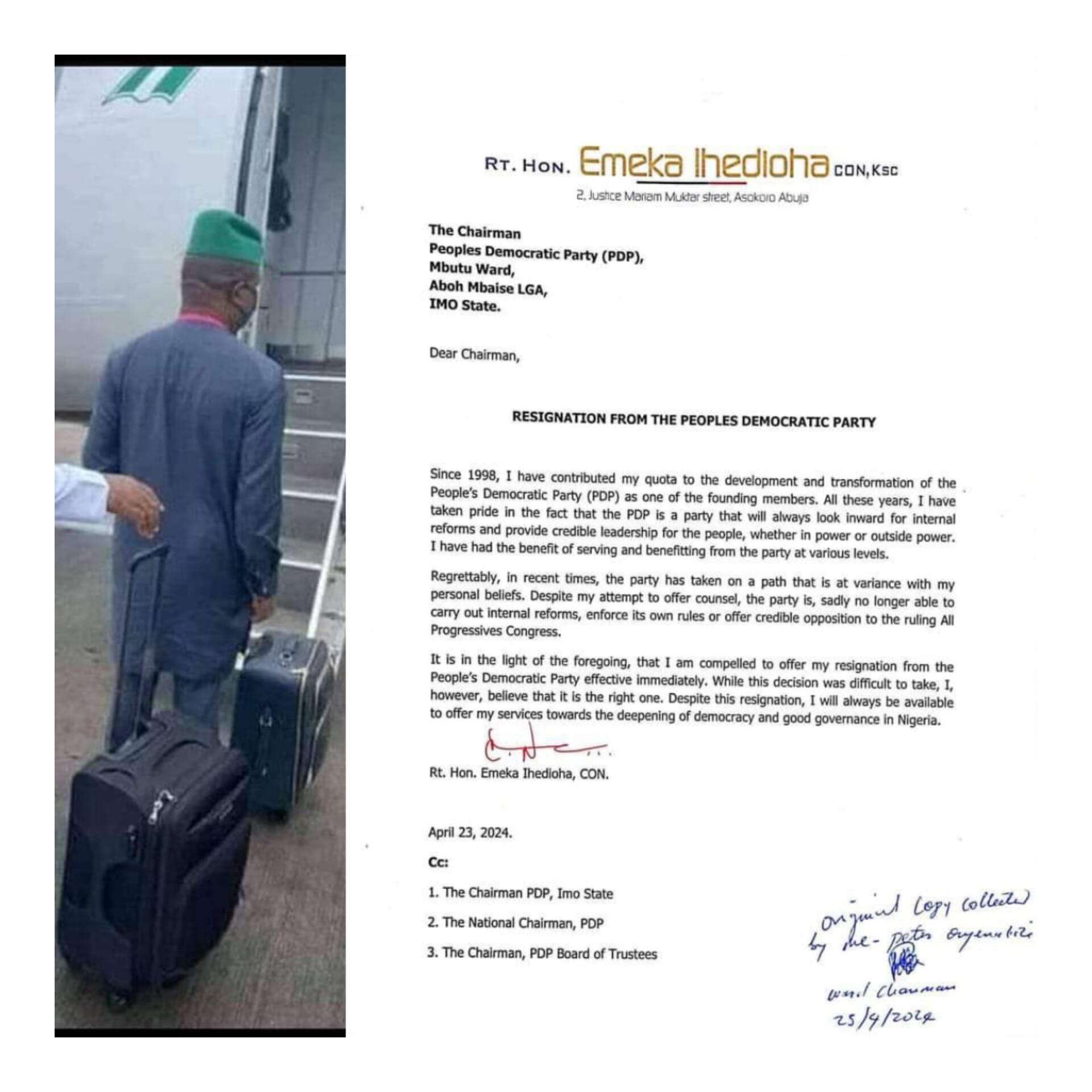
My elder brother, Dee Emeka Ihedioha will make a good project topic for political science students on a case study of what I now call a political Lilly-liveredness.
The former illegal governor of Imo State who was sacked by the Supreme Court for stealing the People’s votes exemplifies the quintessence of political lilly-liveredness, of always chickening out and leaving supporters confused and attendent disillusionment.
Even his illegal tenure was marked by vindictiveness, indecision, vacillation, and a lack of political will, which ultimately led to his downfall.
Any political leader who wants to live beyond his time or tenure must pick one or two lessons of the political misfortunes of the former Deputy Speaker of the house of Representatives.
The core people who worked for him for the election were either dumped out of his system and many left unappreciated that even when they could have helped in the political river that was raging to swallow him was knocking, many who were to help looked the other way.
When I dumped the PDP four years ago, many people were saying I left the party that made me but same people who cursed me then do no longer have anything to say because it is Ihedioha.
But Ihedioha, everything he is today was made possible by the PDP!
The PDP breastfed him from political infancy to whatever he is today but just because he lost in the control of the party in the state, he has dumped the party.
It is that spirits of vindictiveness, ungratefulness and lact of appreciation will be his biggest undoing as a politician. amidst high expectations from the people who toiled for him, now what did they get? He never consider the plights of the man who puts his life at risk for him. His illegal administration was plagued by indecision, and a reluctance to take bold steps to address the state’s pressing issues because he became a law unto himself to even listen to those around him who toiled for him.
Characteristics of Political Lilly-Liveredness Any Politician Who Intend To Go Far Must Avoid:
1. Indecisiveness: Ihedioha’s body politics is marked by a lack of clear direction and purpose. He failed to make tough decisions, often vacillating on critical issues, and leaving his aides and supporters in confusion.
2. Fear of Confrontation: Ihedioha avoided confrontations with political opponents and interest groups, even when it was necessary to take a stand. The best he usually do is to chicken out. This perceived weakness emboldened his opponents and undermined his authority.
3. Lack of Political Will: Ihedioha’s politics failed to implement meaningful reforms or policies, due to a lack of political will. He was more concerned with maintaining a fragile political balance than taking bold steps to address the state’s challenges.
4. Overreliance on Elite Aides: Ihedioha relied heavily on his aides and advisors of his elite friends, often to the point of abdication. This led to a lack of personal responsibility and accountability, as he frequently shifted blame to others for his administration’s failures.
5. Inability to Connect with the Masses: Ihedioha’s aloofness and detachment from the people of Imo State contributed to his unpopularity. He failed to build a strong connection with his constituents, leading to widespread disillusionment and discontent.
Conclusion:
Emeka Ihedioha’s political lilly-liveredness ultimately led to his downfall. His indecision, fear of confrontation, lack of political will, overreliance on elite aides, and inability to connect with the masses made him an ineffective leader. As a case study, Ihedioha’s example serves as a warning to politicians and leaders of the importance of courage, decisiveness, leadership in governance and strong reward system.






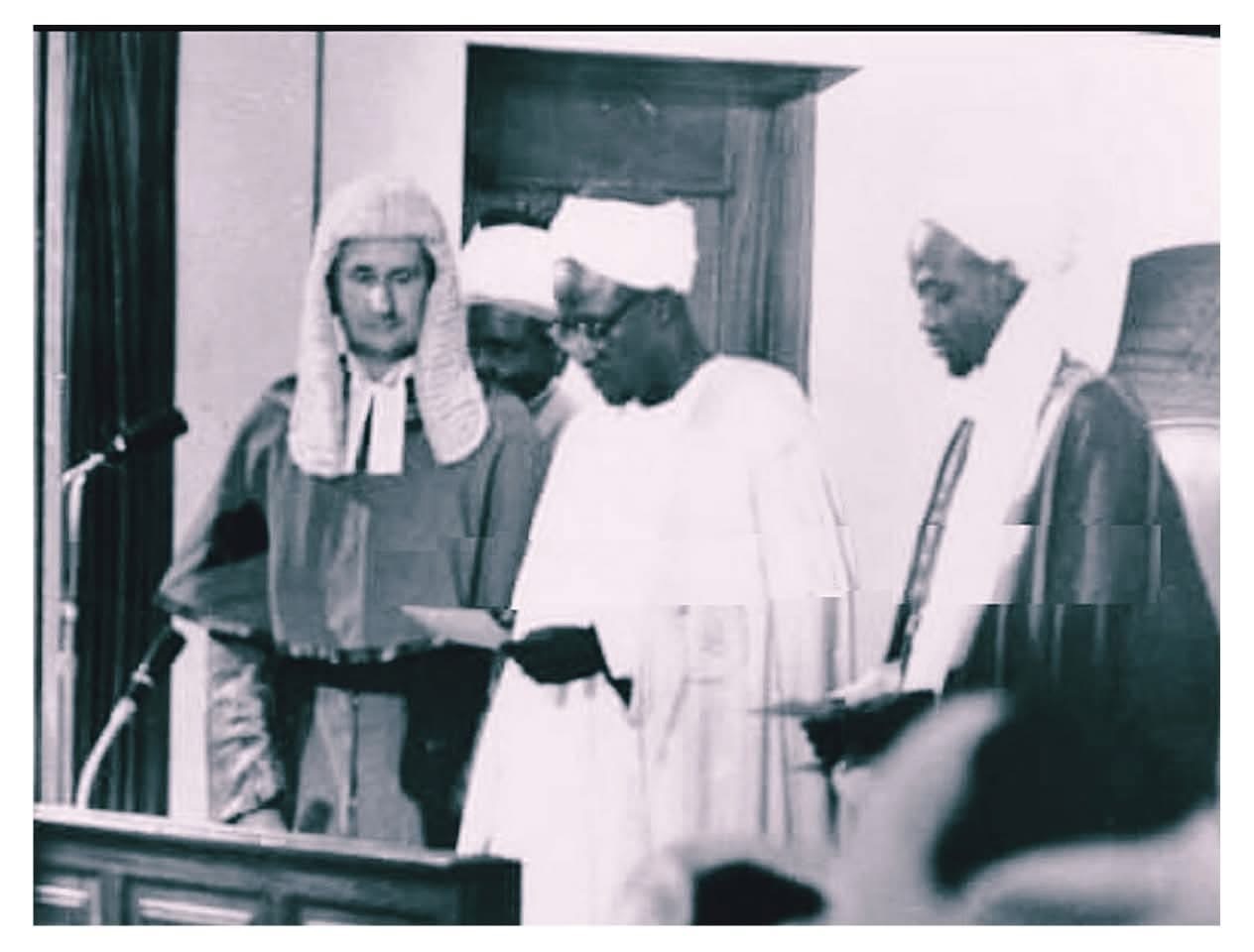
A defining moment in the transition from colonial rule to indigenous leadership in Northern Nigeria.
The image depicts Sir Kashim Ibrahim during his swearing-in ceremony as Governor of the Northern Region of Nigeria, an event that marked a significant milestone in Nigeria’s political evolution. While the photograph is often dated to the late 1950s, historical records confirm that Sir Kashim Ibrahim assumed office in October 1960, shortly after Nigeria attained independence from British colonial rule.
Sir Kashim Ibrahim was appointed Governor of the Northern Region from 1960 to 1966, becoming the first indigenous Nigerian to hold the office. His appointment symbolised the transfer of political authority from colonial administrators to Nigerians and reflected the emerging autonomy of the regions within the newly independent federation.
Born in 1909 in Maiduguri, present-day Borno State, Kashim Ibrahim was a distinguished educator, administrator, and politician. Before entering politics, he had a notable career in education, serving as Provincial Education Officer and later as Minister of Education for the Northern Region, where he played a key role in expanding access to Western education in Northern Nigeria.
The office of Governor during this period was largely ceremonial but politically significant. It represented the Crown at the regional level while reinforcing constitutional governance under Nigeria’s federal structure. As governor, Sir Kashim Ibrahim worked closely with the Northern Region’s political leadership, particularly the government of Sir Ahmadu Bello, the Sardauna of Sokoto, who served as Premier.
His tenure coincided with a formative period in Nigeria’s post-independence history, characterised by efforts at nation-building, regional development, and managing the complexities of ethnic and political diversity. Sir Kashim Ibrahim remained in office until January 1966, when Nigeria’s First Republic was overthrown following the military coup that ended civilian governance.
Beyond politics, Sir Kashim Ibrahim is remembered for his enduring contributions to education and public service in Northern Nigeria. His legacy continues through institutions named in his honour, most notably Sir Kashim Ibrahim College of Education in Maiduguri, which stands as a testament to his lifelong commitment to learning and leadership.
The photograph remains a powerful historical record, capturing a moment when Nigeria formally embraced indigenous leadership at the highest levels of regional governance.
Sources
Falola, Toyin & Matthew Heaton. A History of Nigeria. Cambridge University Press.
Coleman, James S. Nigeria: Background to Nationalism. University of California Press.
Nigerian National Archives, Kaduna – Records of Northern Regional Government (1960–1966).
Columns
Davido’s baby mama, Sophia Momodu, claps back at Snapchat user who accused her of flaunting a replica bag

Sophia Momodu has responded sharply after a Snapchat user tried to drag her over an alleged replica designer bag.
The user accused Sophia of “flaunting a replica” and warned her that this is an era where fake items are easily detected, advising her to stop “setting herself up for drags.”
Sophia was clearly not having it.
In a blunt response, she fired back, telling the user to “hold your chest and say God release me from witchcraft,” adding a sarcastic “you wish?” to shut down the allegation.
https://www.instagram.com/reel/DSMmzu8jMMN/?igsh=dDR3d2Q3ZXgxYWJu
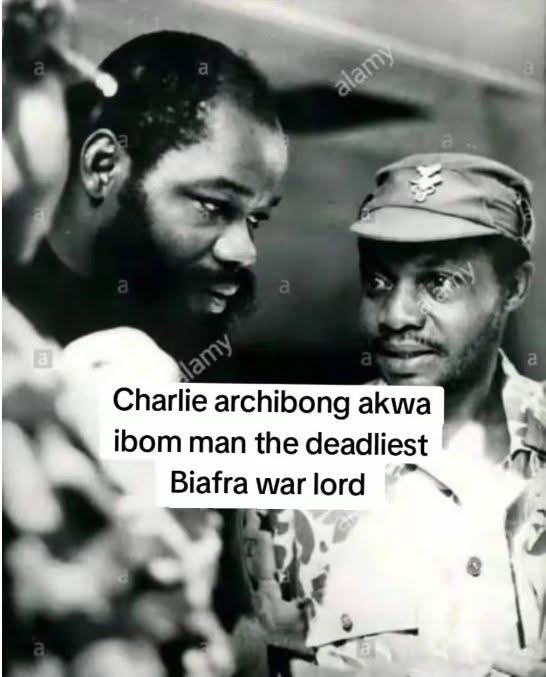
“Brigadier Archong” (also referred to as Colonel Charlie Archibong) was a prominent Biafran commander during the Nigerian Civil War (1967-1970), known for his bravery and key role in the Biafran invasion of the Midwest region.
Key Activities During the War
Midwest Invasion Commander: Colonel Archibong was the lead commander of the Biafran forces that invaded Nigeria’s Midwest region on August 9, 1967. His orders were to advance rapidly through the West and capture Dodan Barracks in Lagos within 48 hours. The advance was halted by a controversial retreat order from Brigadier Victor Banjo at Ore, which ultimately led to the failure of the offensive.
Ojukwu blamed himself for not letting achuzie or Charlie archibong lead the troops to capture Nigeria capital city Lagos after the Biafran capital city Enugu was attacked by the Nigerian, even after Charlie archibong territory fell to the Nigerian military Charlie archibong and his people mostly lead to lay a deadly ambush against the Nigerian army in Calabar and akwa ibom and pH and this action Also lead to the killing of innocent civilians by Nigeria army not only Asaba experienced massacred south south of today veteran can testify
Key Biafran Fighter: Archibong was considered one of General Odumegwu Ojukwu’s most trusted and gallant fighters. He was known by the nickname “Charlie Bazooka” and was respected for his zeal and determination.
Further Action: After the Midwest campaign, he saw more action around Ikot Ekpene.
Disappearance/Death: Archibong was reported missing after an officer-led reconnaissance operation, and his command headquarters waited in vain for his return. Sources suggest he may have been killed through internal sabotage within Biafra.
Archibong is remembered as a significant figure in the Biafran military, often appearing in historical photos alongside Ojukwu as a “war hero.

The man who tackled a gunman to the floor and saved people from getting sh0t at Bondi Beach in Australia has been identified as Ahmed al Ahmed.

John Cena Retires From Wrestling (Video)

Female Student Missing For 8 Days Found Chilling At Boyfriend’s House

-
Business1 year ago
US court acquits Air Peace boss, slams Mayfield $4000 fine
-

 Trending1 year ago
NYA demands release of ‘abducted’ Imo chairman, preaches good governance
-

 Politics1 year ago
Mexico’s new president causes concern just weeks before the US elections
-

 Politics1 year ago
Putin invites 20 world leaders
-

 Politics1 year ago
Russia bans imports of agro-products from Kazakhstan after refusal to join BRICS
-
Entertainment1 year ago
Bobrisky falls ill in police custody, rushed to hospital
-
Entertainment1 year ago
Bobrisky transferred from Immigration to FCID, spends night behind bars
-
Education1 year ago
GOVERNOR FUBARA APPOINTS COUNCIL MEMBERS FOR KEN SARO-WIWA POLYTECHNIC BORI