
Politics
Iwuanyanwu alleges death threat, plot to burn residence

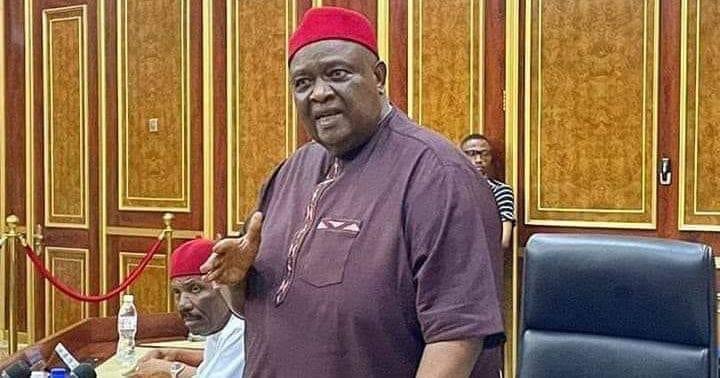
The President General of Ohanaeze Ndigbo, Chief Emmanuel Iwuanyanwu, has raised the alarm over alleged threat to his life.
He stated that some Igbos, whom he described as anti-Igbo, have orchestrated plans to either kill him or burn his house over his leadership of Ndigbo.
Iwuanyanwu, who addressed a briefing at the secretariat of Ohanaeze Ndigbo in Enugu on Wednesday evening, alleged the same group of persons threatening his life caused the death of his predecessor, Prof George Obiozor, attempted to kill former president general, Nnia Nwodo.
“This has become very dangerous. These people have carried this too far. Sometimes ago, I got some information that some people were coming to burn my house; that people said they were hired to come and burn my house.
“Some people also said they were hired to come and kill me; all sorts of stories like that. And I started asking myself: what is it that I have done that would warrant that my house should be burned; that I should be killed?
“I told those people that they shouldn’t worry. Fortunately, one of them said that the person they hired said that I trained his brother in the university. You know I had a scholarship scheme that trained over 5000 young people in the university. So he said his brother was trained by me and so he cannot burn my house.
“I feel sad that I should be confronted by some of these types of spectre of threats just because I want to serve my people.
“I have looked at my past career and seen how God blessed me. At 82 when I’ve retired, for me now to come back to serve my people and to find myself completely engulfed in this type of mess with Isiguzoro.
“I’m somebody who is dogged and can’t easily be pushed around. God has given me the heart and determination to serve my people,” he said.
He stated the group traced Obiozor to his village to kill him and when they failed to get him, they set his house on fire.
“Obiozor died as as result of that attack on his country home because as a diplomat, all his books, awards and recognition were totally burnt and these were things he cherished so much.
“In the case of Nnia Nwodo, as President General of Ohanaeze Ndigbo, they trailed him to his village in Ukehe, Enugu state and threw bomb into his house. Fortunately, he was not there,” he added.
Iwuanyanwu stated that former president general of Ohanaeze Ndigbo, late Pro Joe Irukwu also suffered similar fate when he was accused of receiving millions of naira to work against the interest of Igboland, adding that “Irukwu painfully carried the allegation until his death”.
He also bemoaned the Igbo penchant for pulling down their leaders.
“Evidently, we the Igbo destroy the Igbo in diverse ways; and turn around to claim that others are after us.
When it was Chief Nnia Nwodo as the President General of Ohanaeze, the same group bombed the house of Nwodo at Ukehe; and pronounced him a saboteur that should be stoned to death wherever he was found. The matter took the author to Chief Mbazulike Amaechi house at Ukpor and Chief Amaechi was shocked to discover that they fabricated falsehood against Nwodo. And they apologized,’ he stressed.
Iwuanyanwu, who stated that he was prepared to serve Ndigbo and would not succumb to threats of anti-Igbo, bemoaned the Igbo penchant for pulling down their leaders.
He debunked some viral audio recordings insinuating that the leadership of Ohanaeze Ndigbo was planning to apologise over killings during the January 15, 1966 coup.




Politics
Ndigbo are no longer spectators in the Nigerian project- Minister Dave Umahi dismisses calls for Biafra under Tinubu’s administration
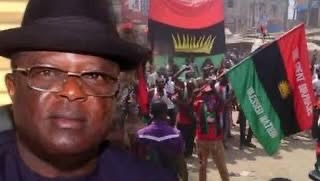
The Minister of Works, David Umahi, says the all-inclusive style of governance being practiced by President Bola Tinubu has made the agitation for Biafra an unnecessary clamour.
While speaking at the inspection of the Enugu-Anambra road last Saturday, December 13, Umahi said the Tinubu administration had given Ndigbo what they had sought for decades, not through secession, but through what he described as unprecedented inclusion in national governance and development.
He explained that the agitation for Biafra was historically driven by neglect, exclusion and underrepresentation at the federal level, but insisted that the situation had changed under the current administration.
“When a people are fully integrated, respected and empowered within the structure of the nation, the dream they once chased through agitation has already been achieved through cooperation.
The push for Biafran secession over the years was borne out of neglect, exclusion and underrepresentation but today the narrative has changed dramatically under President Bola Tinubu.
The President has deliberately opened the doors of national development to the South-East. Appointments, policy inputs and infrastructure priorities now reflect true federal balance.
Every sector now bears visible Igbo footprints. The emergence of Igbo sons and daughters in strategic positions is a testament to this inclusion.
Biafra was never about breaking Nigeria; it was about being counted in Nigeria. Through inclusion, equity and concrete development, Ndigbo are no longer spectators in the Nigerian project; they are co-authors of its future. When justice finds a people, agitation loses its voice.”he said
The African Democratic Congress (ADC) has announced a 90-day nationwide membership mobilisation, revalidation, and registration exercise as part of preparations for its internal party activities ahead of 2026.
The party also approved provisional dates for its congresses and the election of delegates at the polling unit, ward, and local government levels across the country.
In circulars issued by its national secretary, Rauf Aregbesola, the ADC said the congresses are expected to hold between January 20 and January 27, 2026.
The process, the party said, will lead to the emergence of delegates who will participate in its non-elective national convention scheduled for February 2026 in Abuja.
A statement by Bolaji Abdullahi, national publicity secretary of the party, said the decisions were reached at a meeting of the national working committee (NWC) held on November 27, 2025.
Abdullahi said the timetable and activities were approved in line with the resolutions of the NWC and in accordance with relevant provisions of the party’s constitution.
The ADC said further details on the membership exercise, congresses, and convention will be communicated to party members and stakeholders in due course.
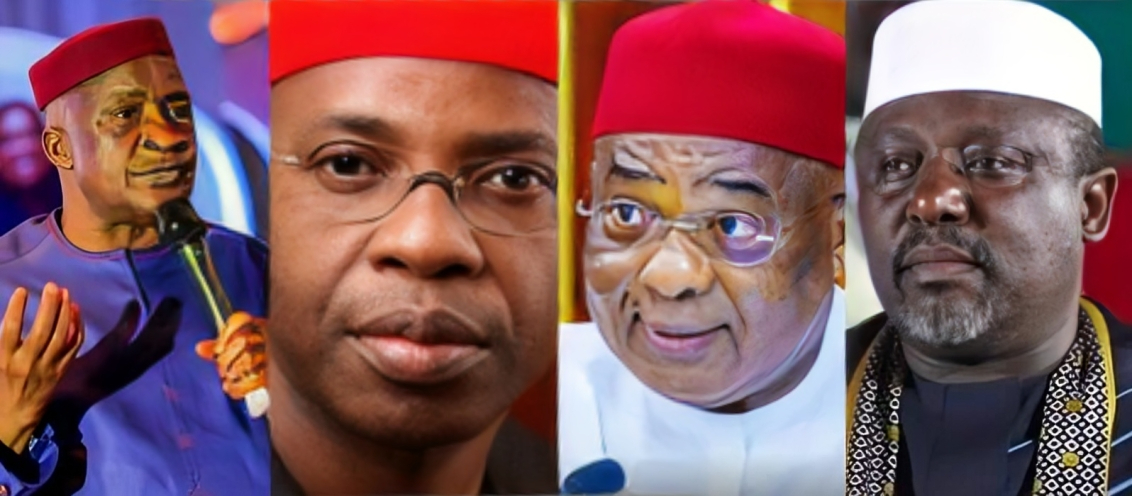
Imo State’s inability to sustain political succession from one elected governor to another is not accidental. It is the consequence of recurring structural failures rooted in elite conspiracy, federal power realignments, internal party implosions, zoning sensitivities, and the perennial arrogance of incumbency. From Achike Udenwa to Ikedi Ohakim and Rochas Okorocha, each administration fell victim to a combination of these forces, leaving behind a state where power is never inherited, only contested.
Achike Udenwa’s experience remains the most instructive example of how federal might and elite scheming can dismantle a governor’s succession plan. Governing between 1999 and 2007 under the PDP, Udenwa assumed that the party’s national dominance would guarantee internal cohesion in Imo. Instead, his tenure coincided with one of the most vicious intra-party wars the state has ever witnessed.
The Imo PDP split into two irreconcilable blocs. On one side was Udenwa’s grassroots-driven Onongono Group, powered by loyalists such as Alex Obi and anchored on local structures. On the other was a formidable Abuja faction populated by heavyweight figures including Kema Chikwe, Ifeanyi Araraume, Hope Uzodimma, Tony Ezenna, and others with direct access to federal influence. This was not a clash of personalities alone; it was a struggle over who controlled the levers of power beyond Owerri.
The conflict worsened when Udenwa openly aligned with then Vice President Atiku Abubakar during his bitter feud with President Olusegun Obasanjo. That alignment proved politically fatal. Obasanjo, determined to weaken Atiku’s network nationwide, withdrew federal support from governors perceived as loyal to the vice president. In Imo, the effect was immediate and devastating.
Federal agencies, party organs, and influence channels tilted decisively toward the Kema Chikwe-led Abuja faction. Udenwa lost effective control of the PDP structure, security leverage, and strategic influence. His foot soldiers in the Onongono Group could mobilise locally, but they could not withstand a coordinated assault backed by the centre.
His preferred successor, Charles Ugwu, never gained political altitude. By the time succession became imminent, Udenwa was already a governor without power. Even his later recalculations failed to reverse the tide. The party had slipped beyond his grasp.
The eventual outcome was politically ironic. Ikedi Ohakim emerged governor, backed by forces aligned with the federal establishment, notably Maurice Iwu—his kinsman and then Chairman of the Independent National Electoral Commission (INEC). Another Udenwa ally, Martin Agbaso, briefly tasted victory, only for his election to be cancelled. The lesson was brutal and unmistakable: without federal alignment, succession in Imo is almost impossible.
Notably, Udenwa’s record in office did not rescue him. Infrastructure development, relative stability, and administrative competence counted for little in the face of elite conspiracy operating simultaneously at state and federal levels. In Imo politics, performance is secondary to power alignment.
Ikedi Ohakim’s tenure presents a different dimension of failure. Unlike Udenwa, he never reached the point of succession planning. His administration was consumed by political survival. From 2007 to 2011, Ohakim governed amid persistent hostility from elites and a rapidly deteriorating public image.
Ohakim has consistently maintained that his downfall was orchestrated. Central to his claim is the allegation that he was blackmailed with a scandal involving the alleged assault of a Catholic priest, Reverend Father Eustace Eke. In a deeply religious state like Imo, the allegation was politically lethal.
Whether the claims were factual or exaggerated mattered less than their impact. The narrative overwhelmed governance, drowned out policy achievements, and turned public opinion sharply against him. Political elites who had midwifed his emergence quickly distanced themselves, sensing vulnerability.
By the 2011 election, Ohakim stood isolated. Party loyalty evaporated, elite cover disappeared, and voter sympathy collapsed. His re-election bid failed decisively. With that loss, any discussion of succession became irrelevant. His experience reinforces a core principle: a governor rejected by the electorate cannot dictate continuity.
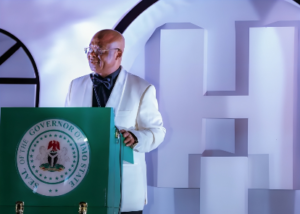
*Uzodimma*
Rochas Okorocha’s rise in 2011 appeared to signal a break from Imo’s succession curse. Charismatic, populist, and financially powerful, he commanded party structures and grassroots loyalty. By his second term, he seemed politically unassailable.
Yet Okorocha committed the most consequential succession error in the state’s history. By attempting to impose his son-in-law, Uche Nwosu, as successor, he crossed from political strategy into dynastic ambition. That decision detonated his massive support base in the State overnight.
Imo’s political elites revolted almost unanimously. Party affiliation became secondary to a shared determination to stop what was widely perceived as an attempt to privatise public office. The revolt was elite-driven, strategic, and ruthless.
The zoning factor compounded the crisis. Okorocha hailed from Orlu zone; so did Nwosu. For many Imo voters, the prospect of Orlu retaining power through familial succession was unacceptable. What might have been tolerated as ambition became framed as entitlement.
This time, elite resistance aligned with popular sentiment. The electorate queued behind alternatives not necessarily out of conviction, but out of rejection. Crucially, Emeka Ihedioha emerged governor because Okorocha fatally miscalculated—splitting his base, provoking elite rebellion, and underestimating voter resentment. Okorocha’s formidable structure collapsed under internal rebellion and voter backlash, sealing his failure to produce a successor.
Hope Uzodimma’s current position must be assessed against this turbulent history. At present, the structural indicators are in his favour. He enjoys firm federal backing, controls the APC machinery in the state, and commands the support—or at least the compliance—of most major political elites.
Unlike Udenwa, Uzodimma is aligned with the centre. Unlike Ohakim, he has survived electoral tests. Unlike Okorocha, he has not openly flirted with dynastic politics. On the surface, the succession equation appears favorable.
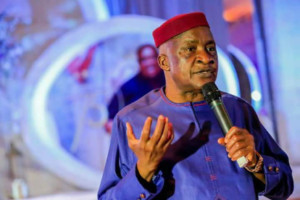
*Udenwa*
However, Imo’s history cautions against certainty. Elite loyalty in the state is conditional and transactional. It endures only where interests are balanced, ambitions managed, and inclusion sustained. A wrong choice of successor could still provoke elite conspiracy, even if it emerges from within the ruling party.
The opposition remains weak and fragmented, with limited capacity to mobilize mass resistance. Yet voter apathy, now more pronounced than during the Udenwa and Okorocha eras, introduces a new risk. Disengaged electorates are unpredictable and often disruptive.
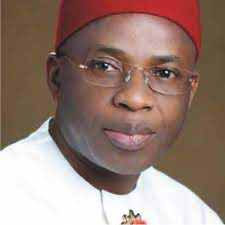
“Ohakim*
Ultimately, Uzodimma’s challenge is not opposition strength but elite psychology. Suppressed ambitions, if mishandled, can erupt. Succession in Imo has never been about coronation; it is about negotiation.
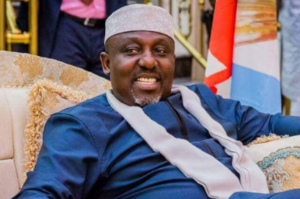
*Okorocha*
History is unforgiving to governors who confuse incumbency with ownership. Power in Imo is never transferred by decree. As 2027 approaches, the same forces that toppled past succession plans remain alive. Whether Uzodimma avoids their trap will depend not on power alone, but on restraint, balance, and political wisdom.

Abia Unveils State-Owned Electric Bus Transport Scheme

NIGERIA POLICE FORCE ANNOUNCES RESUMPTION OF ENFORCEMENT OF TINTED GLASS PERMIT

Bianca Ojukwu’s Daughter Joins Her Mother at the ECOWAS Council of Ministers Session in South Africa

-
Business1 year ago
US court acquits Air Peace boss, slams Mayfield $4000 fine
-

 Trending1 year ago
NYA demands release of ‘abducted’ Imo chairman, preaches good governance
-

 Politics1 year ago
Mexico’s new president causes concern just weeks before the US elections
-

 Politics1 year ago
Putin invites 20 world leaders
-

 Politics1 year ago
Russia bans imports of agro-products from Kazakhstan after refusal to join BRICS
-
Entertainment1 year ago
Bobrisky falls ill in police custody, rushed to hospital
-
Entertainment1 year ago
Bobrisky transferred from Immigration to FCID, spends night behind bars
-
Education1 year ago
GOVERNOR FUBARA APPOINTS COUNCIL MEMBERS FOR KEN SARO-WIWA POLYTECHNIC BORI