
Politics
REGIONALISM AND PARLIAMENTARY SYSTEM OF GOVERNMENT ARE NOT SOLUTIONS TO NIGERIA’S PROBLEM – EMIR OF KANO SANUSI

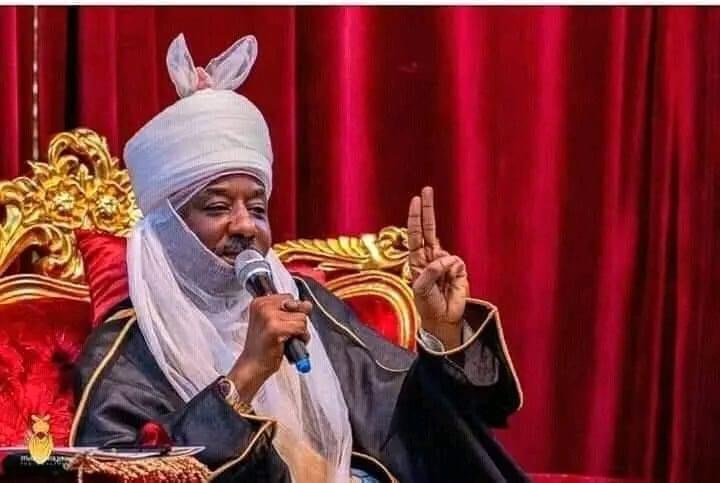
Emir of Kano, Muhammadu Sanusi II has said that regionalism and parliamentary system of government are not solutions to Nigeria’s problem.
Sanusi who said this in an interview with Vanguard, questioned the necessity of a bicameral legislature and the rationale behind appointing ministers from every state, even when not required. He noted that it contributes to bureaucratic inefficiencies and does not necessarily serve the best interests of the nation.
He also criticized the federal government’s interference in state matters, particularly regarding traditional and chieftaincy affairs. Emir Sanusi also stressed the importance of upholding constitutional principles and maintaining a clear separation of powers to ensure accountable governance.
The monarch who noted that regionalism will exacerbate the issues in the country rather than resolve existing tensions, also called for a more cohesive national identity and governance structure that promotes unity and accountability.
He said;
“I think there are several things we can do to address those structures because at the end of the day if you allow the state governors to run, the thing with devolution is we have 36 states, if only half of the governors are good, at least half of Nigeria has a good government. There is too much power at the centre, too much of the resources. The centre does not do primary education or primary healthcare, and that is where the vast majority of Nigerians are. Shouldn’t those resources come to the state? Instead of everybody going to Abuja, what is happening in Abuja? There are several issues that we need to look at. And also simple constitutionalism and federalism, just even the respect of separation of separation of power. If you take the example of what is happening in Kano today, chieftaincy matter is 100 per cent a state matter.
“We had a parliamentary system in the First Republic. What happened? At the end of the day, it is the humans that operate the system. People talk about regions. Initially, the regions we had in this country were North, East, and West, and then it became NorthEast and MidWest. Where did the creation called six geo-political zones come from historically? We can keep dividing and subdividing this country and thinking of ourselves, but are we really honest? Are these regions?
“If you go to the Niger Delta, since when did the Itsekiri stop fighting wars against the Ijaw? Since when did we become homogeneous?
“It was the Sokoto Jihad that brought us together. From the Sokoto caliphate, we became Northerners, from Northerners, we became Nigerians. When I was in King’s College, I grew up under Yakubu Gowon in a country where Nigerians were thinking like Nigerians. What happened? Political leadership is the one that exploits regional and ethnic identities as part of the struggle for political office.
“When they get there, they all sit together. If you look at the president’s cabinet, what do you have? You have everybody from every state. You have Christians, you have Muslims, you have Northerners and Southerners. Why are they not fighting one another in there? The elites are irresponsible.
“Don’t think that pandering to these elites by saying the solution is going to a regional system of government. How do we go regional? In Yorubaland, there are Ijebu, Ekiti, Ijesha, Owo, and Egba since when did they become one? Right there between Ife and Modakeke, they were killing each other. It is not about that. It is not a solution. How many parts are you going to slice this country to get a homogenous country? How? With all the intermarriages and education, I am not sure that is a solution, and I think people have this dream that can only be sold by blocking out history.
“We had a regional system in the First Republic. How did it end? We had a parliamentary system in the First Republic. How did it end? I am not talking about the coup; I am talking about the crisis that led to the coup. Before Nzeogu, forget Ironsi. How was the system before they came? Is there any documentary evidence that that system was fundamentally better than what we have?
“We can’t shift responsibilities away from human beings, the people who are responsible for operating the system. If you go to the Senate and the House of Representatives, and you are there for 16 years and you have never passed a bill, you don’t even know that your job is to be a lawmaker.”





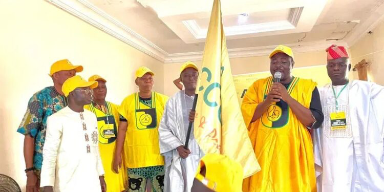
A faction of Accord Party has held its own governorship primary, where Mr. Clement Bamigbola emerged as the faction’s governorship candidate for the 2026 Osun State election.
This is coming just four days after the emergence of Governor Ademola Adeleke as the party’s flag-bearer.
Recall that the party under the leadership of Maxwell Mgbudem, on Wednesday, held a similar exercise which produced Governor Ademola Adeleke as the party’s candidate.
However, a faction of the party rejected his emergence, insisting that Barrister Maxwell Mgbudem is not the legally recognized national chairman of the Accord Party.
In a fresh development on Sunday, about 300 delegates of the Accord Party from across Osun State elected Bamigbola as the factional candidate during a primary held at Regina Suite, Osogbo.
Bamigbola emerged through a voice vote conducted by the delegates, after which the Chairman of the Primary Committee, Hon. Olufemi Ogundare, declared him the party’s candidate for the 2026 Osun State governorship election.
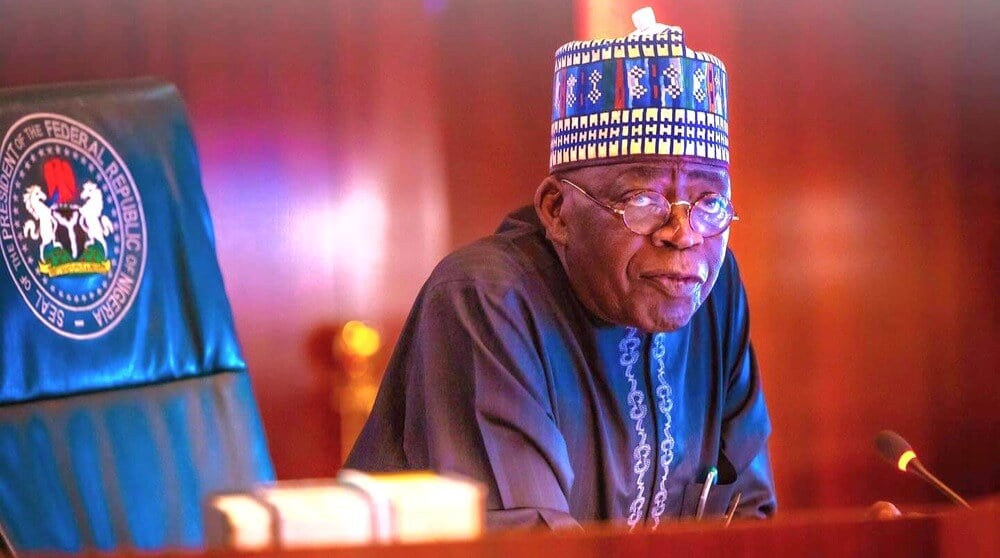
President Bola Tinubu and leaders of ECOWAS countries are currently meeting in Abuja.
The 68th Ordinary Session of the ECOWAS Authority of Heads of State and Government is taking place at the State House Conference Centre, in Abuja.
Leaders of West African countries at the meeting include President Julius Bio (Sierra Leone, ECOWAS Chair), President Patrice Talon (Benin), José Maria Neves (Cabo Verde) and Alassane Ouattara (Côte d’Ivoire).
Others are Adama Barrow (The Gambia), John Mahama (Ghana), Umaro Embaló (Guinea-Bissau), Joseph Boakai (Liberia), Bassirou Faye (Senegal) and Faure Gnassingbé (Togo).
The meeting is coming against the backdrop of five turbulent years for West Africa, which saw coups in Mali (2020, 2021), Burkina Faso (twice in 2022), and Niger (2023).
The latest incidents include an attempted coup in Benin on December 7, 2025, and renewed instability in Guinea-Bissau.
At the time of filing this report, details of the meeting are yet to be disclosed.
Politics
Breaking: Diri Orders Autopsy on Bayelsa Deputy Governor’s Death, Warns Against Politicisation
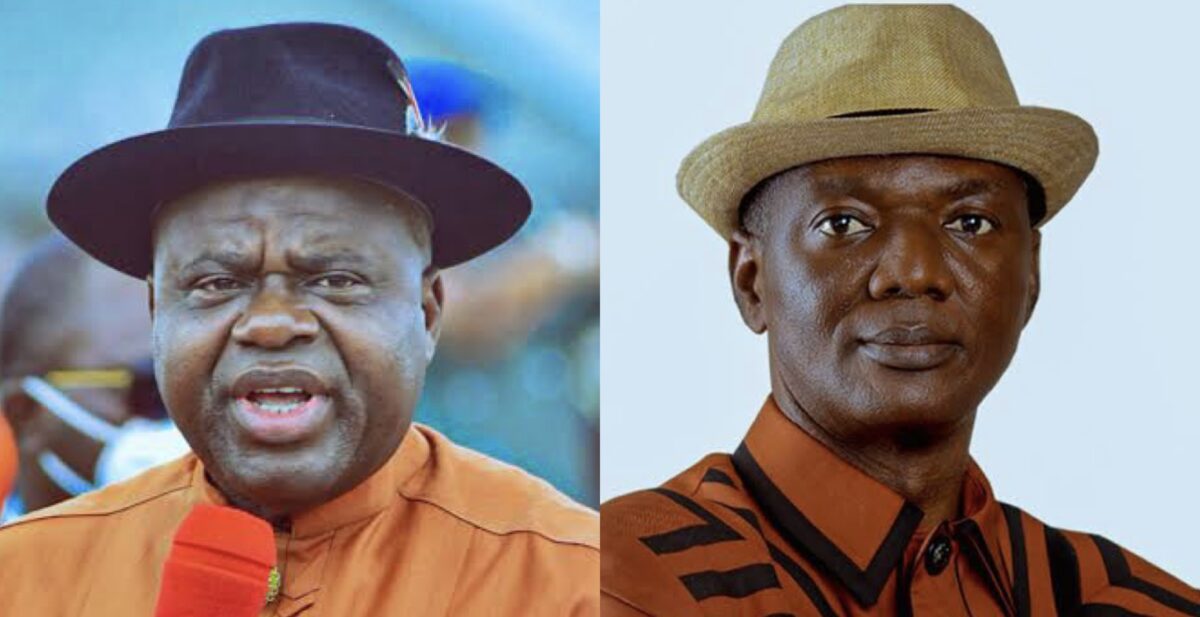
Bayelsa State Governor, Senator Douye Diri, has ordered an autopsy to determine the cause of death of the state’s Deputy Governor, Lawrence Ewhrudjakpo.
Governor Diri gave the directive on Saturday while receiving former President Goodluck Jonathan at the Government House in Yenagoa.
Reacting to the incident, the governor condemned what he described as widespread misinformation and speculation on social media, warning against any attempt to politicise the deputy governor’s death.
“I want to make an appeal. I have seen people politicise his death. In Ijaw land, there is no enmity in death. Let nobody politicise the passing of our dearly beloved deputy governor,” Diri said.
“If anyone truly loves him, this is the time to show it. I have directed that an autopsy be carried out to reveal the cause of his death. There is a lot of nonsense going on on social media.”
The governor further urged the public to focus on mourning and honouring the late deputy governor, noting that the state government had declared three working days of mourning in his honour.
“If anyone is issuing statements to eulogise him, let it end there. Let us mourn him because Bayelsa State is in a mourning mood,” he added.
Governor Diri also called for unity and love among the people, reminding them of the inevitability of death.
Speaking during the condolence visit, former President Goodluck Jonathan described the late Ewhrudjakpo as a committed and dedicated individual who played a key role in the activities of his foundation.
“For me, he was someone my foundation and I will never forget. He represented the governor in all our programs,” Jonathan said, adding that Ewhrudjakpo worked tirelessly in that role, even more than when he served as deputy governor.

The man who tackled a gunman to the floor and saved people from getting sh0t at Bondi Beach in Australia has been identified as Ahmed al Ahmed.

John Cena Retires From Wrestling (Video)

Female Student Missing For 8 Days Found Chilling At Boyfriend’s House

-
Business1 year ago
US court acquits Air Peace boss, slams Mayfield $4000 fine
-

 Trending1 year ago
NYA demands release of ‘abducted’ Imo chairman, preaches good governance
-

 Politics1 year ago
Mexico’s new president causes concern just weeks before the US elections
-

 Politics1 year ago
Putin invites 20 world leaders
-

 Politics1 year ago
Russia bans imports of agro-products from Kazakhstan after refusal to join BRICS
-
Entertainment1 year ago
Bobrisky falls ill in police custody, rushed to hospital
-
Entertainment1 year ago
Bobrisky transferred from Immigration to FCID, spends night behind bars
-
Education1 year ago
GOVERNOR FUBARA APPOINTS COUNCIL MEMBERS FOR KEN SARO-WIWA POLYTECHNIC BORI