
Politics
Summary Of The National Confab 2014 Recommendations

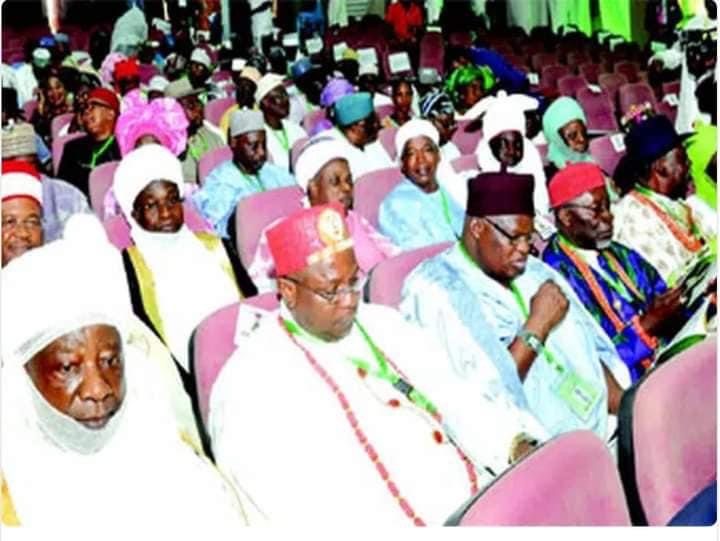
– 1. Qualification to Contest For President
Anybody aspiring to become the country’s President must be a degree holder.
– 2. Rotation of Presidency
Rotation of Presidency between the North and South and governorship among the three senatorial districts of each state.
– 3. Decamping (Cross-Carpeting)
Any elected official, executive or legislative, who carpet-cross, regardless of the reasons for such, shall automatically forfeit his seat.
– 4. Mineral Exploration
Excess revenue should be used for exploration of mineral resources in every part of the country.
– 5. Acting President
Where the President dies in office or incapacitated, impeached or where he resigns, the Vice President shall operate in acting capacity for a period of 90 days during which an election to the same office would be conducted.
– 6. Rotation of the Presidency
When a president leaves under any of the circumstances stated above, another president would be elected from the same zone where the previous one came from.
– 7. Open Grazing
Cattle routes and grazing reserves be phased out to lay emphasis on ranching.
– 8. New State For South East
There shall be created an additional state for the South-East Zone to make the zone have equal number of states with the other zones except the North West which has seven.
– 9. The States For The Regions
Creation of another 18 new states (three per geo-political zone, this means SE will now have 4).
– 10. Fiscal Sharing Formula
The sharing of the funds to the Federation Account among the three tiers of government should be done in the following manner: Federal Government – 42.5%, State Governments – 35% and Local Governments 22.5% as opposed to the prevailing 52.68 %, 26.72% and 20.60% respectively.
– 11. Form of Government
Modified Presidential System, a home-made model of government that effectively combines the presidential and parliamentary systems of government. The president shall pick the vice president from the Legislature.
– 12. Appointment of Ministers
The President should select not more than 18 ministers from the six geo -political zones and not more than 30% of his ministers from outside the Legislature. Reduce Cost of governance by pruning the number of political appointees and using staff of ministries where necessary.
– 13. Legislature
The legislature should remain Bi-cameral but all elected members of the legislative arms of all the tiers of government should serve on part-time basis.
– 14. Local Government Autonomy
Local Government will no longer be the third tier of government. The federal and states are now to be the only tiers of government. States can now create as many local governments as they want.
The Joint State/Local Government Account be scrapped and in its place the establishment of a State RMAFC with representatives of LG and a Chairman nominated by the Governor.
The Constitution should fix the tenure for Local Government Councils at three years. Conference recommends the scrapping of State Independent Electoral Commission, SIECs.
– 15. Immunity
The immunity clause should be removed if the offences attract criminal charges to encourage accountability by those managing the economy.
– 16. Independent Candidacy
Every Nigerian who meets the specified condition in the Electoral Act should be free to contest elections as an independent candidate.
– 17. Anti-corruption
Anybody arraigned before the court by EFCC, ICPC and by any law enforcement agencies, the accused person will be regarded as guilty, unlike the present situation where he is innocent until proven guilty.
Plus, complete abolition of the concept of plea bargain by the Federal government
– 18. State Police
States who want it should have it.
– 19. National Anthem
The old National Anthem should be re-introduced
– 20. Religion Taxes and Pilgrimages
Religious institutions to pay tax, abolition of pilgrimage sponsorship
– 21. Mission Schools
Public schools taken over by various state governments across the country forty two years ago would henceforth be returned to the religious missions which were the original owners






Politics
Engineers Farouk Ahmed, Gbenga Komolafe resign, President Tinubu nominates successors to the Senate for approval
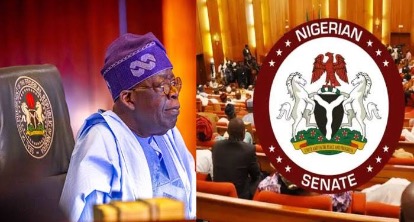
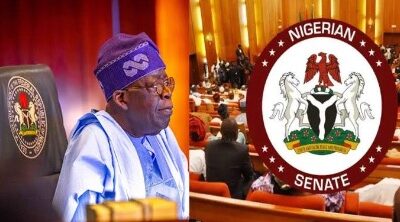
President Bola Ahmed Tinubu has asked the Senate to approve the nominations of two new chief executives for the Nigerian Midstream and Downstream Petroleum Regulatory Authority (NMDPRA) and the Nigerian Upstream Petroleum Regulatory Commission (NUPRC).
The requests followed the resignation of Engineer Farouk Ahmed of the NMDPRA and Gbenga Komolafe of the NUPRC. Both officials were appointed in 2021 by former President Buhari to lead the two regulatory agencies created by the Petroleum Industry Act (PIA).
To fill these positions, President Tinubu has written to the Senate, requesting expedited confirmation of Oritsemeyiwa Amanorisewo Eyesan as CEO of NUPRC and Engineer Saidu Aliyu Mohammed as CEO of NMDPRA.
The two nominees are seasoned professionals in the oil and gas industry.
Eyesan, a graduate of Economics from the University of Benin, spent nearly 33 years with the NNPC and its subsidiaries. She retired as Executive Vice President, Upstream (2023–2024), and previously served as Group General Manager, Corporate Planning and Strategy at NNPC from 2019 to 2023.
Engineer Saidu Aliyu Mohammed, born in 1957 in Gombe, graduated from Ahmadu Bello University in 1981 with a Bachelor’s in Chemical Engineering. He was announced today as an independent non-executive director at Seplat Energy.
His prior roles include Managing Director of Kaduna Refining and Petrochemical Company and Nigerian Gas Company, as well as Chair of the boards of West African Gas Pipeline Company, Nigeria LNG subsidiaries, and NNPC Retail.
He also served as Group Executive Director/Chief Operating Officer, Gas & Power Directorate, where he provided strategic leadership for major gas projects and policy frameworks, including the Gas Masterplan, Gas Network Code, and contributions to the Petroleum Industry Act (PIA).
Engineer Mohammed played a pivotal role in delivering key projects such as the Escravos–Lagos Pipeline Expansion, the Ajaokuta–Kaduna–Kano (AKK) Gas Pipeline, and Nigeria LNG Train.
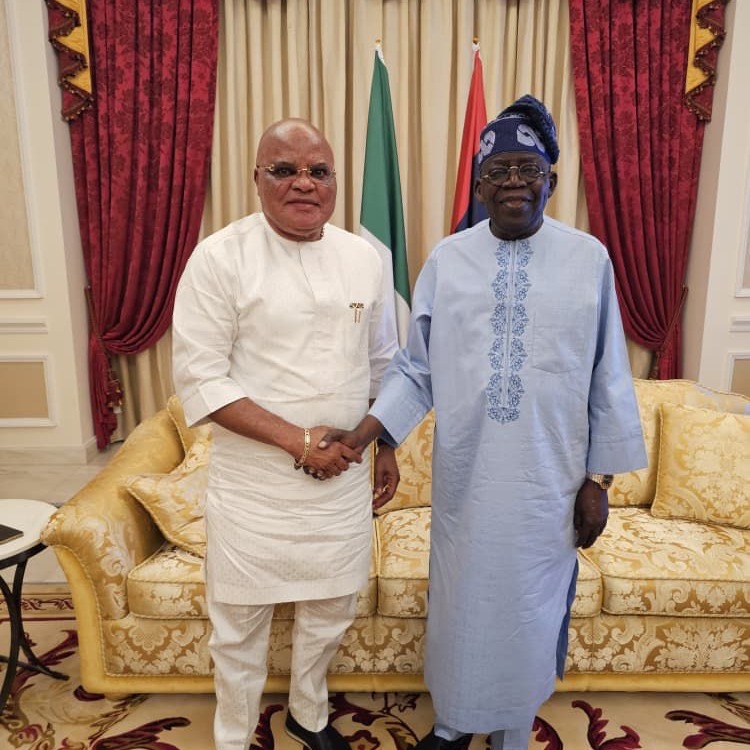
President Bola Tinubu felicitates Senator Ifeanyi Godwin Ararume, astute politician and accomplished businessman, on his birthday, December 16.
Senator Ararume’s odyssey in politics began in the late 1980s, when he served as the State Treasurer of the Liberal Convention in old Imo State. He later joined the National Finance Committee of the defunct National Republican Convention.
He represented Imo North in the 9th National Assembly. He was first elected in May 1999 and re-elected in April 2003. He also served on several committees and held other official roles.
President Tinubu commends the former senator for his years of service to the nation and contributions to its peace, unity, and progress.
The President describes Senator Ararume as a resolute and shrewd politician, highlighting his courageous and remarkable political journey through the years.
President Tinubu wishes Senator Ararume a happy 67th birthday and prays that God Almighty will grant him more years of good health and strength.
Politics
Ndigbo are no longer spectators in the Nigerian project- Minister Dave Umahi dismisses calls for Biafra under Tinubu’s administration
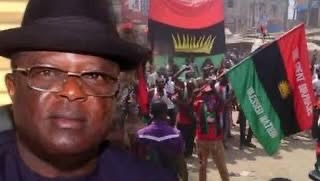
The Minister of Works, David Umahi, says the all-inclusive style of governance being practiced by President Bola Tinubu has made the agitation for Biafra an unnecessary clamour.
While speaking at the inspection of the Enugu-Anambra road last Saturday, December 13, Umahi said the Tinubu administration had given Ndigbo what they had sought for decades, not through secession, but through what he described as unprecedented inclusion in national governance and development.
He explained that the agitation for Biafra was historically driven by neglect, exclusion and underrepresentation at the federal level, but insisted that the situation had changed under the current administration.
“When a people are fully integrated, respected and empowered within the structure of the nation, the dream they once chased through agitation has already been achieved through cooperation.
The push for Biafran secession over the years was borne out of neglect, exclusion and underrepresentation but today the narrative has changed dramatically under President Bola Tinubu.
The President has deliberately opened the doors of national development to the South-East. Appointments, policy inputs and infrastructure priorities now reflect true federal balance.
Every sector now bears visible Igbo footprints. The emergence of Igbo sons and daughters in strategic positions is a testament to this inclusion.
Biafra was never about breaking Nigeria; it was about being counted in Nigeria. Through inclusion, equity and concrete development, Ndigbo are no longer spectators in the Nigerian project; they are co-authors of its future. When justice finds a people, agitation loses its voice.”he said

Chief Timothy Adeola Odutola (1902–1995): Pioneer Industrialist, Nationalist and Philanthropist of Ijebu-Ode

General Yakubu Gowon and Nigeria’s First Locally Assembled Peugeot

Peter Obe and the Lens of History

-
Business1 year ago
US court acquits Air Peace boss, slams Mayfield $4000 fine
-

 Trending1 year ago
NYA demands release of ‘abducted’ Imo chairman, preaches good governance
-

 Politics1 year ago
Mexico’s new president causes concern just weeks before the US elections
-

 Politics1 year ago
Putin invites 20 world leaders
-

 Politics1 year ago
Russia bans imports of agro-products from Kazakhstan after refusal to join BRICS
-
Entertainment1 year ago
Bobrisky falls ill in police custody, rushed to hospital
-
Entertainment1 year ago
Bobrisky transferred from Immigration to FCID, spends night behind bars
-
Education1 year ago
GOVERNOR FUBARA APPOINTS COUNCIL MEMBERS FOR KEN SARO-WIWA POLYTECHNIC BORI