
Business
Sustaining monetary, fiscal policies for bank recapitalisation

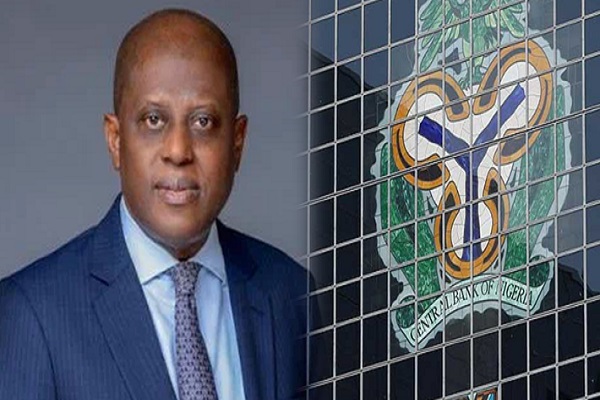
The emergence of stronger and bigger banks is one of the crucial benefits expected from the ongoing Central Bank of Nigeria (CBN)-led recapitalisation of banks. The apex bank believes that achieving sustainable economic growth requires strong support from the financial system. The financial sector regulator is, therefore, keen on aligning monetary and fiscal policies to achieve government’s vision of growth for businesses and $1 trillion economy size for the country, writes Assistant Editor, COLLINS NWEZE.
Aligning fiscal and monetary policy objectives comes with great benefits to the economy. The Central Bank of Nigeria (CBN) is at the centre of achieving fiscal and monetary policies collaboration and supporting the government’s plan for $1 trillion economy size.
For a government that wants to grow its economy to $1 trillion mark, the support of the financial services sector led by the Central Bank of Nigeria (CBN) Governor, Olayemi Cardoso is crucial.
The CBN boss had explained that bank recapitalisation ensures that lenders are well-capitalised, enabling them to take on greater risks, particularly in underserved markets. With stronger capital bases, banks can provide more loans and financial products to Micro Small and Medium Enterprises (MSMEs), rural communities and other vulnerable segments that have previously struggled to access formal financial services.
The CBN had, on March 28, 2024 announced a two-year bank recapitalisation exercise which commenced on April 1, 2024 and is expected to end on March 31, 2026.
The recapitalisation plan requires minimum capital of N500 billion, N200 billion and N50 billion for commercial banks with international, national and regional licenses respectively.
Others included merchant banks N50 billion; non-interest banks with national license N20 billion and non-interest banks with regional license will now have N10 billion minimum capital. The 24-month timeline for compliance ends on March 31, 2026.
Cardoso said the recapitalisation policy not only strengthens financial stability but also serves as a catalyst for inclusive growth.
“By enabling banks to extend more credit to MSMEs, we enhance job creation and productivity. Furthermore, with increased capital, banks can invest in technology and innovation, crucial for driving digital financial services such as mobile money and agent banking. These technologies are important to breaking down geographic and economic barriers, bringing financial services to even the most remote areas,” he stated.
He said Nigeria has what it takes to deepen financial inclusion and support the growth of business and economy. He said the recapitalisation exercise will also support the government’s efforts to achieve a $1 trillion economy.
The CBN further underscored the importance of banking recapitalisation as a major catalyst for the achievement of the $1 trillion economy agenda of the government.
Banking sector remains robust
Cardoso explained that the banking sector remains robust, with key indicators reflecting a resilient system.
“The non-performing loan ratio remains within the prudential benchmark of five per cent, showcasing strong credit risk management. The banking sector liquidity ratio comfortably exceeds the regulatory floor of 30 per cent, a level which ensures banks are maintaining adequate cash flow to meet the needs of customers and their operations. The recent stress test conducted also reaffirmed the continued strength of our banking system,” he said.
“I am pleased to note that a significant number of banks have raised the required capital through rights issues and public offerings well ahead of the 2026 deadline. I believe that the banking sector is in a strong position to support Nigeria’s economic recovery by enabling access to credit for MSMES and supporting investment in critical sectors of our economy,” he said.
The CBN Deputy Governor, Corporate Services, Ms. Emem Usoro, said the journey to a $1 trillion economy requires structured planning, clearly defined policies, unwavering implementation, and an inclusive approach that aligns public and private sector interests.
At the just-concluded seminar organised by the CBN for business editors and financial correspondents in Abuja, Usoro said that one of the key components of the $1 trillion ambition is the recapitalisation of Nigerian banks.
She noted that banks must be sufficiently capitalised to meet the financial demands of a larger and more dynamic economy.
“As we work towards building a $1 trillion dollar economy, we must consider the recapitalisation of our banks to be able to fund, finance and power the economy, and to favourably compete globally,” Usoro said.
She further called for a collective effort from all stakeholders, adding that the financial system must be prepared to play its role in powering development.
“We should particularly pay attention to bank recapitalisation to ensure that our banks are strong, resilient and stable enough to carry out financial intermediation, and the much-needed financing of development projects and programmes,” Usoro said.
The Group Managing Director of United Bank for Africa (UBA), Mr. Oliver Alawuba described the ongoing CBN bank recapitalisation policy as both timely and essential in positioning the financial system to meet the demands of a growing and globally competitive economy.
According to Alawuba, the initiative is expected to boost the resilience of the banking sector by strengthening its capacity to withstand economic shocks such as inflation, currency volatility and global geopolitical disruptions. He noted that the policy will also place Nigerian banks on a stronger footing to finance the country’s long-term economic transformation, including funding of large-scale infrastructure and industrial projects.
Alawuba further stressed that the recapitalisation policy goes beyond regulatory compliance. It is a forward-looking strategy aimed at equipping Nigerian banks to operate at the scale and sophistication required by a trillion-dollar economy. He said the move would enhance the sector’s ability to support traditional economic drivers such as oil and gas, agriculture and manufacturing, as well as emerging sectors such as fintech, green energy and infrastructure development.
“Nigerian banks need adequate capital buffers to meet the evolving demands of these sectors. Without this, the industry cannot effectively rise to the challenge,” he said.
Alawuba further pointed out the sharp contrast between Nigerian banks and their counterparts in more advanced economies, where bank assets typically range between 70 and 150 per cent of Gross Domestic Product (GDP). In Nigeria, bank assets accounted for just 11.97 per cent of GDP as of 2024, a gap he said must be addressed if the country’s financial system is to align with international standards.
He commended the CBN’s recent directive mandating a significant increase in minimum capital thresholds, describing it as recognition of the urgent need for stronger financial institutions capable of delivering on national priorities such as infrastructure expansion, digital transformation, inclusive financial services and economic diversification.
Alawuba concluded that a robust, well-capitalised banking sector is critical for Nigeria’s aspiration to become a one trillion-dollar economy, and the recapitalisation drive is a forward-looking step to achieve that goal.
According to the Director of the Banking Supervision Department at the CBN, Olubuka Akinwunmi provided insights into the state of the banking sector by stating that banks have so far remained within the prudential thresholds stipulated by the regulator, including benchmarks for capital adequacy ratio and non-performing loans.
“Currently, all our banks are still within the prudential thresholds that were set. And they are actively pursuing various recapitalisation efforts,” Akinwunmi said.
He said priority sectors such as agriculture, infrastructure and manufacturing are receiving attention from both the government and financial institutions, as they are crucial to achieving a trillion-dollar economy.
“This year’s national budget reflects a clear emphasis on critical sectors such as health, education, infrastructure and agriculture. Banks are taking cues from these priorities, recognising them as viable areas for business expansion,” Akinwunmi said.
On how many internationally-active banks had met the new N500 billion capital requirement, he noted that substantial progress has already been made.
“We are halfway through the journey in terms of timeline, and in terms of capital already raised; we are also halfway through. That is a positive signal,” he said.
He added that the decision to start the recapitalisation process early has helped insulate the financial system from emerging global and domestic shocks.
“The emerging global economic shifts and pressures were not lost on the management of the CBN. We started early. If we had waited till now, the challenges would have been greater. But we acted in time,” he stated.
Dr Akinwunmi expressed his confidence that the recapitalisation requirements will be met, stressing that existing shareholders’ funds continue to serve as a buffer. However, the CBN deliberately opted for fresh capital inflows, particularly from foreign investors who have shown renewed confidence in Nigeria’s financial system.
“International perception of Nigeria’s banking sector is improving. The reforms over the past year, especially around the foreign exchange regime and improved transparency regarding reserves, have improved investors’ confidence,” he said.
He cited recent disclosures on Nigeria’s net reserves and improvements in regulatory credibility as key factors that are reshaping the outlook for foreign direct investment in the banking sector.
On the Loan to Deposit Ratio (LDR), Akinwunmi explained that the current 50 per cent benchmark does not reflect a reluctance to lend but rather a contextual response to inflation and other macroeconomic challenges.
“As the macro-economic environment stabilises, banks will naturally increase lending. It’s a cautious approach to ensure that lending supports sustainable growth,” he said.
He also touched on the Cash Reserve Ratio (CRR), stating that there has been marked improvement in transparency. Banks now have a clearer understanding of CRR computations, unlike in the past, which enhances predictability and compliance.
On Small and Medium Enterprises (SME) funding, he confirmed that banks have continued to make provisions, but the CBN remains actively engaged to ensure proper disbursement and sectorial targeting. Supervisory oversight, he explained, is being deployed to verify compliance and effectiveness of disbursed funds.
On incentives, he said the most powerful incentive for banks lay in the opportunities provided by a growing economy.
“A stronger bank can take on big-ticket businesses, including infrastructure financing. The current reforms, such as the infrastructure concession plans, present viable business opportunities for well-capitalised banks,” Akinwunmi said.
The capital verification process, according to him, is thorough and designed to ensure that only legitimate, unborrowed funds are used for recapitalisation. An industry-wide tracking mechanism has been established to streamline verification across institutions and enhance collaboration.
“Our examiners follow each capital trail meticulously, moving from one bank to another as necessary. Even if it’s not your bank under verification at that moment, we expect full cooperation to trace the sources of capital,” he said.
On the broader question of resilience to global shocks, he maintained that Nigerian banks are being positioned to remain attractive to investors and capable of withstanding external disruptions.
“CBN is monitoring developments closely and adjusting where necessary. The recapitalisation process is not just about compliance — it’s about long-term stability, competitiveness and economic transformation,” he said.









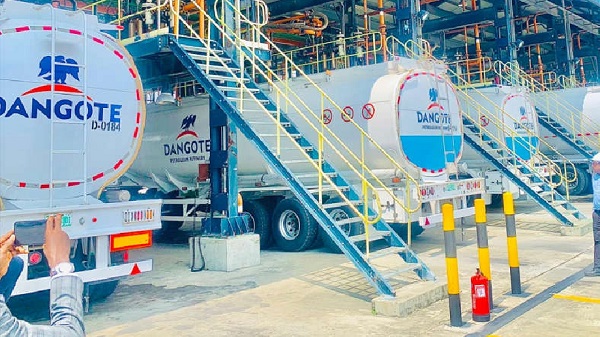
The Dangote Refinery has significantly slashed its ex-depot petrol price in a strategic move to gain a competitive edge over the Nigerian National Petroleum Company Limited (NNPC) and other petroleum marketers across the country.
According to DAILY POST checks on Petroleumpriceng on Friday morning, the refinery’s ex-depot price has dropped to N699 per litre, down from N828 per litre. This reflects a reduction of N129, representing 15.58%.
This latest review marks the 20th price adjustment by the refinery this year and comes just weeks before the busy Yuletide season.
The reduction also follows recent price cuts by the NNPC and independent filling stations, which have lowered pump prices at least twice in the last three weeks, bringing the retail cost of petrol to between N915 and N937 per litre in Abuja.

Authorities in Osun State have uncovered a major identity-theft ring after fraudsters, accused of stealing the BVN and NIN of local businesswoman Mrs. Fadahunsi Janet Gbemisola, allegedly tried to bribe her to “overlook” the compromise of her BVN.
The case has raised serious concerns over banking security, police integrity, and a nationwide data breach involving more than 150 Nigerians.
Mrs. Fadahunsi, who spoke to SaharaReporters on Monday, said the ordeal began on November 28, 2024, when she lost her phone in transit. The device contained her OPay and Palmpay SIM cards.
“I tried calling the phone, but it wasn’t picked,” she recalled. “By the following morning, it had been switched off, so I reported the matter to the police.”
Days later, she was locked out of her OPay account. According to her, Opay officials informed her that the breach originated from MoniePoint Microfinance Bank, even though she had never opened an account with the institution.
When she visited MoniePoint, staff presented her with an account profile, 8028946149, bearing her full name, BVN, NIN, and photograph. The only mismatched details were the address and phone number used to open the account.
“The officer told me I cannot deny the account because my picture and name were there,” she said. “I was shocked because I had never opened any MoniePoint account in my life.”
She later obtained a court order from the Chief Magistrate Court, Ejigbo (MEJ/M4/25) directing MoniePoint, GTBank, Opay, and Palmpay to lift restrictions placed on her BVN. Despite serving all institutions, she said MoniePoint denied ownership of the same account.
Frustrated, she went to the Central Bank of Nigeria (CBN) in Osogbo, where officials reviewed MoniePoint’s submission and confirmed that her BVN and NIN had indeed been used to open the fraudulent account.
“They showed me the form. My picture was there, my BVN was there, my NIN was there,” she said. “But the address and signature were not mine.”
According to her, CBN officials told her plainly that “until you find the person who used your identity, you cannot defend yourself.”
Confronted with the daunting task of tracking down the fraudster and with funds received from family members to bury a loved one frozen in her accounts, she sought help from the police.
Following a petition at the State Criminal Investigation Department in Osogbo, investigators traced the suspect, identified as Calistus Obi, to the Lagos–Ogun border and arrested him on March 28, 2025.
During investigation, the Police Monitoring Unit at Osogbo were able to recover from the suspect “67 SIM cards, multiple phones and evidence of over 150 identities, including BVN and NIN records, allegedly used to open MoniePoint accounts for their international syndicated fraudsters were discovered.”
During interrogation before the Osun State Commissioner of Police, Mrs. Fadahunsi said the suspect admitted he was working with a man called “Mike” based in China.
“He told the CP that he sends the MoniePoint accounts to the man in China and gets a percentage,” she narrated. “The CP asked him, ‘So you have sold Nigerian people to China because of money?’”
After his arrest, the suspect’s associates allegedly approached both the police and the victim with cash offers to bury the case.
“They called me and said I should say how much I want to forget my BVN,” Mrs. Fadahunsi said. “They offered up to ₦10 million. I refused.”
She also said an influential figure from Lagos contacted the police monitoring unit handling the case and asked them to collect ₦500,000 to release the suspect, but the officers declined.
Lamenting fraudsters in the Nigeria Police Force, she explained that shortly after rejecting the bribe, senior officers from Abuja ordered the Osun State Command to transferred the case to Force Headquarters with immediate effects.
“Unfortunately, the case file was transferred to Force Headquarters Cybercrime unit. When I got to Abuja, they told me the suspect had been released on bail,” she said.
“They suddenly claimed he was not the person who opened the MoniePoint account.”
Her new IPO reportedly told Mrs. Fadahunsi that “until we find the real person, you cannot use your BVN.”
She said investigators in Abuja dismissed the earlier evidence that linked the suspect directly to the phone number used to open the fraudulent MoniePoint account.
According to Mrs. Fadahunsi, attempts by her lawyer to follow up with police in Abuja were met with hostility.
“The IPO told my lawyer, ‘You said you want to write petition against me; go and write it,’ and he dropped the call,” she said.
She added that the released suspect later visited Osun CID, attempting to reclaim his confiscated SIM cards and phones, though Osun officers refused as at the last time she visited.
Months after court orders, petitions, and repeated visits to police and regulators, Mrs. Fadahunsi’s BVN remains blocked. Her GTBank, Opay, and Palmpay accounts are inaccessible.
“I cannot do business. I cannot even open another account,” she said. “My whole life is on hold.”
Growing Concern Over National Data Breach
The case has raised alarms about a massive BVN and NIN breach used to create fraudulent MoniePoint accounts allegedly used to receive funds from across the world.
With at least 150 Nigerians’ identities compromised, the incident signals a potential national security threat.
“This is not just my problem,” she said. “It means anyone in Nigeria can lose their identity and the system will blame them.”
When SaharaReporters contacted the Osun State Command’s spokesperson, DSP Abiodun Ojelabi Zechariah, he said he was not aware of the case but requested for the copy of the petition of the woman.
By Prince Uwalaka Chimaroke
9- DEC- 2025
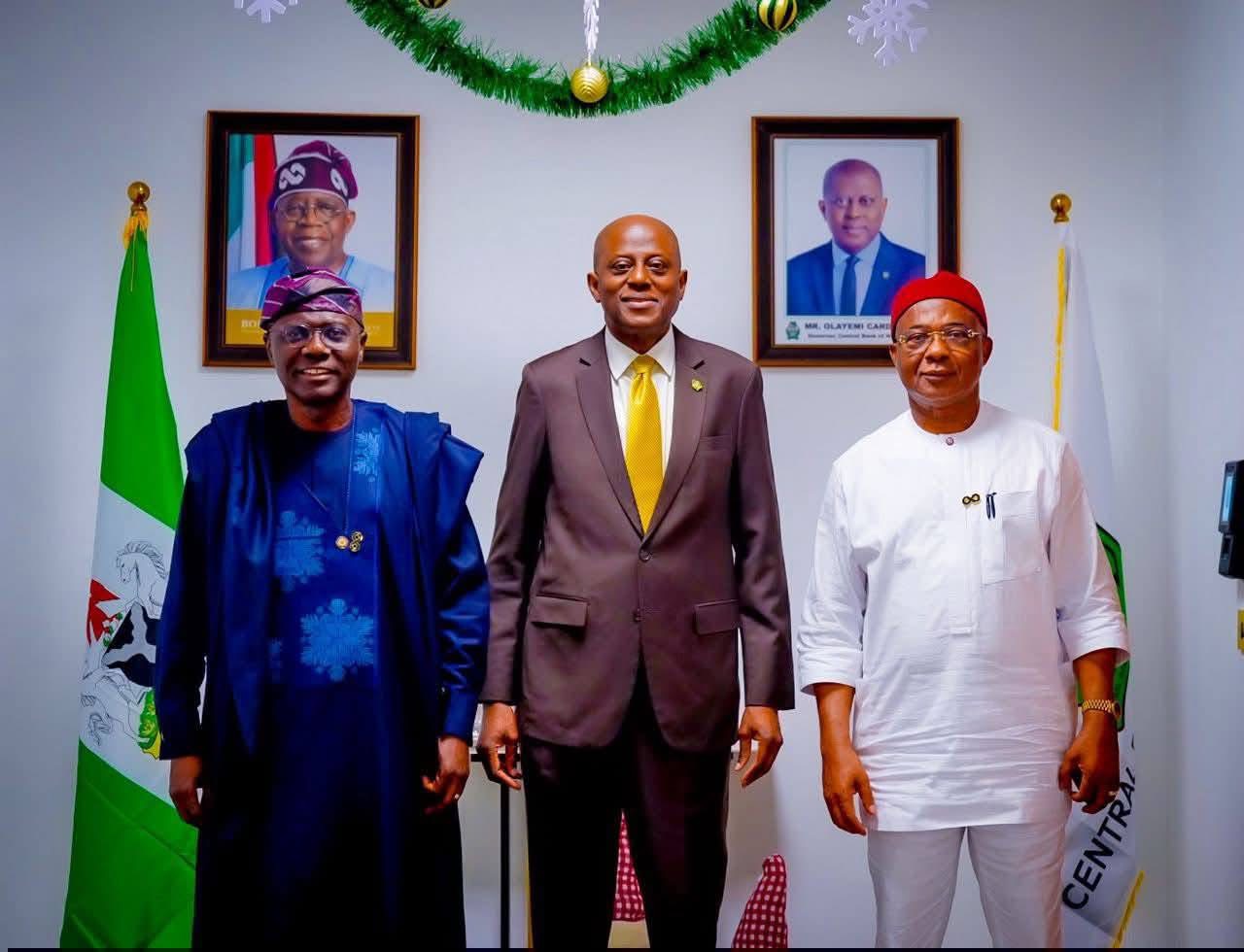
Governor Hope Uzodimma has announced that he paid an official visit to the Governor of the Central Bank of Nigeria (CBN), Mr. Olayemi Cardoso, as part of efforts to strengthen joint economic strategies aimed at improving the wellbeing of Nigerians. He was accompanied by Lagos State Governor, His Excellency Babajide Sanwo-Olu, whom he described as a brother and valued partner in national development.
During the visit, the leaders engaged in extensive discussions focused on enhancing cooperation between state governments and the apex bank. Their deliberations covered existing economic programmes currently underway across the country, with particular attention to reforms designed to support fiscal stability, promote investment, and protect the livelihoods of citizens.
Governor Uzodimma noted that the meeting also created room to explore fresh avenues for synergy on policies that can stimulate sustainable growth. The goal, he said, is to ensure that shared commitments among key government institutions are consistent with long-term national economic objectives.
He reaffirmed that such collaborations remain essential in addressing present economic challenges and securing a more prosperous future for Nigerians, emphasizing that the dialogue with the CBN Governor underscores a united resolve to deliver impactful results.
The discussion ended with all parties expressing optimism that strengthened partnerships will translate into improved outcomes for the nation’s economy.

FG Bans Admission, Transfer Of SS3 Students

“It took me getting married and giving birth to realise marriage benefits men more” — Woman shares emotional thoughts

Private jet crash lands at Kano airport

-
Business1 year ago
US court acquits Air Peace boss, slams Mayfield $4000 fine
-

 Trending1 year ago
NYA demands release of ‘abducted’ Imo chairman, preaches good governance
-

 Politics1 year ago
Mexico’s new president causes concern just weeks before the US elections
-

 Politics1 year ago
Putin invites 20 world leaders
-

 Politics1 year ago
Russia bans imports of agro-products from Kazakhstan after refusal to join BRICS
-
Entertainment1 year ago
Bobrisky falls ill in police custody, rushed to hospital
-
Entertainment1 year ago
Bobrisky transferred from Immigration to FCID, spends night behind bars
-
Education1 year ago
GOVERNOR FUBARA APPOINTS COUNCIL MEMBERS FOR KEN SARO-WIWA POLYTECHNIC BORI