
Trending
The 51st US state? How Canada might take on Donald Trump

US President-elect Donald Trump threatened Canada with 25% tariffs and even quipped about a merger of the nations. The North American neighbors have strong economic links, so a trade dispute would have a heavy impact.
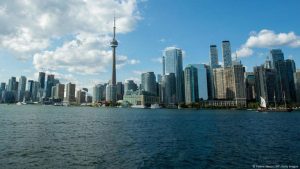
Canada’s economy could be plunged into recession if Trump imposes 25% tariffs
© Valerie Macon/AFP/Getty Images
“Blame Canada!” goes the satirical song from the 1999 animated comedy film “South Park: Bigger, Longer & Uncut,” in which a mother rallies her small Colorado town to confront youth degeneracy.
The song humorously shifts blame to the US’s northern neighbor rather than the policies of the government of the United Statespolicies, parenting failures or media influence, declaring that “we need to form a full assault — it’s Canada’s fault.”
Decades later, US President-elect Donald Trump appears to be channeling a similar energy, blaming Canada for illegal migration and drug trafficking across the northern border.
Weeks after winning a second term in the White House, Trump threatened to impose 25% tariffs on all Canadian imports — including cars and automotive parts — starting on his first day in office.
He has since stepped up his rhetoric, joking that Canada could even be annexed as the 51st US state. He even mocked the Canadian Prime Minister Justin Trudeau — who resigned last weekamid plummeting approval ratings — by calling him the “Governor” of the “Great State of Canada.”
Trump bombast or threat to be tackled?
While some analysts believe the rhetoric is typical Trump bluster, his remarks have been widely condemned by Canadian politicians and economists as Canada wasn’t a major target for the Republican candidate during the US election campaign — unlike China, Mexico, BRICS and NATO.
“It came like a bolt from the blue,” Douglas Porter, chief economist of the Bank of Montreal (BMO), told DW, referring to Trump’s attack. “There was no groundswell among his supporters that saw Canada as a big villain … so I find this one a bit more unnerving.”
Porter said Trump’s reasoning appears to be changing as he prepares to take office on January 20.
“Initially, there were concerns about the border, which I think Canada would be happy to address. Then there was talk about the US-Canada trade imbalance. And in his press conference the other day, Trump talked about imposing economic hardship on Canada,” he said.
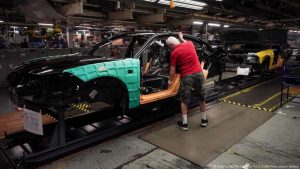
Canada produced more than 1.5 million motor vehicles in 2023, many for the US market
© Chris Young/The Canadian Press/ZUMA Press/picture alliance
Despite championing and signing the United States-Mexico-Canada Agreement (USMCA), which took effect in 2020, Trump now says Washington’s neighbors have failed to meet key terms in the accord, from border control to trade. The deal is up for review next year.
Trump “is known to rip up his own deals to secure even better deals,” Tony Stillo, Director of Canada Economics at the economic advisory firm Oxford Economics, told DW. “Even though he helped negotiate the USMCA that replaced NAFTA (North American Free Trade Agreement), he’s now calling it the worst deal ever.”
The US does, however, have far worse trade imbalances with China, Mexico, Vietnam, Germany, and Japan than with Canada, which was nearly $55 billion (€53.6 billion) from January to November last year, according to the US Census Bureau.
By comparison, the US-China trade imbalance was almost five times higher during that same period, at $270.4 billion. The US-Canada trade imbalance has fallen by about a quarter over the past two years. However, it was much lower before the pandemic and the USMCA took effect.
Canada getting US subsidy, says Trump
Trump wrote on his Truth Social messaging platform this week that the imbalance is effectively a US subsidy to Canada, saying the world’s largest economy “can no longer suffer the massive Trade Deficits that Canada needs to stay afloat.”
US-Canada trade is one of the most extensive and integrated partnerships in the world. In the first 11 months of 2024, $699.4 billion in trade was conducted between the countries. Canada is the largest market for US exports, ahead of Mexico, Europe and China. US exports include trucks, vans, cars and auto parts, as well as fossil fuels.
The United States is also Canada’s top export destination, with more than three-quarters of outbound goods and services heading across the southern border. For comparison, 53% of Germany’s exports go to other European Union nations.
Crude oil makes up a quarter of Canada’s exports southward, which in July 2024 reached a record 4.3 million barrels per day, according to the US Energy Information Administration (EIA).
Thanks to surplus US processing capacity, the US refines the crude oil into gasoline, diesel, and jet fuel for domestic use and re-export — some of it back to Canada.

Despite the US being a major oil producer, the country imports millions of barrels of crude oil from Canada
© Jeff McIntosh/The Canadian Press/AP Photo/picture alliance
Trouble for oil and auto sectors
Danielle Smith, the premier of the oil-rich Canadian province of Alberta, warned the US would be shooting itself in the foot if Trump makes good on his threats, writing this week on X that: “Any proposed tariffs would immediately hurt American refiners and also make consumers pay more at the pumps.”
Trump’s ire has also targeted Canada’s automotive industry, which the president-elect says has shifted manufacturing across the northern border in recent years, resulting in layoffs for American workers.
However, North America’s auto sector is deeply integrated and parts and vehicles often cross the US-Canada border multiple times during production.
Canadian auto executives have warned that tariffs could disrupt complex supply chains, leading to increased costs and inefficiencies — spiking prices for new vehicles in both countries.
“If you tariff at 25% every time it [an auto part] goes across a border, the costs become ridiculous,” William Huggins, assistant professor at McMaster University’s DeGroote School of Business, told DW.
Canada’s BNN Bloomberg this week cited economists as saying the US tariffs could shrink Canada’s gross domestic product (GDP) by 2-4% and may tip the economy into recession.
Ottawa readies tit-for-tat measures
Canada’s ruling Liberal Party won’t elect Trudeau’s successor until March 9. While his departure leaves his country politically rudderless, Canadian policymakers have devised a list of US imports that might face retaliation if Trump proceeds with his tariff plan.
The analysts DW spoke with said Canada is likely to pursue tariffs on politically and economically sensitive US products as it did under a similar trade row with Trump in 2018 and which was resolved a year later.
The Global & Mail newspaper reported this week that Ottawa is considering tariffs on US steel, ceramics, glass, flowers and Florida orange juice, among other goods.
“They [The Canadian side] have only identified a handful of sectors because they don’t want to put everything on the table yet to undermine their negotiating position,” Stillo said.
But with mostly bluster and outlandish threats to go on, Canada’s leaders are yet to know exactly what Trump is seeking. Are his tariff threats a negotiating tactic to improve border control, boost energy and automotive cooperation or hike Canada’s contributions to NATO?
“We’re not dealing with an enlightened multi-step US policy,” Huggins said. “We’re dealing with a bully who said, ‘Give me your lunch money,’ so we’re probably going to give them the change in our pockets.”
But despite the short-term disruption to both nations’ economies, the McMaster University economist thinks policymakers in Ottawa will look to play the long game, for one obvious reason.
“30 years from now, Donald Trump won’t be alive, but Canada will be,” Huggins told DW.
Edited by: Uwe Hessler
Editor’s note: This article was updated on January 12, 2025, to reflect that the US Census Bureau data for 2024 shows trade from January through November.
Author: Nik Martin





Actress Doris Ogala has reacted strongly to Pastor Chris Okafor’s wedding, insisting that the public does not know what is really going on behind the scenes.
In a new outburst following reports of the wedding, Doris alleged that the marriage was forced, claiming the bride was r*ped and got pregnant and that the situation was allegedly used to prevent public exposure. According to her, the bride’s mother is his church’s choir coordinator and allegedly insisted on marriage to avoid scandal.
Doris further claimed that Pastor Chris had another woman he was allegedly set to marry on the 24th, adding that she has chats and videos she says support her claims. She described the situation as darker than it appears and said her decision to speak out was deliberate, despite the personal cost.
She maintained that her earlier confessions and allegations were part of what she described as a spiritual and personal reckoning, stating that she felt compelled to expose what she believes has been hidden.
https://www.instagram.com/reel/DSXz6ZLDMRY/?igsh=YjJyaHJ4bWNxdHg1
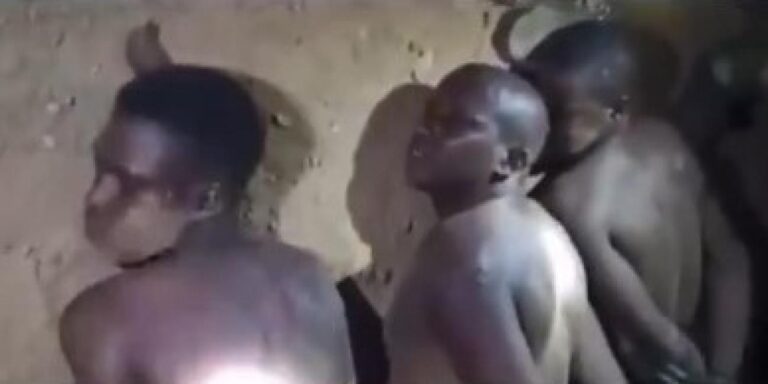
The Kwara State Government has provided clarification on the viral video showing armed men, initially believed to be bandits, being interrogated by soldiers, a development that had sparked widespread public anger and calls for a state of emergency.
The state official confirmed that the men apprehended were part of a security operation coordinated by the Federal Government, raising fresh controversy over the use of armed non-state actors in counter-insurgency efforts.
Speaking on Informant247, Ibrahim Abdulateef, Senior Special Assistant on Communication to the Governor, confirmed the arrested individuals were members of Miyetti Allah who were incorporated into a Joint Task Force following the deadly September 29 attacks in Ifelodun LGA.
“Under their security setup, they use both recognized officers and a JTF which includes members of Miyetti Allah and local vigilante networks,” Abdulateef said.
The controversy deepened as the state confirmed that a patrol vehicle was provided through the local government chairman “in a bid to empower security forces.”
The government denied the men were arrested as bandits in Kwara. Instead, Abdulateef alleged that after the men completed their assignment, they “absconded with the patrol van” and were subsequently arrested by soldiers “in Auchi, Edo State, not anywhere in Kwara.”
According to Sahara Reporters, the Chief Press Secretary to the Governor, Rafiu Ajakaye, further clarified the identity of an official named in the suspects’ confession: “Victor is a police sergeant attached to the NSA Office,” and not a DSS or Air Force officer as speculated.
Ajakaye disclosed that Victor and the vigilante operatives had since left Kwara State in line with the position of affected local communities, a decision the government said it respected.
He cautioned against sensational reporting of sensitive security matters, describing the situation as a “secrecy dilemma” that requires balance to ensure accountability without undermining national security efforts.
“We are going through a difficult phase in national security emergency. The pain of losing our brothers and sisters and of losing our peace of mind cannot be quantified. Losing a soul is a tragedy — much less many souls,” he said in a WhatsApp post.
He called for calm, urging political elites and community leaders to act with tact and responsibility amid rising tensions.
“But statesmen and patriots aren’t known in time of peace and ease. The elite (who shoulder the burden of guiding the masses) need to handle these whole things with a lot of tact and patriotism,” he said.
“May God guide us, restore peace in our land, expose the evil doers and their collaborators, and make our country stronger, more peaceful, and more prosperous,” the CPS added. “This is a time for careful leadership, not reckless accusations.”
The state’s confirmation of the use of Miyetti Allah members in armed operations comes after previous reports highlighted strong opposition from Kwara residents and local Fulani leaders to an alleged plan by the National Security Adviser (NSA), Nuhu Ribadu, to deploy and arm Fulani herders (Bororos) with AK-47 rifles to fight banditry.
Local Fulani stakeholders had warned that arming non-state actors could worsen insecurity, citing the failure of similar previous attempts and the volatility of migrant herders.
Both the Kwara State Government and Miyetti Allah initially denied any arrangement involving the arming of herders or collaboration with bandits.
By Dan Opara
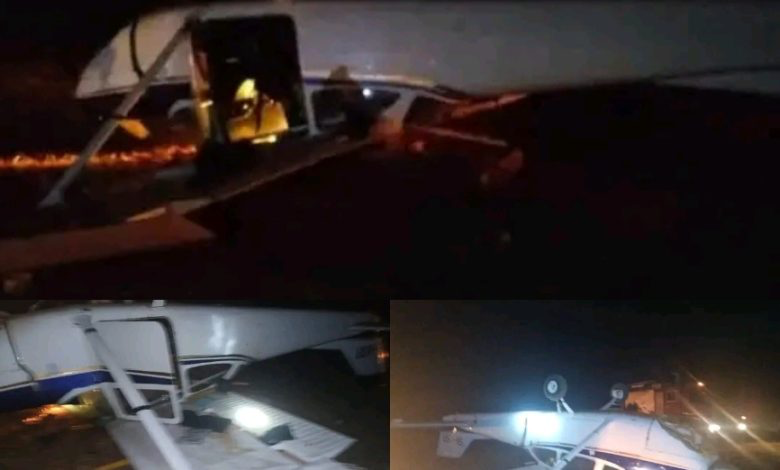
A light aircraft, Cessna 172, operated by Skypower Express, crash landed on Tuesday night, December 16, 2025, at the Sam Mbakwe International Cargo Airport, Owerri, Imo State, resulting in the hospitalization of four persons.
Eyewitnesses said the aircraft encountered difficulties during landing, lost stability on the runway, and subsequently somersaulted before coming to a halt within the airport premises.
The incident triggered panic among airport personnel and onlookers, although no lives were lost.
Emergency response teams were swiftly deployed to the scene, where the injured occupants were rescued and immediately transported to a nearby medical facility for urgent treatment.
Airport officials confirmed that the four victims are currently receiving medical care, and their condition was described as stable as of the time of filing this report.
The Nigerian Safety Investigation Bureau, NSIB, has commenced a formal investigation into the incident to ascertain both the immediate and underlying causes of the crash landing.
The investigation is expected to focus on the aircraft’s technical condition, prevailing weather conditions, pilot actions, and other operational factors surrounding the occurrence.
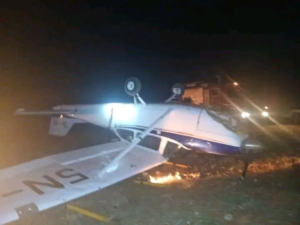
Following the accident, airport operations were temporarily disrupted, but normal activities were later restored after safety officials secured the affected area.
Authorities at the airport assured the public that all necessary safety measures are being strengthened to prevent a recurrence.
Meanwhile, stakeholders within the aviation sector have expressed concern over the incident and called for a comprehensive and transparent investigation to further enhance aviation safety standards in the country.
Ekwutosblog gathered the report through monitored information circulating on social media, as prayers and goodwill messages continue to pour in for the quick recovery of those hospitalized, while the public awaits the outcome of the NSIB investigation.


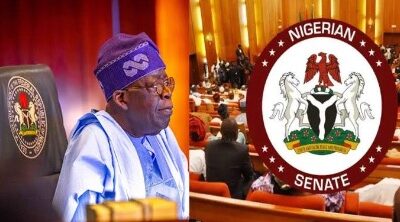
IMO WEST SENATOR IZUNASO WARNS AGAINST RISING TREND OF ILL-PREPARED LEADERS IN NIGERIA.

Chief Timothy Adeola Odutola (1902–1995): Pioneer Industrialist, Nationalist and Philanthropist of Ijebu-Ode

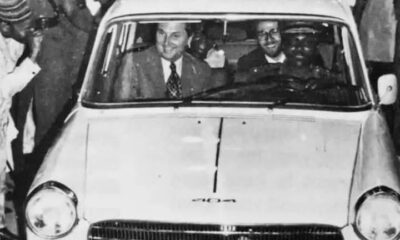
General Yakubu Gowon and Nigeria’s First Locally Assembled Peugeot

-
Business1 year ago
US court acquits Air Peace boss, slams Mayfield $4000 fine
-

 Trending1 year ago
NYA demands release of ‘abducted’ Imo chairman, preaches good governance
-

 Politics1 year ago
Mexico’s new president causes concern just weeks before the US elections
-

 Politics1 year ago
Putin invites 20 world leaders
-

 Politics1 year ago
Russia bans imports of agro-products from Kazakhstan after refusal to join BRICS
-
Entertainment1 year ago
Bobrisky falls ill in police custody, rushed to hospital
-
Entertainment1 year ago
Bobrisky transferred from Immigration to FCID, spends night behind bars
-
Education1 year ago
GOVERNOR FUBARA APPOINTS COUNCIL MEMBERS FOR KEN SARO-WIWA POLYTECHNIC BORI