
Politics
THINK TANK: SENATOR MOHAMMED ALI NDUME’S DELIBERATE DISTORTION OF DEVELOPMENT LOANS DATA: SETTING THE RECORD STRAIGHT

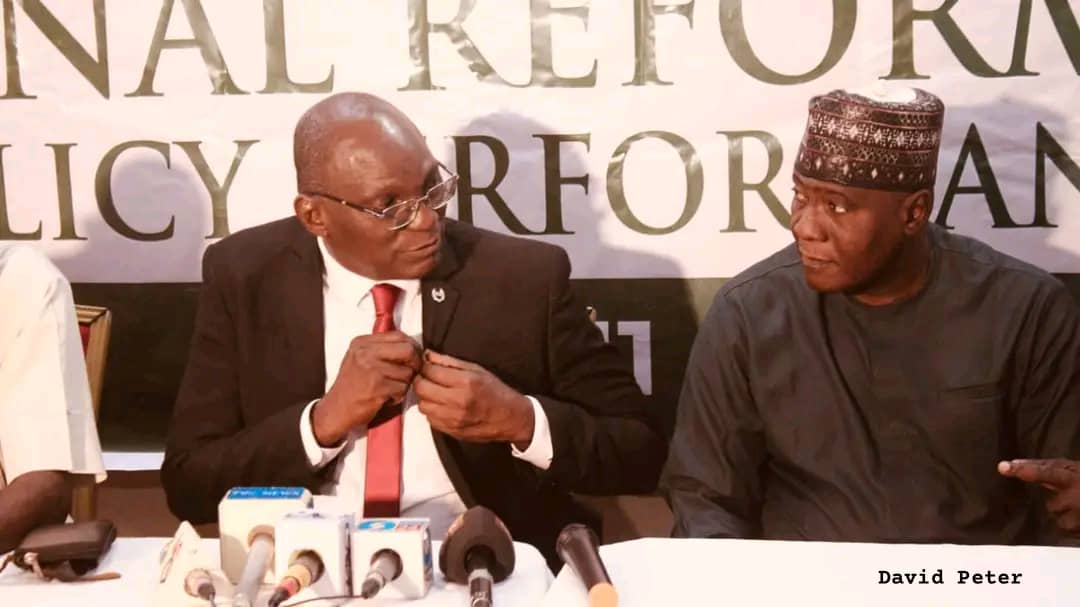
Once again, the Independent Media and Policy Initiative (IMPI) finds it necessary to set the public record straight following Senator Mohammed Ali Ndume’s recent and deliberate misinterpretation of facts regarding Nigeria’s development loans, seemingly aimed at casting aspersions on President Bola Ahmed Tinubu’s reform agenda.
It is disappointing that Senator Ndume, now in his fourth consecutive Senate term, discussed Nigeria’s national debt without offering proper context or enlightening Nigerians. During a recent television interview, he questioned the rationale and transparency of borrowings totalling $9.45 billion (about N13 trillion) since June 2023.
With public concerns already heightened around government borrowing, it was incumbent on a senior legislator such as Senator Ndume to provide accurate and holistic information—especially when Nigeria’s total public debt, while rising to N144.67 trillion in local currency, actually declined in dollar terms from $108.23 billion at the end of December 2023 to $94.23 billion by December 2024. This signals a remarkable reduction of $14 billion within a year—an unprecedented fiscal achievement since 2006 that deserves acknowledgement, not a misrepresentation.
Rather than commend this historic reduction, Senator Ndume claimed, without substantiation, that these loans are being misapplied to so-called ‘non-tangible’ projects. This criticism is shortsighted, betraying a narrow understanding of the multifaceted nature of development. Development today is not limited to physical infrastructure alone but increasingly encompasses human capital—skills, knowledge, education, and health—that underpin a productive society and stronger economy.
Countries like India and China have surged by building roads or factories and investing in their people. Human capital development—expanding access to education, healthcare, social protections, gender inclusion, and agricultural productivity—drives lasting national prosperity.
Senator Ndume’s suggestion that only physical projects matter is not supported by development economics or Nigeria’s need for inclusive growth. Notably, the loans are not commercial bank advances but concessionary, development-backed loans from institutions like the World Bank—often with very low interest rates, extended maturities (up to 40 years), and multi-year moratoria. Such terms make these loans an efficient and responsible instrument for funding national development priorities that commercial lenders will not touch.
India and China, for instance, developed their technical capacity deliberately and strategically, understanding that human skills and knowledge would be their ultimate competitive trade advantage.
The soft and intangible projects funded by the federal government are as important as the “tangible, accountable” projects preferred by Senator Ndume.
Of course, we are sure that the Senator is conscious that those loans for intangibles that he mentioned are not commercially valued loans like those made available by commercial banks. Indeed, development-backed loans are classified as concessionary loans with usually long tenures, as long as 40 years, and interest rates as low as one per cent, sometimes with a four-year moratorium.
Naturally, no commercial bank is inclined to fund these aspects of human development because they have no basis for physical and commercial quantification. However, they constitute a significant pivot in human growth and sustainability. Realising the critical need to invest in human capital, multilateral agencies emerged to fill the fiscal gaps and address and facilitate investments focused on human capital development.
The lead entities in this sector are the World Bank and the International Monetary Fund (IMF). The World Bank seeks to help countries invest in and develop their people to be productive citizens and active economic contributors. The philosophical underpinning of the World Bank’s operations is prioritising investments in education, healthcare, and social protections to realise a stronger economy full of healthy, thriving adults. This forms the kernel of the World Bank loans to Nigeria.
Our analysis shows that World Bank loans accounted for nearly 80% of Nigeria’s multilateral debt in 2024, rising modestly from $21.15 billion in 2023 to $22.32 billion in 2024—a 5.5% increase, not the $9.5 billion figure Senator Ndume cited. Meanwhile, Nigeria’s IMF debt fell sharply from $2.47 billion to $800.23 million (-67.6%) over the same period.
This evidence supports the view that the Tinubu administration is not carelessly accumulating debt but carefully balancing securing new credit for critical sectors and reducing overall public debt. The administration should be recognised for prudent debt management and reform focus, not unfairly disparaged.
Additionally, Senator Ndume’s claim that these loans bypassed parliamentary scrutiny is inaccurate. The World Bank credit approval process requires approval by its internal arms (IDA or IBRD) and subsequent concurrence by Nigeria’s National Assembly before disbursement.
For the record, the World Bank approved six projects (valued at $4.25 billion) for Nigeria in 2024, but actual disbursements between 2023 and 2024 stand at just $2.36 billion—far from the $9.5 billion claimed
Beyond this, we find it somewhat disconcerting that the Senator made efforts in that interview to misrepresent and, as it were, politicise the value of the debt secured by the Tinubu administration from the World Bank, putting it at $9.5 billion since the administration’s inception in June 2023. This is inappropriate, as such propagation of deliberately concocted misleading figures against a government with the apparent purpose of disparaging it and, in the same token, inciting the people against the government should be discouraged.
Nigeria’s debt profile is a loud testimony of a government that is not about the acquisition of debt but one that is adept at managing its debt portfolio by creating a positively skewed balance between new loans and paying down older ones. Thus, rather than impugn the capacity and the good standing of the government’s debt management approach, we submit that the Tinubu administration should be seen for what it is: a genuinely reform-focused administration.
On the whole, whereas the World Bank approved six projects valued at $4.25 billion for Nigeria in 2024, the actual disbursements between 2023 and 2024 amounted to $2.36 billion, a distant figure from the $9.5 billion Senator Ndume insinuated was the credit disbursed by the bank on account of parliamentary approvals.
We find Senator Ndume’s misstatements on development-backed loans deeply troubling and unworthy of a ranking lawmaker tasked with advancing Nigeria’s development priorities. Misrepresenting data to score political points is manipulative and undermines informed public debate.
We urge all policymakers, especially those in positions of authority, to prioritise accuracy and transparency in public discourse. Nigerians deserve nothing less than the unvarnished truth on critical national matters.
Omoniyi M. Akinsiju PhD
Chairman,
Independent Media and Policy Initiative (IMPI)
April 2025






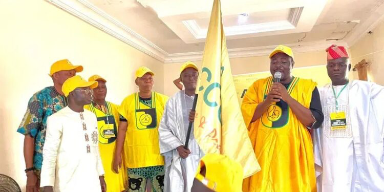
A faction of Accord Party has held its own governorship primary, where Mr. Clement Bamigbola emerged as the faction’s governorship candidate for the 2026 Osun State election.
This is coming just four days after the emergence of Governor Ademola Adeleke as the party’s flag-bearer.
Recall that the party under the leadership of Maxwell Mgbudem, on Wednesday, held a similar exercise which produced Governor Ademola Adeleke as the party’s candidate.
However, a faction of the party rejected his emergence, insisting that Barrister Maxwell Mgbudem is not the legally recognized national chairman of the Accord Party.
In a fresh development on Sunday, about 300 delegates of the Accord Party from across Osun State elected Bamigbola as the factional candidate during a primary held at Regina Suite, Osogbo.
Bamigbola emerged through a voice vote conducted by the delegates, after which the Chairman of the Primary Committee, Hon. Olufemi Ogundare, declared him the party’s candidate for the 2026 Osun State governorship election.
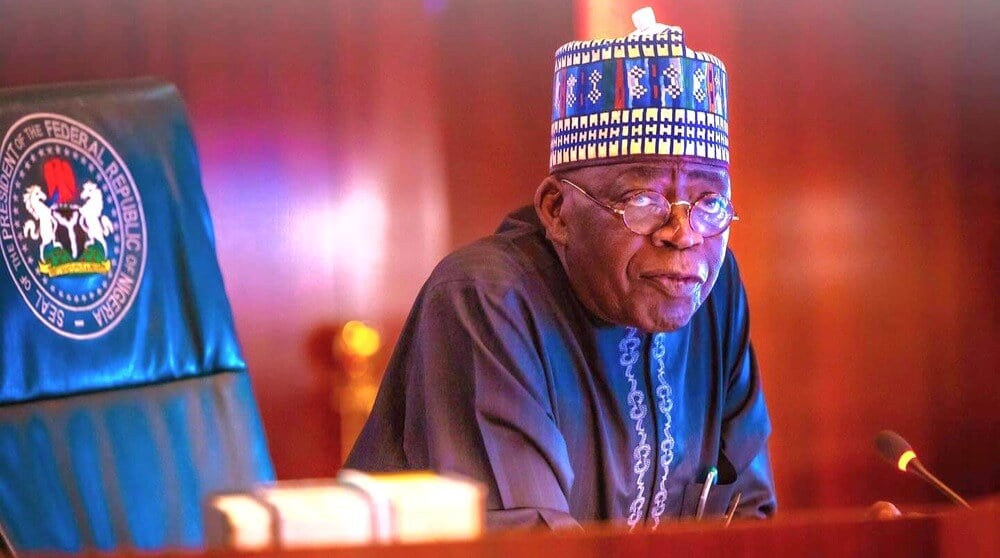
President Bola Tinubu and leaders of ECOWAS countries are currently meeting in Abuja.
The 68th Ordinary Session of the ECOWAS Authority of Heads of State and Government is taking place at the State House Conference Centre, in Abuja.
Leaders of West African countries at the meeting include President Julius Bio (Sierra Leone, ECOWAS Chair), President Patrice Talon (Benin), José Maria Neves (Cabo Verde) and Alassane Ouattara (Côte d’Ivoire).
Others are Adama Barrow (The Gambia), John Mahama (Ghana), Umaro Embaló (Guinea-Bissau), Joseph Boakai (Liberia), Bassirou Faye (Senegal) and Faure Gnassingbé (Togo).
The meeting is coming against the backdrop of five turbulent years for West Africa, which saw coups in Mali (2020, 2021), Burkina Faso (twice in 2022), and Niger (2023).
The latest incidents include an attempted coup in Benin on December 7, 2025, and renewed instability in Guinea-Bissau.
At the time of filing this report, details of the meeting are yet to be disclosed.
Politics
Breaking: Diri Orders Autopsy on Bayelsa Deputy Governor’s Death, Warns Against Politicisation
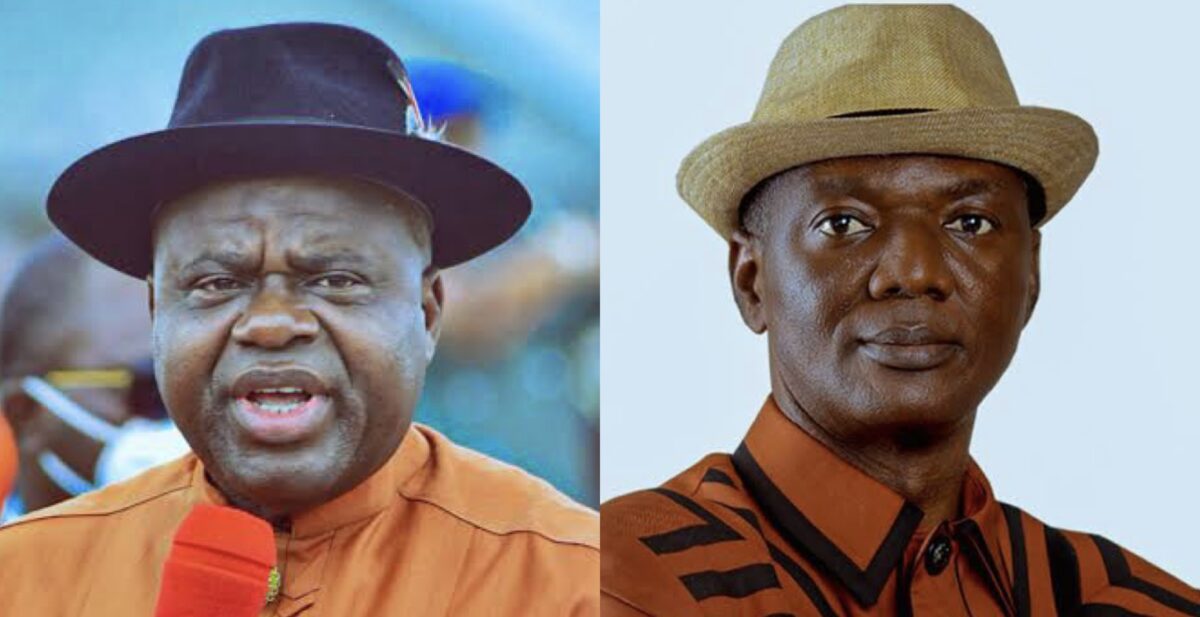
Bayelsa State Governor, Senator Douye Diri, has ordered an autopsy to determine the cause of death of the state’s Deputy Governor, Lawrence Ewhrudjakpo.
Governor Diri gave the directive on Saturday while receiving former President Goodluck Jonathan at the Government House in Yenagoa.
Reacting to the incident, the governor condemned what he described as widespread misinformation and speculation on social media, warning against any attempt to politicise the deputy governor’s death.
“I want to make an appeal. I have seen people politicise his death. In Ijaw land, there is no enmity in death. Let nobody politicise the passing of our dearly beloved deputy governor,” Diri said.
“If anyone truly loves him, this is the time to show it. I have directed that an autopsy be carried out to reveal the cause of his death. There is a lot of nonsense going on on social media.”
The governor further urged the public to focus on mourning and honouring the late deputy governor, noting that the state government had declared three working days of mourning in his honour.
“If anyone is issuing statements to eulogise him, let it end there. Let us mourn him because Bayelsa State is in a mourning mood,” he added.
Governor Diri also called for unity and love among the people, reminding them of the inevitability of death.
Speaking during the condolence visit, former President Goodluck Jonathan described the late Ewhrudjakpo as a committed and dedicated individual who played a key role in the activities of his foundation.
“For me, he was someone my foundation and I will never forget. He represented the governor in all our programs,” Jonathan said, adding that Ewhrudjakpo worked tirelessly in that role, even more than when he served as deputy governor.

The man who tackled a gunman to the floor and saved people from getting sh0t at Bondi Beach in Australia has been identified as Ahmed al Ahmed.

John Cena Retires From Wrestling (Video)

Female Student Missing For 8 Days Found Chilling At Boyfriend’s House

-
Business1 year ago
US court acquits Air Peace boss, slams Mayfield $4000 fine
-
 Trending1 year ago
NYA demands release of ‘abducted’ Imo chairman, preaches good governance
-

 Politics1 year ago
Mexico’s new president causes concern just weeks before the US elections
-
 Politics1 year ago
Putin invites 20 world leaders
-
 Politics1 year ago
Russia bans imports of agro-products from Kazakhstan after refusal to join BRICS
-
Entertainment1 year ago
Bobrisky falls ill in police custody, rushed to hospital
-
Entertainment1 year ago
Bobrisky transferred from Immigration to FCID, spends night behind bars
-
Education1 year ago
GOVERNOR FUBARA APPOINTS COUNCIL MEMBERS FOR KEN SARO-WIWA POLYTECHNIC BORI