
Columns
Why Nigeria’s maritime cadets still struggle with global certification – NSML MD

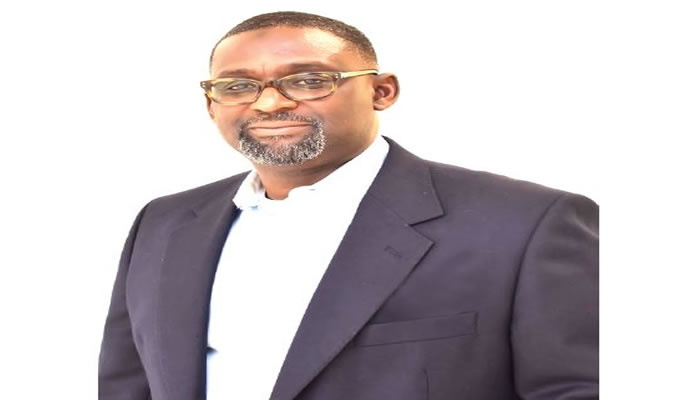
In this interview, with ANOZIE EGOLE, the Managing Director of the NLNG Shipping and Marine Services Limited, Mr. Abdulkadir Ahmed, speaks on the challenges with the Nigerian Seafarers Development Program, among others
You said 2024 was a good year for NSML. Can you tell us how?
I can tell you it was our best year, whether from a profitability point of view or an operations point of view. But actually, what we are even most proud of is that it was our best year from a safety point of view. For us, the profitability bit is just on the side, it’s what we call the icing on the cake. We are in business primarily to deliver on those core tenets of why we were set up. To run a safe business, provide safety, ensure the assets under us are managed reliably so that they can be available, and create value. Now, value isn’t just about finances. Value is the service that we provide to our customers, to our stakeholders. So when we say it was our best year, it was our best year financially, but most importantly, it was our best year operationally and safety-wise.
To what extent have you achieved your Nigerianisation policy?
We have a Nigerianisation objective or goal that we have defined a very long time ago. We are a Nigerian company and, of course, we were created to provide opportunities for Nigerian seafarers to participate in the Liquefied Natural Gas shipping industry. So we defined a Nigerianisation objective, which is that we want to have, at every moment, 85 per cent of our crew onboard our vessels, Nigerians, across all cadres. Again, it’s about ensuring that we are open to the world. The shipping industry, by its nature, opens up to the world. When I talk about standards, it’s a global standard. And you want to have a cross-fertilisation of cultures, of ideas. I hope you understand what I’m saying. So that was why we kept 15 per cent, to say we would have other nationalities. And today, we have Polish, Ukrainians, Indians, Malaysians, and Filipinos, on our vessels. And it helps, when you go there, it’s one family, everybody is an NSML staff. You don’t have NSML Nigerian staff, everybody is NSML staff. They go on board, they work together, they collaborate, they run the vessels, and they run them professionally. We were able to attain our 85 per cent two years ago. So, for example, people will leave, that’s normal, people will be promoted, and we will have additional vessels to manage. We have been growing our vessels under management consistently. We just took a new, advanced mega vessel, called Axios, It’s a mega vessel. It’s a sister vessel of the Arcturus. Remember the Arcturus that we took last year? So we took a new one, just last month. We took a new vessel under our management. And it’s something we’re proud of. It’s one of the most advanced LNG vessels in operation in the world today. We are one of the few, as small as we are, of the few, technical ship managers with that kind of vessel under management. And we are providing opportunities for Nigerians to sail on those vessels. So, from a Nigerian point of view, we are very happy with where we are, as a company. We have met our targets; we aim to exceed those targets. But from the office side, we are 100 per cent Nigerians in the office. The entire leadership, the entire crew, and the staff members in the office are Nigerians.
Tell us more about the cadetship program?
Now, the Nigerian Maritime Administration and Safety Agency is the co-sponsor of Nigerian cadets, under the Nigerian Seafarers Development Program. Part of their certification program is to go on board, and have their sea time and that is a very fundamental aspect of their certification. So they go to the colleges first, then they go on board, and then they go back to the colleges for their final exams. So we, in conjunction with NMASA, have been one of the most consistent, in terms of providing sea time, for Nigerian cadets. So far, almost 300 cadets have sailed on our vessels, and we take this very seriously. Because it is in line with the desire to deepen the Nigerian maritime sector. We are one of the few companies with ocean-going vessels in Nigeria today. We are the only LNG technical management company, I dare say, in Sub-Saharan Africa today. So the opportunity that we give them to be on those vessels is top-notch. But most importantly, it is also a funnel for us. They come on our vessel, they train on our vessel, and we imbibe them with our standards, with our culture. And they go back to their colleges, and finish, and we can also, where the opportunities are, recruit from that group. And so far, almost 100 have been recruited within NSML. So we are very proud of that. I am sure some of you were here when we had the induction program for the Romanian Cadets, and those are people who unfortunately went to Romania and finished, but unfortunately, their certifications were not recognised. We stepped in to provide a solution to NIMASA, which is simply that they will go on our vessels, and I think about 65 of them are already on the vessels. They are about to finish their sea time, and then they will go to a maritime academy in the United Kingdom for their certification. So we are exploring multiple ways, to provide solutions and provide opportunities.
Tell us about your collaboration with the Maritime Academy of Nigeria, Oron?
Now we collaborate with the Maritime Academy of Nigeria, Oron. In 2014, if I remember correctly, we actually went to the school, evaluated their curriculum, identified their needs, and supported the upgrading of their facilities then. Some of our top management today all went to the maritime academy. The first Nigerian LNG Captain went to a maritime academy. We got him from there, and we sent him on further courses. So we have a good relationship with the maritime academy. And currently, we have even developed a program where we’re taking their cadets for industrial attachments. I think currently we have about 20 students from the school on industrial attachment, and this is the first time we are taking students on that from MAN, Oron. All to ensure that we provide a platform for their training and development. Now, there is a fundamental problem, but then, we are all in business to solve problems. The problem is the certification, the NMASA-accredited certification. Unfortunately, the NMASA-accredited certificate is not recognised internationally for ocean-going. So, maritime academies, as good as they are, in terms of their facility and their curriculum, at the moment, we do have a certificate recognition problem. But that’s something that we are discussing, and we are working with NMASA to find a way to resolve that. It’s more of an organisational issue than anything else. It’s not a quality issue. Let me be very frank, it’s not a quality issue; it’s a quality assurance issue. I hope you understand what I am saying. I may believe you are good. But my word would not count for somebody else. Somebody needs to have said, okay, what is the assurance process to ensure, you are good today, and you will be good tomorrow. And that is where the discussion with NMASA is going on. How do we support NMASA to upgrade their systems, their processes, to ensure others internationally can come in and say, yes, we believe, and we assure ourselves that your systems and processes of accreditation are good? It’s just a matter of perception. So those works are still ongoing. Unfortunately, because we are ocean-going, our vessels call at various international destinations. We cannot have NMASA-trained officers with Certificate-of-Competency on those vessels yet, because those certifications are not fully accepted internationally yet. But we are working towards that. We can resolve the ratings certification.
Is it safe to say that with your certification, you can take and train cadets on your own?
There’s a Maritime Academy, which is the baseline. That’s the baseline institution for the provision of maritime training. The Maritime Centre of Excellence is an Advanced Marine Training Institute. So, it’s like going to university, let’s put it to university, they are the only ones that will issue you a degree certificate. But with all the necessary certifications to ensure that your degree remains relevant and up to date, you can go to other institutes. That’s what MCOE is. So, we are not competing with the Maritime Academy or other maritime institutions. No. We are rather complementary. They are the ones that provide the basic training and COC certification. What then happens is that the additional courses over and above what you can achieve, which we are seeing now, have been accreted for a couple of those courses. And that’s what MCOE aims to be: an advanced maritime training institute that can provide advanced maritime certification in specific courses. Then we aligned ourselves with the MCA. The MCA is the UK Coast Guard and Marine Agency. They are accredited; it’s deemed to be the gold standard of maritime certificate accreditation in the world today. So, we have a partnership with an institution in the UK. The plan in place this year is to upgrade the MCOE both in terms of facility, resources, and courses so that the centre itself is 100 per cent accredited by the MCA. And what we then intend to do in doing such is that anybody who is a seafarer who needs advanced certification doesn’t have to go to the UK or anywhere else to go and get that today, they can come to MCOE. Like I said, it’s, again, it’s a plan, we haven’t implemented. First of all, we have to upgrade the centre, but we have started. Part of that is that we have achieved accreditation of two courses. They have done an audit of our facility. They have identified the things that we need to do. We need to have more. They have acknowledged what we have, and that’s why they have accredited those two courses. But we want to go beyond specific course accreditation. We want to go for full centre accreditation, which is why we are upgrading the facility. We are increasing the courses and the resources provided to MCOE to be able to do that.
You don’t need to go anywhere to go and do it, you can come to Bornny and do it, and it’s as good as you have gone to the UK to do it. MCOE doesn’t provide the COC what we are providing is, when you have the COC, is the additional certification. For example, the COC will not give you a basic tanker course.






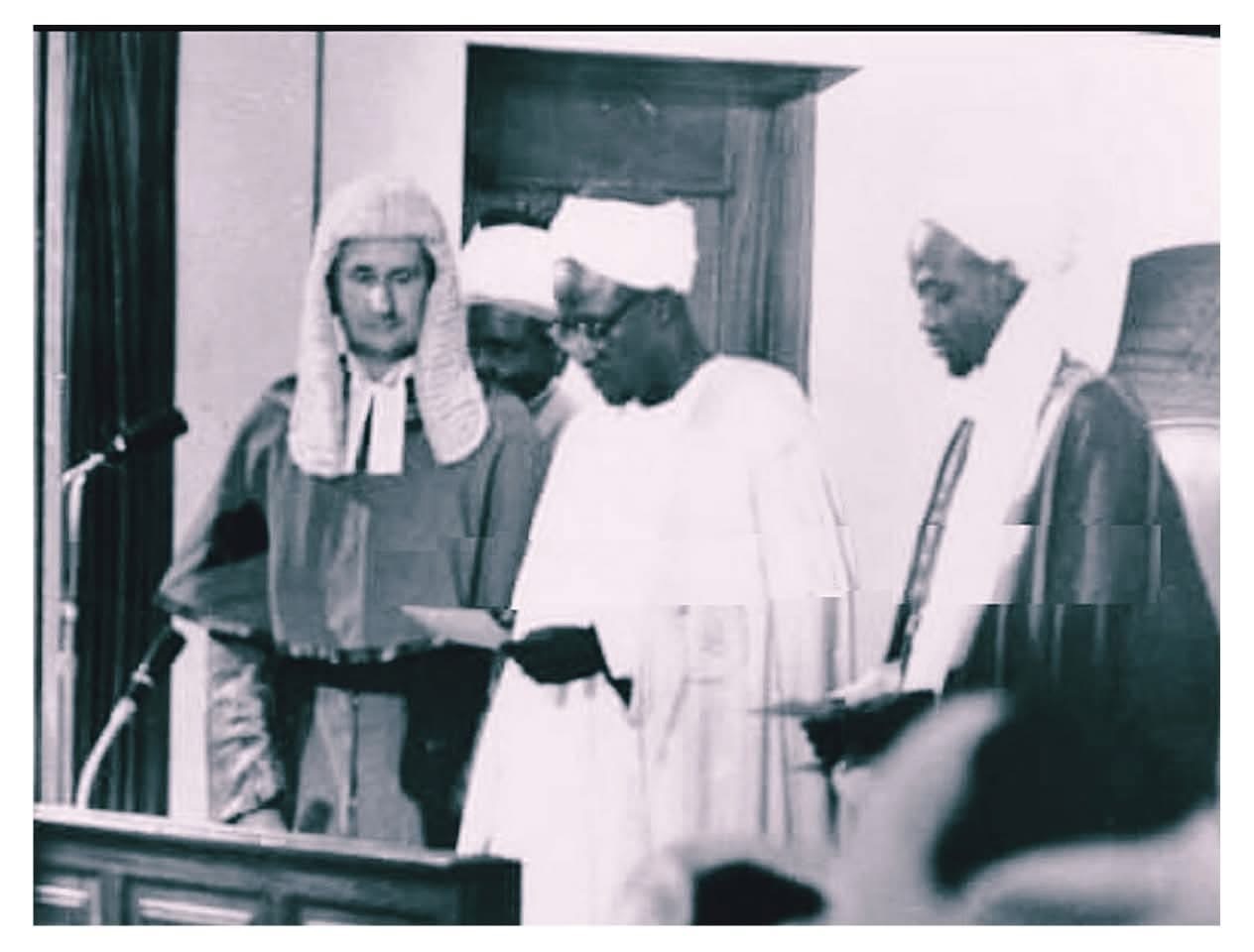
A defining moment in the transition from colonial rule to indigenous leadership in Northern Nigeria.
The image depicts Sir Kashim Ibrahim during his swearing-in ceremony as Governor of the Northern Region of Nigeria, an event that marked a significant milestone in Nigeria’s political evolution. While the photograph is often dated to the late 1950s, historical records confirm that Sir Kashim Ibrahim assumed office in October 1960, shortly after Nigeria attained independence from British colonial rule.
Sir Kashim Ibrahim was appointed Governor of the Northern Region from 1960 to 1966, becoming the first indigenous Nigerian to hold the office. His appointment symbolised the transfer of political authority from colonial administrators to Nigerians and reflected the emerging autonomy of the regions within the newly independent federation.
Born in 1909 in Maiduguri, present-day Borno State, Kashim Ibrahim was a distinguished educator, administrator, and politician. Before entering politics, he had a notable career in education, serving as Provincial Education Officer and later as Minister of Education for the Northern Region, where he played a key role in expanding access to Western education in Northern Nigeria.
The office of Governor during this period was largely ceremonial but politically significant. It represented the Crown at the regional level while reinforcing constitutional governance under Nigeria’s federal structure. As governor, Sir Kashim Ibrahim worked closely with the Northern Region’s political leadership, particularly the government of Sir Ahmadu Bello, the Sardauna of Sokoto, who served as Premier.
His tenure coincided with a formative period in Nigeria’s post-independence history, characterised by efforts at nation-building, regional development, and managing the complexities of ethnic and political diversity. Sir Kashim Ibrahim remained in office until January 1966, when Nigeria’s First Republic was overthrown following the military coup that ended civilian governance.
Beyond politics, Sir Kashim Ibrahim is remembered for his enduring contributions to education and public service in Northern Nigeria. His legacy continues through institutions named in his honour, most notably Sir Kashim Ibrahim College of Education in Maiduguri, which stands as a testament to his lifelong commitment to learning and leadership.
The photograph remains a powerful historical record, capturing a moment when Nigeria formally embraced indigenous leadership at the highest levels of regional governance.
Sources
Falola, Toyin & Matthew Heaton. A History of Nigeria. Cambridge University Press.
Coleman, James S. Nigeria: Background to Nationalism. University of California Press.
Nigerian National Archives, Kaduna – Records of Northern Regional Government (1960–1966).
Columns
Davido’s baby mama, Sophia Momodu, claps back at Snapchat user who accused her of flaunting a replica bag

Sophia Momodu has responded sharply after a Snapchat user tried to drag her over an alleged replica designer bag.
The user accused Sophia of “flaunting a replica” and warned her that this is an era where fake items are easily detected, advising her to stop “setting herself up for drags.”
Sophia was clearly not having it.
In a blunt response, she fired back, telling the user to “hold your chest and say God release me from witchcraft,” adding a sarcastic “you wish?” to shut down the allegation.
https://www.instagram.com/reel/DSMmzu8jMMN/?igsh=dDR3d2Q3ZXgxYWJu
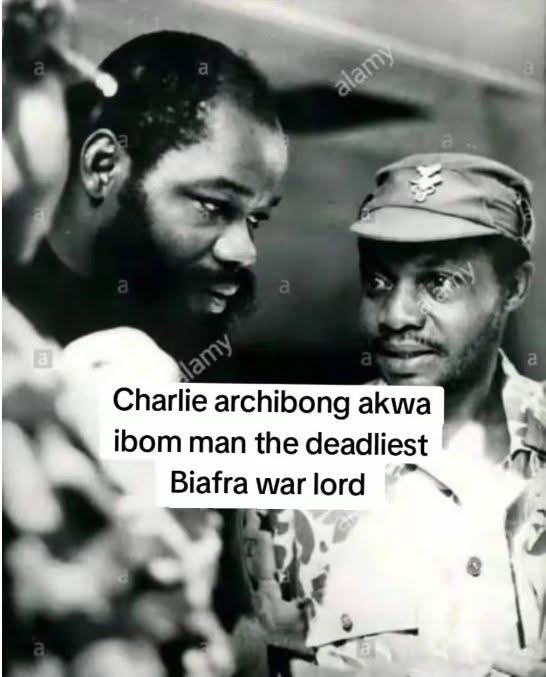
“Brigadier Archong” (also referred to as Colonel Charlie Archibong) was a prominent Biafran commander during the Nigerian Civil War (1967-1970), known for his bravery and key role in the Biafran invasion of the Midwest region.
Key Activities During the War
Midwest Invasion Commander: Colonel Archibong was the lead commander of the Biafran forces that invaded Nigeria’s Midwest region on August 9, 1967. His orders were to advance rapidly through the West and capture Dodan Barracks in Lagos within 48 hours. The advance was halted by a controversial retreat order from Brigadier Victor Banjo at Ore, which ultimately led to the failure of the offensive.
Ojukwu blamed himself for not letting achuzie or Charlie archibong lead the troops to capture Nigeria capital city Lagos after the Biafran capital city Enugu was attacked by the Nigerian, even after Charlie archibong territory fell to the Nigerian military Charlie archibong and his people mostly lead to lay a deadly ambush against the Nigerian army in Calabar and akwa ibom and pH and this action Also lead to the killing of innocent civilians by Nigeria army not only Asaba experienced massacred south south of today veteran can testify
Key Biafran Fighter: Archibong was considered one of General Odumegwu Ojukwu’s most trusted and gallant fighters. He was known by the nickname “Charlie Bazooka” and was respected for his zeal and determination.
Further Action: After the Midwest campaign, he saw more action around Ikot Ekpene.
Disappearance/Death: Archibong was reported missing after an officer-led reconnaissance operation, and his command headquarters waited in vain for his return. Sources suggest he may have been killed through internal sabotage within Biafra.
Archibong is remembered as a significant figure in the Biafran military, often appearing in historical photos alongside Ojukwu as a “war hero.

FG Bans Admission, Transfer Of SS3 Students

“It took me getting married and giving birth to realise marriage benefits men more” — Woman shares emotional thoughts

Private jet crash lands at Kano airport

-
Business1 year ago
US court acquits Air Peace boss, slams Mayfield $4000 fine
-

 Trending1 year ago
NYA demands release of ‘abducted’ Imo chairman, preaches good governance
-

 Politics1 year ago
Mexico’s new president causes concern just weeks before the US elections
-

 Politics1 year ago
Putin invites 20 world leaders
-

 Politics1 year ago
Russia bans imports of agro-products from Kazakhstan after refusal to join BRICS
-
Entertainment1 year ago
Bobrisky falls ill in police custody, rushed to hospital
-
Entertainment1 year ago
Bobrisky transferred from Immigration to FCID, spends night behind bars
-
Education1 year ago
GOVERNOR FUBARA APPOINTS COUNCIL MEMBERS FOR KEN SARO-WIWA POLYTECHNIC BORI