
Columns
Fire outbreaks consumed property worth N67.1bn in 2024 – FFS DG, Jaji

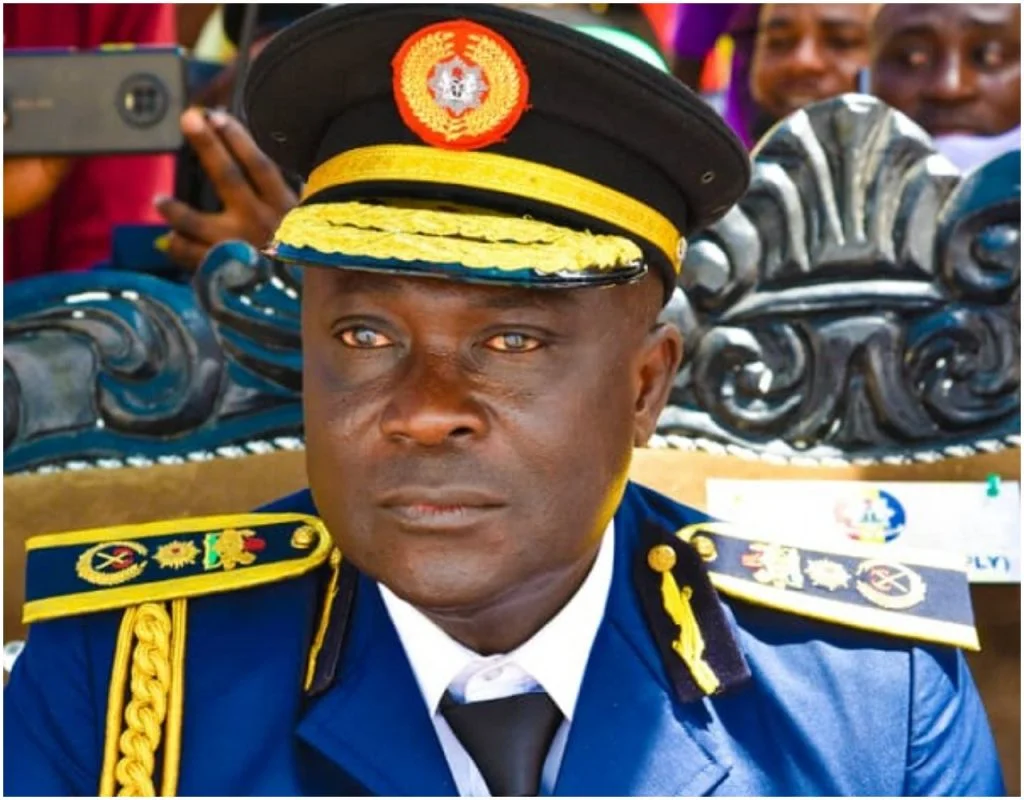
The Controller General, Federal Fire Service (FFS), Abdulganiyu Jaji says property worth about N67.1bn was lost in 2024 as a result of fire outbreaks in the country.
He disclosed this while addressing a briefing newsmen in Abuja, stating that about 100 deaths were recorded as a result of fire outbreaks within the same period.
According to the Controller General, the Service also saved property worth N1.94 trillion last year.
In the year 2024, Jaji explained that the Federal Fire Service effectively saved property worth N1.94 trillion and recorded an estimated property loss of N67.1 billion.
He added, “In the same year, Federal Fire Service responded to fire and other emergencies during which 30,890 lives were saved while over 100 lives were lost.”
Jaji opined that the cases of fire outbreaks could rise during the harmattan season when humidity is low, implored all operators of fuel stations, petrol tankers, gas refilling stations, gas cylinders consumers and the general public to follow safety protocols and regulations to curb the situation.
He further stated that the Service would continue to advance its goals through robust strategies, operational efficiency and proactive moves this year.
He added that they would also focus on raising awareness, and improving response time using cutting-edge technologies such as the National Fire Detection and Alarm System (NAFDAS), Fire Alarm App known as N-Alert.
While commending President Bola Tinubu for approving the procurement of state-of-the-art firefighting appliances and remodelling of the National Fire Academy, he called Nigerians to support the repeal and re-enactment of the Fire Service Act of 1963, saying that if it is achieved, it will reposition the Service to enhance effective service delivery.




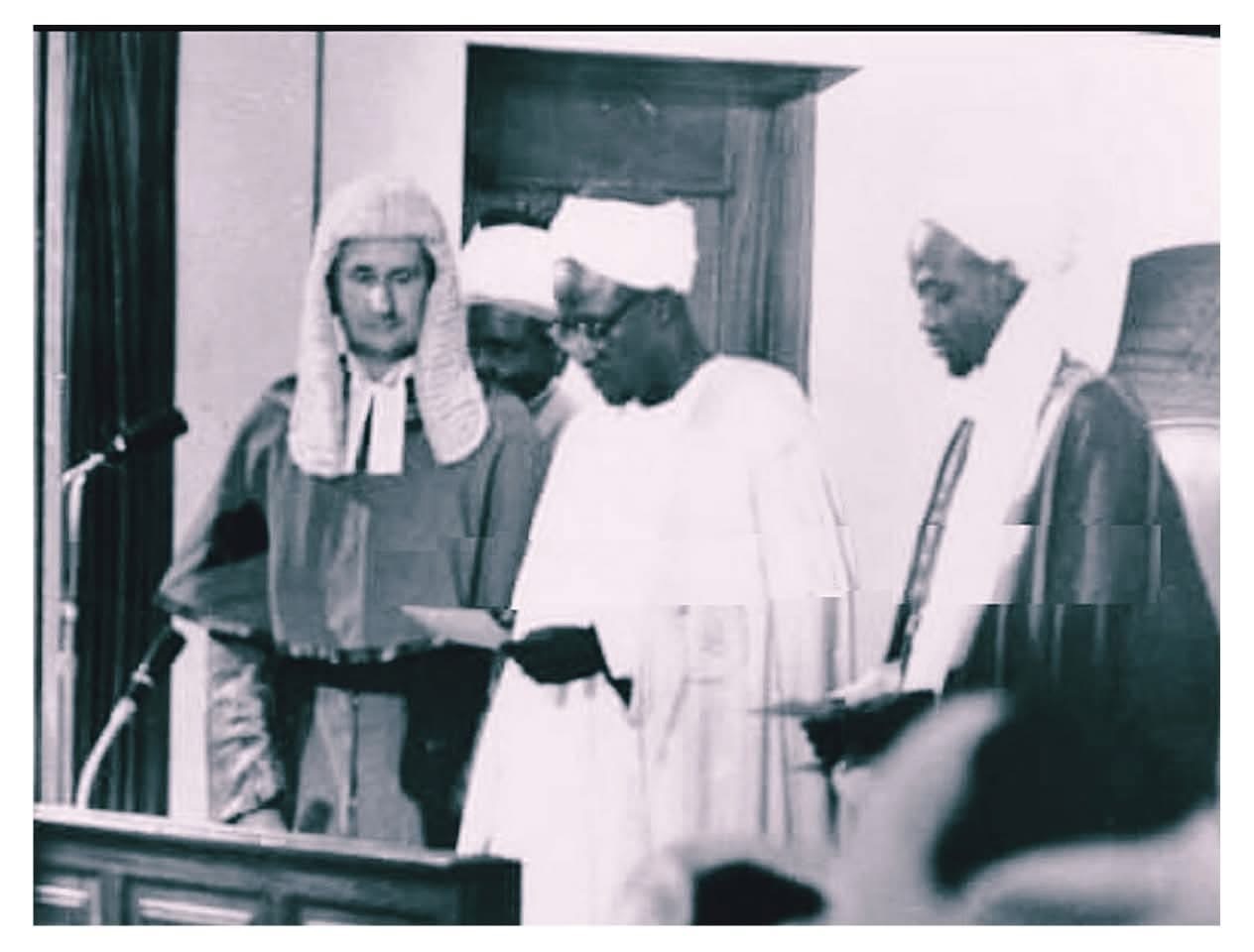
A defining moment in the transition from colonial rule to indigenous leadership in Northern Nigeria.
The image depicts Sir Kashim Ibrahim during his swearing-in ceremony as Governor of the Northern Region of Nigeria, an event that marked a significant milestone in Nigeria’s political evolution. While the photograph is often dated to the late 1950s, historical records confirm that Sir Kashim Ibrahim assumed office in October 1960, shortly after Nigeria attained independence from British colonial rule.
Sir Kashim Ibrahim was appointed Governor of the Northern Region from 1960 to 1966, becoming the first indigenous Nigerian to hold the office. His appointment symbolised the transfer of political authority from colonial administrators to Nigerians and reflected the emerging autonomy of the regions within the newly independent federation.
Born in 1909 in Maiduguri, present-day Borno State, Kashim Ibrahim was a distinguished educator, administrator, and politician. Before entering politics, he had a notable career in education, serving as Provincial Education Officer and later as Minister of Education for the Northern Region, where he played a key role in expanding access to Western education in Northern Nigeria.
The office of Governor during this period was largely ceremonial but politically significant. It represented the Crown at the regional level while reinforcing constitutional governance under Nigeria’s federal structure. As governor, Sir Kashim Ibrahim worked closely with the Northern Region’s political leadership, particularly the government of Sir Ahmadu Bello, the Sardauna of Sokoto, who served as Premier.
His tenure coincided with a formative period in Nigeria’s post-independence history, characterised by efforts at nation-building, regional development, and managing the complexities of ethnic and political diversity. Sir Kashim Ibrahim remained in office until January 1966, when Nigeria’s First Republic was overthrown following the military coup that ended civilian governance.
Beyond politics, Sir Kashim Ibrahim is remembered for his enduring contributions to education and public service in Northern Nigeria. His legacy continues through institutions named in his honour, most notably Sir Kashim Ibrahim College of Education in Maiduguri, which stands as a testament to his lifelong commitment to learning and leadership.
The photograph remains a powerful historical record, capturing a moment when Nigeria formally embraced indigenous leadership at the highest levels of regional governance.
Sources
Falola, Toyin & Matthew Heaton. A History of Nigeria. Cambridge University Press.
Coleman, James S. Nigeria: Background to Nationalism. University of California Press.
Nigerian National Archives, Kaduna – Records of Northern Regional Government (1960–1966).
Columns
Davido’s baby mama, Sophia Momodu, claps back at Snapchat user who accused her of flaunting a replica bag

Sophia Momodu has responded sharply after a Snapchat user tried to drag her over an alleged replica designer bag.
The user accused Sophia of “flaunting a replica” and warned her that this is an era where fake items are easily detected, advising her to stop “setting herself up for drags.”
Sophia was clearly not having it.
In a blunt response, she fired back, telling the user to “hold your chest and say God release me from witchcraft,” adding a sarcastic “you wish?” to shut down the allegation.
https://www.instagram.com/reel/DSMmzu8jMMN/?igsh=dDR3d2Q3ZXgxYWJu
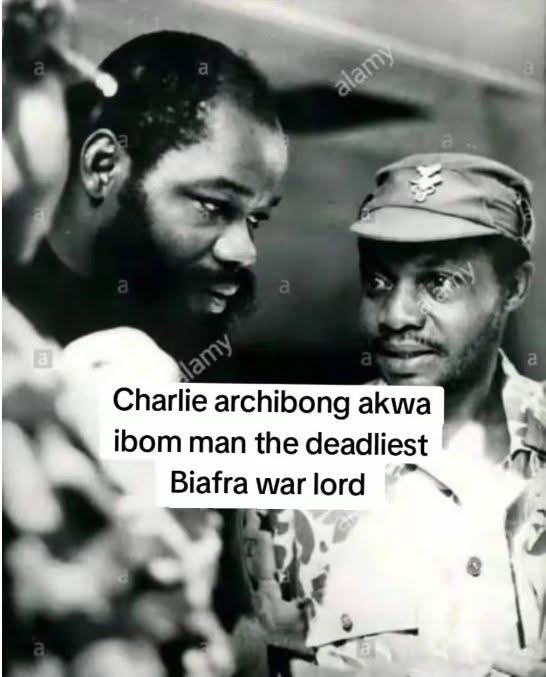
“Brigadier Archong” (also referred to as Colonel Charlie Archibong) was a prominent Biafran commander during the Nigerian Civil War (1967-1970), known for his bravery and key role in the Biafran invasion of the Midwest region.
Key Activities During the War
Midwest Invasion Commander: Colonel Archibong was the lead commander of the Biafran forces that invaded Nigeria’s Midwest region on August 9, 1967. His orders were to advance rapidly through the West and capture Dodan Barracks in Lagos within 48 hours. The advance was halted by a controversial retreat order from Brigadier Victor Banjo at Ore, which ultimately led to the failure of the offensive.
Ojukwu blamed himself for not letting achuzie or Charlie archibong lead the troops to capture Nigeria capital city Lagos after the Biafran capital city Enugu was attacked by the Nigerian, even after Charlie archibong territory fell to the Nigerian military Charlie archibong and his people mostly lead to lay a deadly ambush against the Nigerian army in Calabar and akwa ibom and pH and this action Also lead to the killing of innocent civilians by Nigeria army not only Asaba experienced massacred south south of today veteran can testify
Key Biafran Fighter: Archibong was considered one of General Odumegwu Ojukwu’s most trusted and gallant fighters. He was known by the nickname “Charlie Bazooka” and was respected for his zeal and determination.
Further Action: After the Midwest campaign, he saw more action around Ikot Ekpene.
Disappearance/Death: Archibong was reported missing after an officer-led reconnaissance operation, and his command headquarters waited in vain for his return. Sources suggest he may have been killed through internal sabotage within Biafra.
Archibong is remembered as a significant figure in the Biafran military, often appearing in historical photos alongside Ojukwu as a “war hero.

Accord Party Crisis Deepens As Another Governorship Candidate Emerges For Osun Polls

AMNESTY INTERNATIONAL FLAGS IMO “TIGER BASE,” VOWS PUBLIC DISCLOSURE OF ALLEGED RIGHTS VIOLATIONS.

Tinubu, ECOWAS leaders meet in Abuja over Benin coup, regional stability

-
Business1 year ago
US court acquits Air Peace boss, slams Mayfield $4000 fine
-

 Trending1 year ago
NYA demands release of ‘abducted’ Imo chairman, preaches good governance
-

 Politics1 year ago
Mexico’s new president causes concern just weeks before the US elections
-

 Politics1 year ago
Putin invites 20 world leaders
-

 Politics1 year ago
Russia bans imports of agro-products from Kazakhstan after refusal to join BRICS
-
Entertainment1 year ago
Bobrisky falls ill in police custody, rushed to hospital
-
Entertainment1 year ago
Bobrisky transferred from Immigration to FCID, spends night behind bars
-
Education1 year ago
GOVERNOR FUBARA APPOINTS COUNCIL MEMBERS FOR KEN SARO-WIWA POLYTECHNIC BORI