
Politics
How Rivers Govt can approach S’Court judgement on allocation stoppage – Farah Dagogo

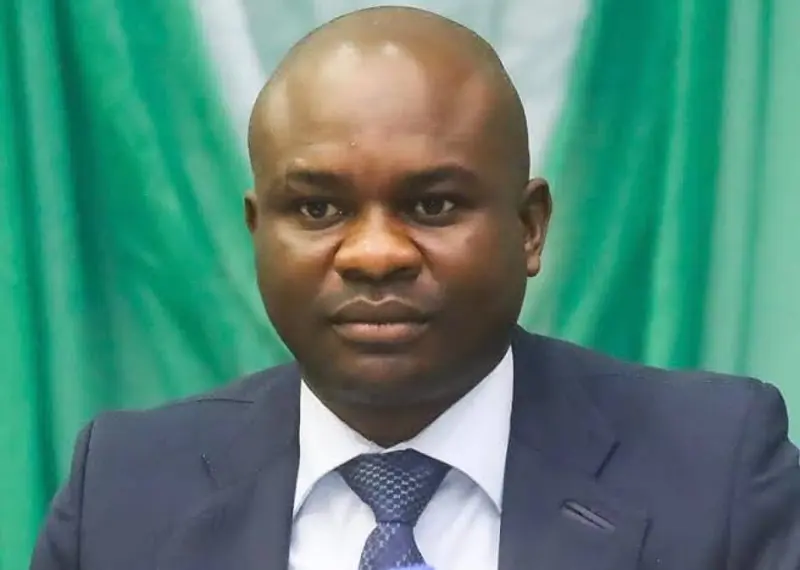
Hon. Farah Dagogo was a former governorship aspirant in the 2023 Rivers State election. He was at different times a member of the National Assembly (House of Representatives) and State House of Assembly.
In this interview with Ekwutosblog, he gives insight into the recent Supreme Court judgement on Rivers State political crises, steps that the Governor and the House of Assembly need to take for lasting peace. He also advised against tenure elongation of Local Government chairmen just as he gave instances on how the judgement on stoppage of allocations can be challenged. Excerpts!
Is the Supreme Court order on seizure of allocations to Rivers State justified?
The principle that a smaller panel of judges cannot overrule a larger panel within the same court is fundamental to maintaining judicial consistency and stability. In the context of the Nigerian Supreme Court, this doctrine ensures that legal precedents are respected unless reconsidered by an equal or larger bench.
In Nigeria, the doctrine of stare decisis mandates that decisions of higher courts bind lower courts, and courts of equal standing should follow established precedents. Specifically, a smaller panel, such as a five-justice bench, should not overrule the decision of a larger panel, like a seven-justice bench. This hierarchy preserves the integrity and predictability of the legal system. For instance, in Sodeinde Bros. Ltd v. ACB Ltd, the Supreme Court emphasized that a five-person panel cannot overrule or depart from the decision of a panel of equal or larger number.
The recent events in Rivers State have brought this principle into sharp focus.
The crisis began when 27 members of the Rivers State House of Assembly allegedly defected from the Peoples Democratic Party (PDP) to the All Progressives Congress (APC). Under Nigerian law, specifically the 1999 Constitution (as amended) lawmakers are expected to vacate their seats upon defection unless their original party is factionalized. However, the Supreme Court found no evidence supporting the claim that these lawmakers had defected, thereby rejecting the assertion that they had lost their seats.
You recall that a five-justice panel of the Supreme Court ruled that there was no evidence of defection by the 27 lawmakers, effectively restoring their positions in the House. This decision raises concerns about adherence to judicial hierarchy, as it appears to conflict with the established precedent that a smaller panel cannot overrule a larger one. The ruling also ordered the Central Bank of Nigeria to withhold federal allocations to Rivers State until the budget was passed by the reinstated lawmakers, a move that has been criticized as punitive towards the state’s populace.
This brings to bear analysis of Judicial Authority and Case Law. The Supreme Court’s decision to have a five-justice panel address an issue previously settled by a seven-justice panel contradicts the established judicial practice of panel hierarchy and overruling precedents. Such actions can undermine the consistency and reliability of legal precedents. As noted in legal analyses, the present panel size weakens the institutional voice of the Supreme Court and is potentially harmful to its integrity.
The 1999 Constitution (as amended) stipulates that lawmakers who defect from their political parties without justifiable reasons, such as a division within the party, must vacate their seats. In this case, the Supreme Court found no evidence of defection, thereby allowing the lawmakers to retain their positions. This interpretation aligns with the constitutional mandate but raises questions about the court’s consistency in applying these provisions. I am giving all these backgrounds so you have an idea of how the law works or operates.
To your question on withholding of Federal Allocations to the state, the Supreme Court’s directive to withhold federal allocations to Rivers State introduces a complex constitutional issue. While the court aims to enforce legislative compliance, such financial sanctions could be seen as overreach, potentially violating the principles of federalism and the financial autonomy of state governments.
To surmise it, the Supreme Court’s handling of the Rivers State legislative crisis highlights critical issues concerning judicial hierarchy, adherence to constitutional provisions, and the balance of powers within Nigeria’s federal structure. Departing from established precedents without convening an appropriate panel size undermines the judiciary’s credibility and the doctrine of stare decisis. Moreover, punitive measures affecting state finances may set a concerning precedent for federal-state relations. It is imperative for the judiciary to uphold its foundational principles to maintain public trust and ensure the rule of law.










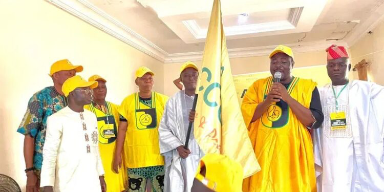
A faction of Accord Party has held its own governorship primary, where Mr. Clement Bamigbola emerged as the faction’s governorship candidate for the 2026 Osun State election.
This is coming just four days after the emergence of Governor Ademola Adeleke as the party’s flag-bearer.
Recall that the party under the leadership of Maxwell Mgbudem, on Wednesday, held a similar exercise which produced Governor Ademola Adeleke as the party’s candidate.
However, a faction of the party rejected his emergence, insisting that Barrister Maxwell Mgbudem is not the legally recognized national chairman of the Accord Party.
In a fresh development on Sunday, about 300 delegates of the Accord Party from across Osun State elected Bamigbola as the factional candidate during a primary held at Regina Suite, Osogbo.
Bamigbola emerged through a voice vote conducted by the delegates, after which the Chairman of the Primary Committee, Hon. Olufemi Ogundare, declared him the party’s candidate for the 2026 Osun State governorship election.
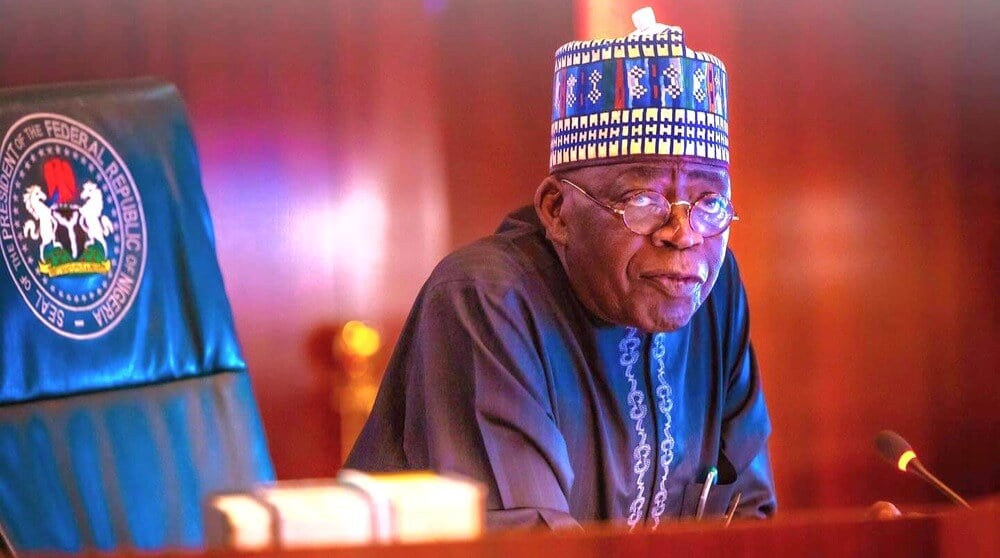
President Bola Tinubu and leaders of ECOWAS countries are currently meeting in Abuja.
The 68th Ordinary Session of the ECOWAS Authority of Heads of State and Government is taking place at the State House Conference Centre, in Abuja.
Leaders of West African countries at the meeting include President Julius Bio (Sierra Leone, ECOWAS Chair), President Patrice Talon (Benin), José Maria Neves (Cabo Verde) and Alassane Ouattara (Côte d’Ivoire).
Others are Adama Barrow (The Gambia), John Mahama (Ghana), Umaro Embaló (Guinea-Bissau), Joseph Boakai (Liberia), Bassirou Faye (Senegal) and Faure Gnassingbé (Togo).
The meeting is coming against the backdrop of five turbulent years for West Africa, which saw coups in Mali (2020, 2021), Burkina Faso (twice in 2022), and Niger (2023).
The latest incidents include an attempted coup in Benin on December 7, 2025, and renewed instability in Guinea-Bissau.
At the time of filing this report, details of the meeting are yet to be disclosed.
Politics
Breaking: Diri Orders Autopsy on Bayelsa Deputy Governor’s Death, Warns Against Politicisation
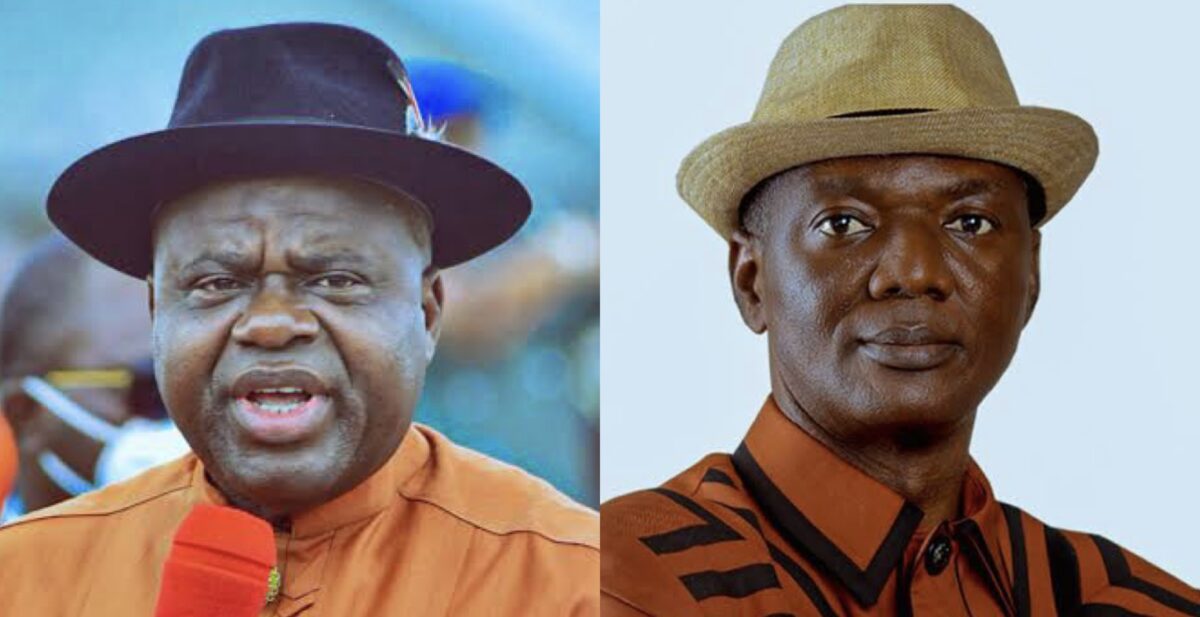
Bayelsa State Governor, Senator Douye Diri, has ordered an autopsy to determine the cause of death of the state’s Deputy Governor, Lawrence Ewhrudjakpo.
Governor Diri gave the directive on Saturday while receiving former President Goodluck Jonathan at the Government House in Yenagoa.
Reacting to the incident, the governor condemned what he described as widespread misinformation and speculation on social media, warning against any attempt to politicise the deputy governor’s death.
“I want to make an appeal. I have seen people politicise his death. In Ijaw land, there is no enmity in death. Let nobody politicise the passing of our dearly beloved deputy governor,” Diri said.
“If anyone truly loves him, this is the time to show it. I have directed that an autopsy be carried out to reveal the cause of his death. There is a lot of nonsense going on on social media.”
The governor further urged the public to focus on mourning and honouring the late deputy governor, noting that the state government had declared three working days of mourning in his honour.
“If anyone is issuing statements to eulogise him, let it end there. Let us mourn him because Bayelsa State is in a mourning mood,” he added.
Governor Diri also called for unity and love among the people, reminding them of the inevitability of death.
Speaking during the condolence visit, former President Goodluck Jonathan described the late Ewhrudjakpo as a committed and dedicated individual who played a key role in the activities of his foundation.
“For me, he was someone my foundation and I will never forget. He represented the governor in all our programs,” Jonathan said, adding that Ewhrudjakpo worked tirelessly in that role, even more than when he served as deputy governor.

The man who tackled a gunman to the floor and saved people from getting sh0t at Bondi Beach in Australia has been identified as Ahmed al Ahmed.

John Cena Retires From Wrestling (Video)

Female Student Missing For 8 Days Found Chilling At Boyfriend’s House

-
Business1 year ago
US court acquits Air Peace boss, slams Mayfield $4000 fine
-

 Trending1 year ago
NYA demands release of ‘abducted’ Imo chairman, preaches good governance
-

 Politics1 year ago
Mexico’s new president causes concern just weeks before the US elections
-

 Politics1 year ago
Putin invites 20 world leaders
-

 Politics1 year ago
Russia bans imports of agro-products from Kazakhstan after refusal to join BRICS
-
Entertainment1 year ago
Bobrisky falls ill in police custody, rushed to hospital
-
Entertainment1 year ago
Bobrisky transferred from Immigration to FCID, spends night behind bars
-
Education1 year ago
GOVERNOR FUBARA APPOINTS COUNCIL MEMBERS FOR KEN SARO-WIWA POLYTECHNIC BORI