
Tech
Meta abandons racial diversity programmes as Zuckerberg woos Trump

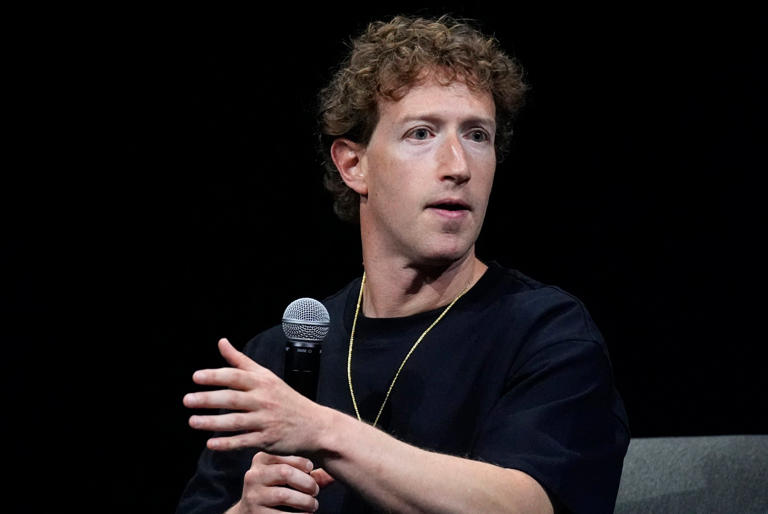
The changes come soon after the platform dropped fact-checking on Facebook and Instagram in the US, and mark a further right-wing shift
Social media giant Meta announced Friday it is dismantling its diversity, equity and inclusion (DEI) programmes across the company, marking another major shift in strategy as it aligns with politically conservative priorities.
In an internal memo to employees, the company outlined sweeping changes including the elimination of its diverse slate hiring approach and the disbanding of its DEI team.
The move comes amid what Meta describes as “a changing legal and policy landscape” following recent Supreme Court decisions against programmes that allowed for increased diversity priorities at US universities.
Do you have questions about the biggest topics and trends from around the world? Get the answers with SCMP Knowledge, our new platform of curated content with explainers, FAQs, analyses and infographics brought to you by our award-winning team.
The memo, first reported by Axios, landed days after Meta abruptly overhauled its content moderation policies, including ending its US fact-checking programme on Facebook and Instagram, in a major shift that conforms with the priorities of incoming US president Donald Trump.
That announcement echoed long-standing complaints made by Trump’s Republican Party and X owner Elon Musk about fact-checking and moderating hate speech on social media.
Meta boss Mark Zuckerberg has been moving aggressively to reconcile with Trump since his election in November, including donating US$1 million to his inauguration fund and hiring a Republican as his public affairs chief.
On Friday he sat down for an interview with popular podcaster Joe Rogan in which he bitterly criticised the Biden administration for asking that content be censored on Meta platforms during the coronavirus pandemic.
Trump has been a harsh critic of Meta and Zuckerberg for years, accusing the company of bias against him and threatening to retaliate against the tech billionaire once back in office.
Republicans are also fiercely against DEI programmes in corporate America, many of which were established in the aftermath of the Black Lives Matter movement and the nation’s attempt to reckon with long-standing racial disparities.
In the immediate aftermath of Trump’s election victory in November, Walmart and a string of prestige brands – from Ford, John Deere and Lowe’s to Harley-Davidson and Jack Daniel’s – also scaled back programmes aimed at bolstering minority groups.
In its memo, Meta said its Chief Diversity Officer Maxine Williams will transition to a new role focused on accessibility and engagement, as the company phases out its dedicated DEI initiatives.
The parent company of Facebook and Instagram will also terminate its supplier diversity programme, which previously prioritised sourcing from diverse-owned businesses. Instead, Meta says it will focus on supporting small and medium-sized businesses more broadly.
“We serve everyone,” the memo stated, emphasising that the company will continue to source candidates from different backgrounds while eliminating specific representation goals for women and people from ethnic minorities that were previously in place.
More Articles from SCMP
Stub out costly Hong Kong trade in illicit cigarettes
Education University of Hong Kong puts non-local students on notice over visas
At US Supreme Court, TikTok’s pleas to honour free speech are met with scepticism
2034 Fifa World Cup still Hong Kong’s goal, Kai Tak can boost interest: Eric Fok Q&A
This article originally appeared on the South China Morning Post (www.scmp.com), the leading news media reporting on China and Asia.
Copyright (c) 2025. South China Morning Post Publishers Ltd. All rights reserved.









Tech
“I Lost $1.2 Million To Hackers On One Of My Apps. I Caught One Of The Hackers, And Instead Of Handing Him Over To The Police, I Employed Him To Work For Me.”- BLord

Anambra Born tech entrepreneur and businessman Linus Williams, popularly known as BLord, has shared an unusual story about how he handled a major cyberattack on one of his applications.
According to BLord, he lost $1.2 million to hackers who infiltrated one of his digital platforms. In the course of tracking the incident, he successfully identified one of the individuals involved in the breach.
Rather than handing the suspect over to security agencies, BLord said he made a strategic decision: he employed the hacker.
He explained that the hacker’s skills, though misapplied, were exceptional and could be redirected towards strengthening his company’s cybersecurity systems.
BLord noted that the decision was driven by a desire to turn a negative experience into an opportunity for growth and to better secure his business infrastructure.
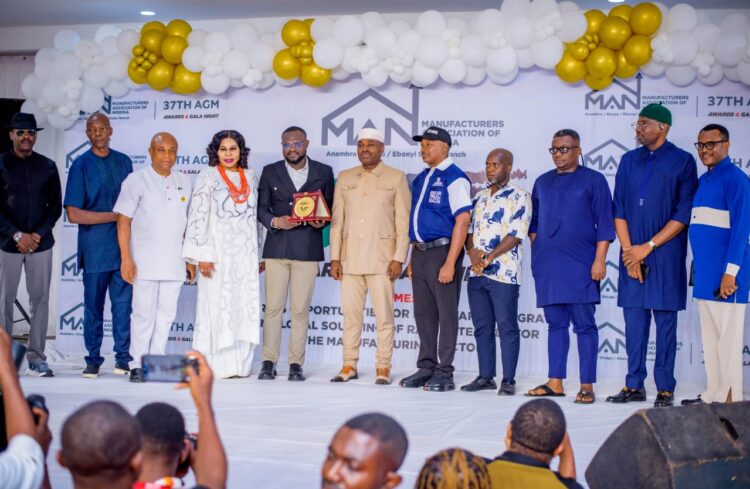
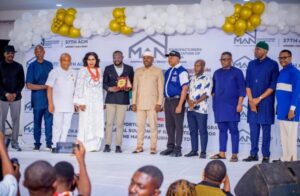
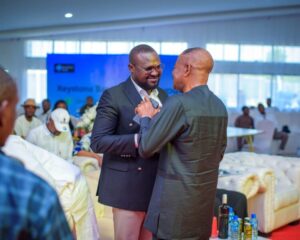
The MD/CEO of John Zobis Group, Mr. John Ezeobi, has again been honoured with another major industry prize in recognition of his contributions to local sourcing, innovation and the growth of Nigeria’s manufacturing capacity.
The prestigious award, “Pillar of Industrial Enterprise and National Impact,” which was conferred on him by the Manufacturers Association of Nigeria (MAN) — Anambra, Ebonyi and Enugu Zone, was presented during the association’s 37th Annual General Meeting, Awards & Gala Night at the International Conference Centre, Enugu.
coming barely three weeks after Ezeobi was nominated as the winner of The Sun’s Industrialist of the Year Award 2025 by the Management of The Sun Newspaper, a run of recognition that has further highlighted his rising profile in the South-East manufacturing ecosystem.
The latest award, it was gathered, celebrates Ezeobi’s deliberate investment in backward integration, his push for local sourcing of raw materials and efforts to strengthen domestic value chains, which MAN described as essential to reducing import dependence and creating jobs across the region.
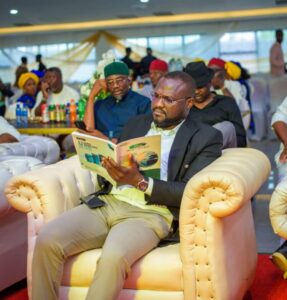
Chaired by Chief Obinna Iyiegbu (Obi Cubana), the well-attended occasion, themed “Exploring Opportunities for Backward Integration and Local Sourcing of Raw Materials for the Manufacturing Sector,” brought together regulators, policymakers, manufacturers and industry stakeholders and also featured presentations, panel sessions and cultural performances, among other highlights.
Speaking at the event, the Keynote Speaker and Director-General of the Raw Materials Research and Development Council (RMRDC), Prof. Nnanyelugo Ike-Muonso, said the economic benefits of exploring Opportunities for backward integration and local sourcing of raw materials for the Manufacturing sector cannot be overemphasized.
Prof. Ike-Muonso told delegates that Nigeria spent over ₦3.53 trillion importing raw materials in the first half of 2025 alone, warning that such dependence continues to weaken the nation’s economy. He further argued that the proposed 30% Value Addition Bill, which would require a minimum local value addition before export, would be transformational if signed into law.
He also outlined the bill’s potential to expand GDP, generate hundreds of thousands of jobs and save foreign exchange by keeping more of the country’s raw-material wealth in domestic supply chains, boost local manufacturing, and generally reposition Nigeria as a regional industrial hub.
On his own part, the Governor of Enugu State, Dr. Peter Mbah, endorsed the call for stronger industry-academia partnerships and urged financial institutions to make affordable credit available to manufacturers who adopt backward integration. The governor, who was represented by his Deputy, Barrister Ifeanyi Ossai, described the policy pathway as key to moving Nigeria from resource export dependence toward higher-value industrial output.
Reacting via his social handle shortly after receiving the award, the Zobis Cable Boss expressed gratitude for the honour, describing it as a strong motivation to do more in driving local production, reducing import dependence, and strengthening Nigeria’s industrial base.
Ezeobi, who received the plaque from pioneer Nollywood star and legal practitioner, Barr. Kenneth Okonkwo, attested that the AGM provided a critical platform for renewed commitment to backward integration as a pathway to sustainable industrial development.
“The event highlighted the critical importance of backward integration and local sourcing of raw materials as strategic levers for strengthening domestic production, reducing import dependency, and building resilient, self-sustaining industries. A meaningful platform for driving progress and collaboration across Nigeria’s manufacturing sector,” he partly wrote.
Also speaking, the Chairman of MAN for the Anambra-Ebonyi-Enugu zone, Dr. Adaora Chukwudozie, described local sourcing as the pragmatic route to lowering production costs and stabilizing supply chains for SMEs and larger manufacturers alike. She welcomed RMRDC’s roadmap and invited state governments to partner in establishing raw-material corridors and shared processing facilities that would bring inputs closer to factories.
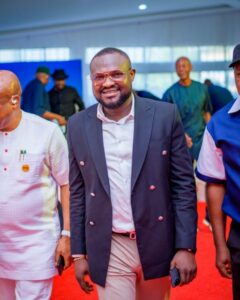
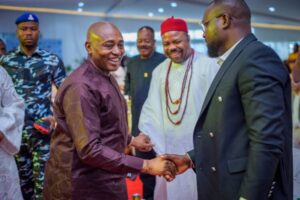
The event, which had His Eminence, Eze Eberechukwu Orji, Eze Aro, as the Royal Father of the Day, was also graced by other notable dignitaries and stakeholders, which include Senator Osita Izunaso, Dr. Gideon Chidiebere Osi, Ichie Sunday Ezeobiora , Chairman, Sunchi Farms; Mr Linus Williams Ifejika, Chairman Blord Group; Otumba Francis Meshioye, National President, Manufacturers Association of Nigeria; Dr. Ifeanyi Okoye, Chairman, Juhel Pharmacy; Chief Dr. Dan Chukwudozie, Chairman,Dozzy Group; Dr. Chike Obidigbo,Chairman, Hardis and Dromedas; Anambra Commissioner for Trade and Industry,Mr. Christian Udechukwu.







Tech
GLOBACOM SEALS STRATEGIC CONNECTIVITY PARTNERSHIP TO DRIVE IMO STATE’S DIGITAL TRANSFORMATION AGENDA

By Prince Uwalaka Chimaroke
15-NOV-2025
Globacom, one of Nigeria’s leading digital solutions providers, has entered into a groundbreaking Internet connectivity agreement with the Imo State Government through the Ministry of Digital Economy and e-Governance—an ambitious step that signals the state’s commitment to becoming a fully digitized economy and a model Smart City in the South-East.
The agreement, hailed as the largest single fixed Internet connectivity initiative ever undertaken by Globacom’s Enterprise Business Group, underscores the company’s growing influence in deploying world-class telecommunications infrastructure across Nigeria. This milestone partnership positions the operator at the heart of Imo State’s fast-evolving digital future.
Through the deal, Globacom will deliver high-capacity, state-of-the-art Internet infrastructure to strategic government and institutional locations. These include the 15-building Smart City complex in Owerri, the Ministry of Digital Economy and e-Governance, and the Imo State University for Innovation, Science and Technology (formerly Imo State Polytechnic). The infrastructure rollout is expected to strengthen digital literacy, modernize public administration, and enhance access to digital services for residents.
A central component of the project is the integration of the Glo-1 submarine cable—Globacom’s privately owned, trans-Atlantic fibre optic system that links Nigeria directly to Europe. Known for its high bandwidth, ultra-low latency, and secure connectivity, the Glo-1 network will serve as the backbone for Imo State’s digital expansion.
With this partnership, Imo State aims to accelerate e-governance, improve the efficiency of public service delivery, attract technology-driven investments, and promote innovation across sectors including education, commerce, and security.
The collaboration demonstrates a shared vision between the State Government and Globacom: to empower citizens, institutions, and businesses through robust digital infrastructure that can sustain long-term economic growth.

FG Bans Admission, Transfer Of SS3 Students

“It took me getting married and giving birth to realise marriage benefits men more” — Woman shares emotional thoughts

Private jet crash lands at Kano airport

-
Business1 year ago
US court acquits Air Peace boss, slams Mayfield $4000 fine
-

 Trending1 year ago
NYA demands release of ‘abducted’ Imo chairman, preaches good governance
-

 Politics1 year ago
Mexico’s new president causes concern just weeks before the US elections
-

 Politics1 year ago
Putin invites 20 world leaders
-

 Politics1 year ago
Russia bans imports of agro-products from Kazakhstan after refusal to join BRICS
-
Entertainment1 year ago
Bobrisky falls ill in police custody, rushed to hospital
-
Entertainment1 year ago
Bobrisky transferred from Immigration to FCID, spends night behind bars
-
Education1 year ago
GOVERNOR FUBARA APPOINTS COUNCIL MEMBERS FOR KEN SARO-WIWA POLYTECHNIC BORI