
Politics
Sri Lanka’s Dissanayake and Premadasa head to presidential race runoff

By Uditha Jayasinghe and Sudipto Ganguly
COLOMBO (Reuters) -Marxist-leaning Anura Kumara Dissanayake and opposition leader Sajith Premadasa headed to a run-off for Sri Lanka’s presidency on Sunday, the election body said, with a second round of counting to determine the winner using preferential votes.
It is the first time in Sri Lanka’s history that the presidential race is to be decided by a second round of counting after the top two candidates failed to win the mandatory 50% of votes to be declared winner.
All remaining candidates, including incumbent President Ranil Wickremesinghe, have been disqualified, the Election Commission told reporters. Dissanayake polled 39.5% of the counted ballots with Premadasa finishing second at 34%.

Anura Kumara Dissanayake, the presidential candidate from National People’s Power, shows his ink-marked finger after casting his vote at a polling station, on the day of the presidential election, in Colombo, Sri Lanka, September 21, 2024. REUTERS/Stringer
© Thomson Reuters
Wickremesinghe, who led the heavily indebted nation’s fragile economic recovery from a debilitating crisis in 2022, trailed in third with 17%.
This is Sri Lanka’s first election since the Indian Ocean nation’s economy buckled in 2022 under a severe foreign exchange shortage, leaving it unable to pay for imports of essentials including fuel, medicine and cooking gas. Protests forced then-President Gotabaya Rajapaksa to flee and later resign.
“The election result clearly shows the uprising that we witnessed in 2022 is not over,” said Pradeep Peiris, a political scientist at University of Colombo.
“People have voted in line with those aspirations to have different political practices and political institutions. AKD (as Dissanayake is known) reflects these aspirations and people have rallied around him.”
Dissanayake, 55, presented himself as the candidate of change for those reeling under austerity measures linked to a $2.9 billion International Monetary Fund bailout, promising to dissolve parliament within 45 days of taking office for a fresh mandate for his policies in general elections.

Sri Lanka’s President Ranil Wickremesinghe shows his ink-marked finger after casting his vote at a polling station, on the day of the presidential election, in Colombo, Sri Lanka, September 21, 2024. REUTERS/Dinuka Liyanawatte TPX IMAGES OF THE DAY
© Thomson Reuters
He has worried investors with a manifesto pledging to slash taxes in the island nation, which could impact IMF fiscal targets, and a $25 billion debt rework. But during the campaign, he took a more conciliatory approach, saying any changes would be undertaken in consultation with the IMF and that he was committed to ensuring repayment of debt.
Premadasa also pledged to renegotiate the contours of the IMF deal.
GRINDING POVERTY FOR MILLIONS
Buttressed by the IMF deal, Sri Lanka’s economy has posted a tentative recovery. It is expected to grow this year for the first time in three years and inflation has collapsed to 0.5% from a crisis peak of 70%.
But the continued high cost of living was a critical issue for many voters, and millions remain mired in poverty, with many pinning hopes of a better future on the next leader.
Voting was peaceful, although police declared a curfew across the island nation until noon (0630 GMT) as a precaution while vote counting continued.
About 75% of the 17 million eligible voters cast their ballots, according to the commission.
Dissanayake, known for stirring speeches, ran as a candidate for the National People’s Power alliance, which includes his Marxist-leaning Janatha Vimukthi Peremuna party. Traditionally, Dissanayake’s party has backed stronger state intervention, lower taxes and more closed market economic policies.

Election officials carrying ballot boxes walk at a counting center, after voting ended for the presidential election in Colombo, Sri Lanka September 21,2024.REUTERS/Dinuka Liyanawatte
© Thomson Reuters
Although JVP has just three seats in parliament, Dissanayake was boosted by his promises of tough anti-corruption measures and more pro-poor policies. He drew big crowds at rallies, calling on Sri Lankans to leave behind the suffering of the crisis.
Premadasa, 57, entered politics after his father, President Ranasinghe Premadasa, was killed in a suicide bombing in 1993. The younger Premadasa polled 42% of the votes in 2019 to finish second, behind Rajapaksa, in the last presidential election.

An election official carrying a ballot box walks at a counting center, after voting ended for the presidential election in Colombo, Sri Lanka September 21,2024.REUTERS/Dinuka Liyanawatte
© Thomson Reuters
Premadasa’s centre-left party has promised tax changes to reduce living costs. Support from farming communities in north and central Sri Lanka helped him close the gap on Dissanayake as counting progressed.
The winner will have to ensure Sri Lanka sticks with the IMF programme until 2027 to get its economy on a stable growth path, reassure markets, repay debt, attract investors and help a quarter of its people climb out of poverty.
(Reporting by Uditha Jayasinghe and Sudipto Ganguly in Colombo; Editing by Matthew Lewis, William Mallard and Tom Hogue)



By Prince Uwalaka Chimaroke
17- DEC- 2025
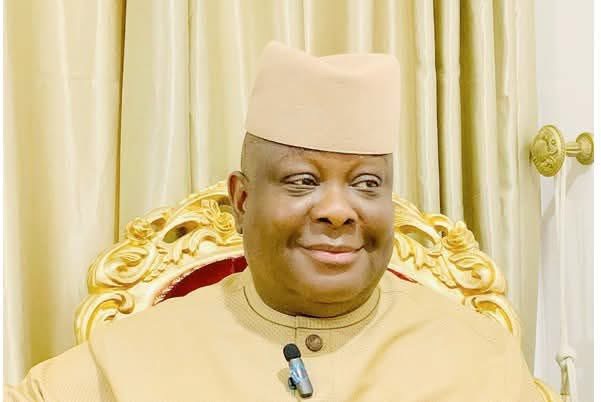
The Senator representing Imo West Senatorial District and Chairman of the Senate Committee on Capital Markets, Senator Osita Izunaso, has expressed deep concern over what he described as the increasing occupation of political offices by individuals lacking the training, discipline, and values required for effective leadership.
Speaking in Abuja on Wednesday at the public presentation of Leadership 365: Daily Reflection for Effective Leadership, authored by Dr. Linus Okorie, President of the GOTNI Leadership Centre, the lawmaker noted that leadership in Nigeria is often misunderstood as merely holding public office rather than demonstrating character, competence, and vision.
Senator Izunaso stressed that authority does not automatically confer leadership, lamenting the absence of intentional leadership development structures in the country. According to him, many political actors assume leadership positions without adequate preparation, resulting in poor conduct, weak decision-making, and a disconnect from the people they serve.
He explained that true leadership reflects in attitude, speech, and behaviour, noting that leaders are constantly under public scrutiny and must therefore conduct themselves with responsibility and restraint. He added that leadership is not exclusive to political office holders, pointing out that leaders often emerge naturally in everyday settings based on influence and character rather than titles.
The lawmaker commended Dr. Okorie for contributing to leadership discourse through his book, describing it as a thoughtful work that highlights leadership as a daily responsibility applicable to all spheres of life. He emphasized that leadership is often revealed through action and integrity, not position, and can be identified even among children through observation of behaviour and influence.
Addressing young Nigerians, Senator Izunaso cautioned against the growing obsession with quick wealth, urging them instead to embrace mentorship and positive role models whose lives reflect sound values. He advised that money should not be the primary measure for choosing role models, stressing the importance of character and long-term impact.
The senator further observed that while technology and artificial intelligence are shaping the modern world, they can never replace the power of the human spirit. He noted that when properly guided, human capacity can drive meaningful change capable of transforming institutions, economies, and nations.
In his remarks, Dr. Okorie underscored the importance of deliberate leadership grooming, stating that nations that have achieved sustainable development did so by investing consciously in leadership capital. He explained that the book was written to encourage consistent self-reflection and inspire individuals committed to making a positive difference in society.
Observers note that concerns about leadership quality have remained a recurring issue in Nigeria’s governance discourse, with critics often pointing to weak institutions, policy inconsistency, and a political culture that prioritizes patronage over competence as major challenges to national development.
Politics
Engineers Farouk Ahmed, Gbenga Komolafe resign, President Tinubu nominates successors to the Senate for approval
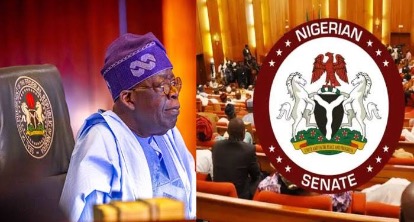
President Bola Ahmed Tinubu has asked the Senate to approve the nominations of two new chief executives for the Nigerian Midstream and Downstream Petroleum Regulatory Authority (NMDPRA) and the Nigerian Upstream Petroleum Regulatory Commission (NUPRC).
The requests followed the resignation of Engineer Farouk Ahmed of the NMDPRA and Gbenga Komolafe of the NUPRC. Both officials were appointed in 2021 by former President Buhari to lead the two regulatory agencies created by the Petroleum Industry Act (PIA).
To fill these positions, President Tinubu has written to the Senate, requesting expedited confirmation of Oritsemeyiwa Amanorisewo Eyesan as CEO of NUPRC and Engineer Saidu Aliyu Mohammed as CEO of NMDPRA.
The two nominees are seasoned professionals in the oil and gas industry.
Eyesan, a graduate of Economics from the University of Benin, spent nearly 33 years with the NNPC and its subsidiaries. She retired as Executive Vice President, Upstream (2023–2024), and previously served as Group General Manager, Corporate Planning and Strategy at NNPC from 2019 to 2023.
Engineer Saidu Aliyu Mohammed, born in 1957 in Gombe, graduated from Ahmadu Bello University in 1981 with a Bachelor’s in Chemical Engineering. He was announced today as an independent non-executive director at Seplat Energy.
His prior roles include Managing Director of Kaduna Refining and Petrochemical Company and Nigerian Gas Company, as well as Chair of the boards of West African Gas Pipeline Company, Nigeria LNG subsidiaries, and NNPC Retail.
He also served as Group Executive Director/Chief Operating Officer, Gas & Power Directorate, where he provided strategic leadership for major gas projects and policy frameworks, including the Gas Masterplan, Gas Network Code, and contributions to the Petroleum Industry Act (PIA).
Engineer Mohammed played a pivotal role in delivering key projects such as the Escravos–Lagos Pipeline Expansion, the Ajaokuta–Kaduna–Kano (AKK) Gas Pipeline, and Nigeria LNG Train.
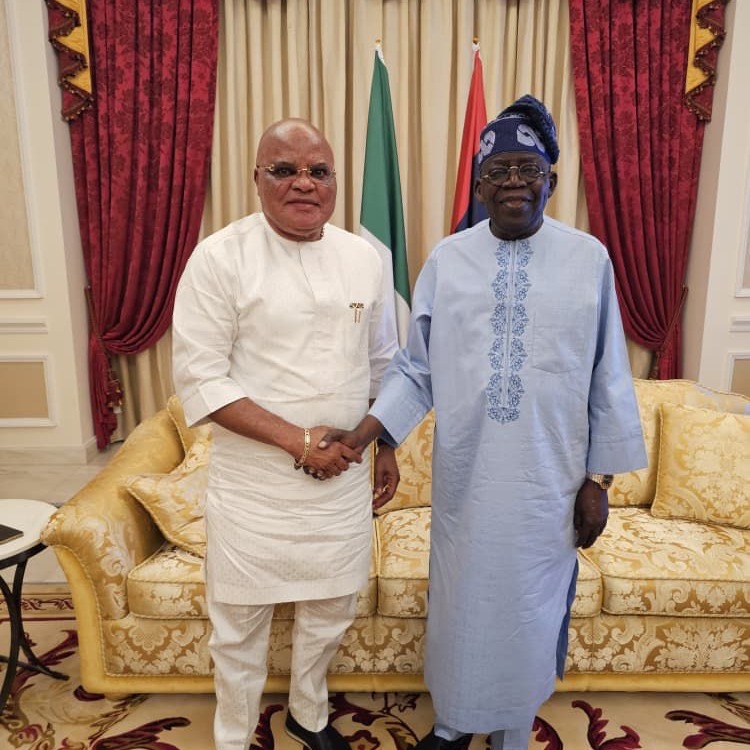
President Bola Tinubu felicitates Senator Ifeanyi Godwin Ararume, astute politician and accomplished businessman, on his birthday, December 16.
Senator Ararume’s odyssey in politics began in the late 1980s, when he served as the State Treasurer of the Liberal Convention in old Imo State. He later joined the National Finance Committee of the defunct National Republican Convention.
He represented Imo North in the 9th National Assembly. He was first elected in May 1999 and re-elected in April 2003. He also served on several committees and held other official roles.
President Tinubu commends the former senator for his years of service to the nation and contributions to its peace, unity, and progress.
The President describes Senator Ararume as a resolute and shrewd politician, highlighting his courageous and remarkable political journey through the years.
President Tinubu wishes Senator Ararume a happy 67th birthday and prays that God Almighty will grant him more years of good health and strength.

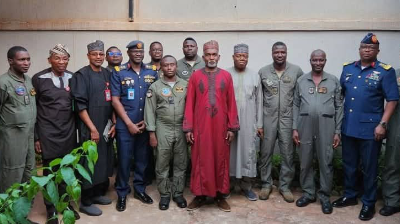
Burkina Faso Releases Nigerian aircraft, Military Personnel After Tuggar Meeting

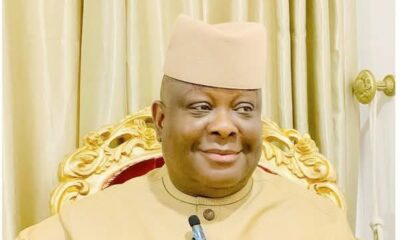
IMO WEST SENATOR IZUNASO WARNS AGAINST RISING TREND OF ILL-PREPARED LEADERS IN NIGERIA.

Chief Timothy Adeola Odutola (1902–1995): Pioneer Industrialist, Nationalist and Philanthropist of Ijebu-Ode

-
Business1 year ago
US court acquits Air Peace boss, slams Mayfield $4000 fine
-

 Trending1 year ago
NYA demands release of ‘abducted’ Imo chairman, preaches good governance
-

 Politics1 year ago
Mexico’s new president causes concern just weeks before the US elections
-

 Politics1 year ago
Putin invites 20 world leaders
-

 Politics1 year ago
Russia bans imports of agro-products from Kazakhstan after refusal to join BRICS
-
Entertainment1 year ago
Bobrisky falls ill in police custody, rushed to hospital
-
Entertainment1 year ago
Bobrisky transferred from Immigration to FCID, spends night behind bars
-
Education1 year ago
GOVERNOR FUBARA APPOINTS COUNCIL MEMBERS FOR KEN SARO-WIWA POLYTECHNIC BORI