
Tech
TikTok says it will go dark on Sunday unless Biden intervenes ‘immediately’

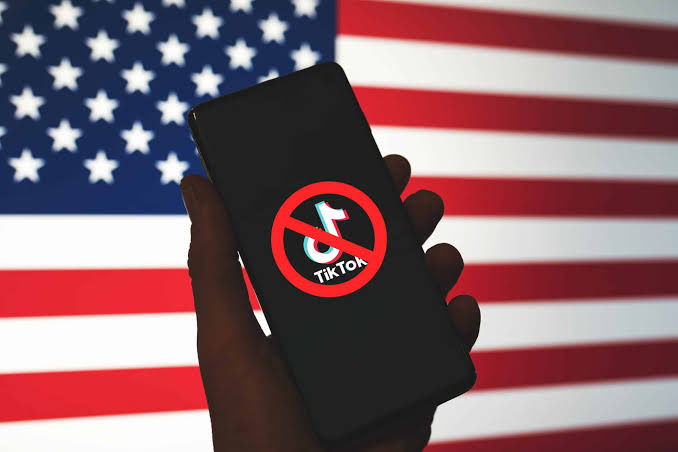
TikTok on Friday said that it would turn off more than 170 million Americans’ access to the super popular video app on Sunday, unless President Joe Biden’s administration acts urgently to assure the company it will not be punished for violating the terms of its looming ban.
A bipartisan law, signed by Biden in April, requires TikTok to sell to American buyers by Sunday or face a ban in the United States. The Supreme Court earlier in the day allowed the controversial ban to stand.
The Biden administration has made clear it would leave enforcement of the ban to President-elect Donald Trump, who will be inaugurated on Monday, and a White House official reiterated Friday night that its position on the matter has been sufficiently clear.
While the official did not rule out further action before the Sunday deadline, they said the administration had clearly signaled that it would not penalize service providers like Google and Apple for hosting TikTok on Sunday.
Still, TikTok said that was not enough.
“The statements issued today by both the Biden White House and the Department of Justice have failed to provide the necessary clarity and assurance to the service providers that are integral to maintaining TikTok’s availability to over 170 million Americans,” the company said in a statement Friday evening. “Unless the Biden Administration immediately provides a definitive statement to satisfy the most critical service providers assuring non-enforcement, unfortunately TikTok will be forced to go dark on January 19.”
Trump has suggested – but not outright stated – that he will not enforce the ban. He had asked the Supreme Court to stay the ban so his incoming administration could work out a deal to sell TikTok to American buyers. But the Supreme Court rejected an appeal from the app’s owners that claimed the law violated the First Amendment, allowing the ban to take place.
So TikTok could turn itself off Sunday, only to turn itself back on at a later date if Trump gives it assurances it will go unpunished for violating the ban.
The company’s Friday night warning was driven by concerns from service providers that face steep fines for allowing access to the app in the event of a ban.
Some service producers – companies that would face exorbitant fines for allowing access to TikTok once the ban takes effect – told TikTok Friday that they still feel vulnerable, according to a person familiar with the matter, who added that the service providers “do not feel that they’ve been given enough assurance that they will not be liable.”
Of course, the Biden administration’s power runs out on Monday, and White House aides have made clear that implementation of the law is entirely up to the incoming administration.
In the meantime, TikTok executives seem to be operating out of an abundance of caution, fearing legal and financial penalties and exerting maximum pressure to keep the app alive in the United States over the long term.
The Supreme Court won’t intervene
Earlier Friday, the high court handed down an unsigned opinion in the TikTok case, and there were no noted dissents.
The decision, which followed warnings from the Biden administration that the app posed a “grave” national security threat because of its ties to China, will allow the ban to start Sunday. But there are a lot of lingering questions about how the ban would work in practice because there’s no precedent for the US government blocking a major social media platform. And how exactly the government would enforce it remains unclear.
In its opinion, the Supreme Court acknowledged that for 170 million Americans TikTok offers “a distinctive and expansive outlet for expression, means of engagement, and source of community.”
But the court said, Congress was focused on national security concerns and that, the court said, was a deciding factor in how it weighed the case.
“Congress has determined that divestiture is necessary to address its well-supported national security concerns regarding TikTok’s data collection practices and relationship with a foreign adversary,” the court wrote.
In a TikTok video responding to the decision, TikTok CEO Shou Chew suggested the company will continue its efforts to ensure the app remains accessible for Americans — potentially now with an assist from President-elect Trump.
“We have been fighting to protect the constitutional right of free speech for the more than 170 million Americans who use our platform every day to connect, create, discover and achieve their dreams,” Chew said. “On behalf of everyone at TikTok, and our users across the country, I want to thank President Trump for his commitment to work with us to find a solution that keeps TikTok available in the United States.”
He added: “We are grateful and pleased to have the support of a president who truly understands our platform, one who has used TikTok to express his own thoughts and perspectives, connecting with the world and generating more than 60 billion views of his content in the process.”
Trump tells CNN: ‘I’ll be making the decision’
The ruling also puts the spotlight on Trump, who spoke with CNN’s Pamela Brown after the decision came down.
“It ultimately goes up to me, so you’re going to see what I’m going to do,” Trump said.
Asked if he would try to reverse the pending ban, Trump said: “Congress has given me the decision, so I’ll be making the decision.”
Trump also confirmed he spoke with Chinese President Xi Jinping, saying they had “a great talk about TikTok and a great talk about many other subjects.”
But the Biden administration – which ends in less than 72 hours – said it was time for Trump to take the baton on the ban.
White House press secretary Karine Jean-Pierre said in a statement Friday morning that “President Biden’s position on TikTok has been clear for months, including since Congress sent a bill in overwhelming, bipartisan fashion to the President’s desk: TikTok should remain available to Americans, but simply under American ownership or other ownership that addresses the national security concerns identified by Congress in developing this law.”
“Given the sheer fact of timing, this administration recognizes that actions to implement the law simply must fall to the next administration, which takes office on Monday,” she added.
Companies and content creators connected to TikTok’s operations in the US – caught in limbo between the two administrations – are seeking assurances that a ban on the popular app and any penalties won’t be enforced right away.
The law penalizes companies that “distribute” or “update” the app with fines of up to $5,000 for each user affected, an equation that could easily reach hundreds of millions of dollars – and potentially billions of dollars – in penalties. The law requires the Department of Justice to investigate potential violations and pursue enforcement.
“From what we’ve heard already … that the implementation is up to the new administration already suggests that they don’t plan on enforcing it,” Jeffrey Fisher, who represented TikTok users in the challenge to the ban, said on CNN’s “The Lead with Jake Tapper.”
“But just given the nature of the law and how many people in the country are watching this,” Fisher said, “we’re just seeking additional clarification that there’s a little breathing space for the new administration to come in and take a fresh look at this.”
A US law enforcement official, however, told CNN that the current Biden administration is leaving it to companies and their attorneys to interpret how to comply with the law on Sunday. In practical terms, the Justice Department isn’t going to file lawsuits over the holiday weekend, with Martin Luther King Jr. Day on Monday, the law enforcement official added.
In his video, Chew told viewers, “Rest assured we will do everything in our power” to ensure the popular app remains available, adding: “More to come.”
The TikTok CEO is set to be seated on the dais, alongside other leading tech CEOs, at Trump’s inauguration — perhaps a sign of just how serious the incoming president is about trying to save the app.
And with some in Congress now suggesting that TikTok might need more time to find a buyer, Trump could find support in trying to push off the ban to a later date.
The law gives the president the option to extend the ban by 90 days, but triggering the extension requires evidence that parties working on purchasing have made significant progress, including binding legal agreements for such a deal — and TikTok’s parent company, ByteDance, hasn’t publicly updated its stance that the app is not for sale.
Decision focuses on ‘extensive’ data collection and security concerns
The Supreme Court decision focuses heavily on concerns about the app’s data collection.
The Biden administration had made two national security arguments about TikTok. One was a fear that the China could access users’ information as potential blackmail material. Another was that the company could manipulate content in a way that benefits the Chinese government’s talking points.
The Supreme Court, which often defers to the executive branch on matters of national security, leaned heavily into the data collection argument.
TikTok does “not dispute that the government has an important and well-grounded interest in preventing China from collecting the personal data of tens of millions of U.S. TikTok users,” the court wrote. “Nor could they. The platform collects extensive personal information from and about its users.”
The court was careful to note the “inherent narrowness” of its ruling given the specific concerns regarding TikTok and the Chinese government. In another similar case, the justices said, the ruling could look different.
“Data collection and analysis is a common practice in this digital age. But TikTok’s scale and susceptibility to foreign adversary control, together with the vast swaths of sensitive data the platform collects, justify differential treatment to address the Government’s national security concerns,” they wrote.
The ruling also noted that justices are “conscious that the cases before us involve new technologies with transformative capabilities.”
Gorsuch and Sotomayor discuss level of scrutiny
Conservative Justice Neil Gorsuch wrote a concurrence sketching out distinctions in how he viewed the case from a legal perspective, while stressing that these thoughts came with just a very limited time that the court had to review and decide the case.
He said that he had “serious reservations” about the level of scrutiny the court’s opinion applied to the law, indicating that he thought “strict scrutiny” – which sets a higher bar for the government to overcome to prove the law’s constitutionality – may have been the more appropriate approach.
But even under that high bar, Gorsuch said he thought the government had met its burden.
“Speaking with and in favor of a foreign adversary is one thing. Allowing a foreign adversary to spy on Americans is another,” he wrote.
Liberal Justice Sonia Sotomayor, also concurring in the court’s opinion, wrote separately to air her disagreement with the court’s decision to “assume without deciding” that the law implicates the First Amendment.
The court’s line of cases dealing with the First Amendment, she said, “leaves no doubt that it does.”
This story has been updated with additional developments.





Tech
“I Lost $1.2 Million To Hackers On One Of My Apps. I Caught One Of The Hackers, And Instead Of Handing Him Over To The Police, I Employed Him To Work For Me.”- BLord
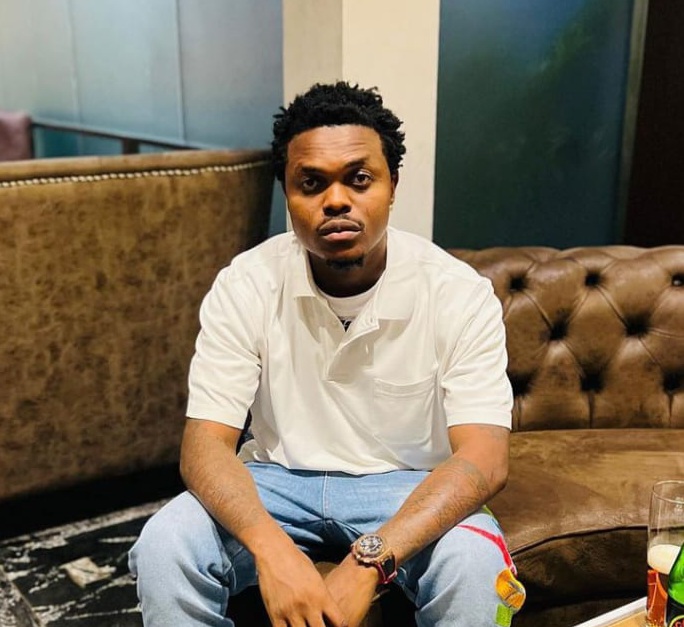
Anambra Born tech entrepreneur and businessman Linus Williams, popularly known as BLord, has shared an unusual story about how he handled a major cyberattack on one of his applications.
According to BLord, he lost $1.2 million to hackers who infiltrated one of his digital platforms. In the course of tracking the incident, he successfully identified one of the individuals involved in the breach.
Rather than handing the suspect over to security agencies, BLord said he made a strategic decision: he employed the hacker.
He explained that the hacker’s skills, though misapplied, were exceptional and could be redirected towards strengthening his company’s cybersecurity systems.
BLord noted that the decision was driven by a desire to turn a negative experience into an opportunity for growth and to better secure his business infrastructure.

The MD/CEO of John Zobis Group, Mr. John Ezeobi, has again been honoured with another major industry prize in recognition of his contributions to local sourcing, innovation and the growth of Nigeria’s manufacturing capacity.
The prestigious award, “Pillar of Industrial Enterprise and National Impact,” which was conferred on him by the Manufacturers Association of Nigeria (MAN) — Anambra, Ebonyi and Enugu Zone, was presented during the association’s 37th Annual General Meeting, Awards & Gala Night at the International Conference Centre, Enugu.
coming barely three weeks after Ezeobi was nominated as the winner of The Sun’s Industrialist of the Year Award 2025 by the Management of The Sun Newspaper, a run of recognition that has further highlighted his rising profile in the South-East manufacturing ecosystem.
The latest award, it was gathered, celebrates Ezeobi’s deliberate investment in backward integration, his push for local sourcing of raw materials and efforts to strengthen domestic value chains, which MAN described as essential to reducing import dependence and creating jobs across the region.
Chaired by Chief Obinna Iyiegbu (Obi Cubana), the well-attended occasion, themed “Exploring Opportunities for Backward Integration and Local Sourcing of Raw Materials for the Manufacturing Sector,” brought together regulators, policymakers, manufacturers and industry stakeholders and also featured presentations, panel sessions and cultural performances, among other highlights.
Speaking at the event, the Keynote Speaker and Director-General of the Raw Materials Research and Development Council (RMRDC), Prof. Nnanyelugo Ike-Muonso, said the economic benefits of exploring Opportunities for backward integration and local sourcing of raw materials for the Manufacturing sector cannot be overemphasized.
Prof. Ike-Muonso told delegates that Nigeria spent over ₦3.53 trillion importing raw materials in the first half of 2025 alone, warning that such dependence continues to weaken the nation’s economy. He further argued that the proposed 30% Value Addition Bill, which would require a minimum local value addition before export, would be transformational if signed into law.
He also outlined the bill’s potential to expand GDP, generate hundreds of thousands of jobs and save foreign exchange by keeping more of the country’s raw-material wealth in domestic supply chains, boost local manufacturing, and generally reposition Nigeria as a regional industrial hub.
On his own part, the Governor of Enugu State, Dr. Peter Mbah, endorsed the call for stronger industry-academia partnerships and urged financial institutions to make affordable credit available to manufacturers who adopt backward integration. The governor, who was represented by his Deputy, Barrister Ifeanyi Ossai, described the policy pathway as key to moving Nigeria from resource export dependence toward higher-value industrial output.
Reacting via his social handle shortly after receiving the award, the Zobis Cable Boss expressed gratitude for the honour, describing it as a strong motivation to do more in driving local production, reducing import dependence, and strengthening Nigeria’s industrial base.
Ezeobi, who received the plaque from pioneer Nollywood star and legal practitioner, Barr. Kenneth Okonkwo, attested that the AGM provided a critical platform for renewed commitment to backward integration as a pathway to sustainable industrial development.
“The event highlighted the critical importance of backward integration and local sourcing of raw materials as strategic levers for strengthening domestic production, reducing import dependency, and building resilient, self-sustaining industries. A meaningful platform for driving progress and collaboration across Nigeria’s manufacturing sector,” he partly wrote.
Also speaking, the Chairman of MAN for the Anambra-Ebonyi-Enugu zone, Dr. Adaora Chukwudozie, described local sourcing as the pragmatic route to lowering production costs and stabilizing supply chains for SMEs and larger manufacturers alike. She welcomed RMRDC’s roadmap and invited state governments to partner in establishing raw-material corridors and shared processing facilities that would bring inputs closer to factories.
The event, which had His Eminence, Eze Eberechukwu Orji, Eze Aro, as the Royal Father of the Day, was also graced by other notable dignitaries and stakeholders, which include Senator Osita Izunaso, Dr. Gideon Chidiebere Osi, Ichie Sunday Ezeobiora , Chairman, Sunchi Farms; Mr Linus Williams Ifejika, Chairman Blord Group; Otumba Francis Meshioye, National President, Manufacturers Association of Nigeria; Dr. Ifeanyi Okoye, Chairman, Juhel Pharmacy; Chief Dr. Dan Chukwudozie, Chairman,Dozzy Group; Dr. Chike Obidigbo,Chairman, Hardis and Dromedas; Anambra Commissioner for Trade and Industry,Mr. Christian Udechukwu.













Tech
GLOBACOM SEALS STRATEGIC CONNECTIVITY PARTNERSHIP TO DRIVE IMO STATE’S DIGITAL TRANSFORMATION AGENDA

By Prince Uwalaka Chimaroke
15-NOV-2025
Globacom, one of Nigeria’s leading digital solutions providers, has entered into a groundbreaking Internet connectivity agreement with the Imo State Government through the Ministry of Digital Economy and e-Governance—an ambitious step that signals the state’s commitment to becoming a fully digitized economy and a model Smart City in the South-East.
The agreement, hailed as the largest single fixed Internet connectivity initiative ever undertaken by Globacom’s Enterprise Business Group, underscores the company’s growing influence in deploying world-class telecommunications infrastructure across Nigeria. This milestone partnership positions the operator at the heart of Imo State’s fast-evolving digital future.
Through the deal, Globacom will deliver high-capacity, state-of-the-art Internet infrastructure to strategic government and institutional locations. These include the 15-building Smart City complex in Owerri, the Ministry of Digital Economy and e-Governance, and the Imo State University for Innovation, Science and Technology (formerly Imo State Polytechnic). The infrastructure rollout is expected to strengthen digital literacy, modernize public administration, and enhance access to digital services for residents.
A central component of the project is the integration of the Glo-1 submarine cable—Globacom’s privately owned, trans-Atlantic fibre optic system that links Nigeria directly to Europe. Known for its high bandwidth, ultra-low latency, and secure connectivity, the Glo-1 network will serve as the backbone for Imo State’s digital expansion.
With this partnership, Imo State aims to accelerate e-governance, improve the efficiency of public service delivery, attract technology-driven investments, and promote innovation across sectors including education, commerce, and security.
The collaboration demonstrates a shared vision between the State Government and Globacom: to empower citizens, institutions, and businesses through robust digital infrastructure that can sustain long-term economic growth.

The man who tackled a gunman to the floor and saved people from getting sh0t at Bondi Beach in Australia has been identified as Ahmed al Ahmed.

John Cena Retires From Wrestling (Video)

Female Student Missing For 8 Days Found Chilling At Boyfriend’s House

-
Business1 year ago
US court acquits Air Peace boss, slams Mayfield $4000 fine
-
 Trending1 year ago
NYA demands release of ‘abducted’ Imo chairman, preaches good governance
-

 Politics1 year ago
Mexico’s new president causes concern just weeks before the US elections
-
 Politics1 year ago
Putin invites 20 world leaders
-
 Politics1 year ago
Russia bans imports of agro-products from Kazakhstan after refusal to join BRICS
-
Entertainment1 year ago
Bobrisky falls ill in police custody, rushed to hospital
-
Entertainment1 year ago
Bobrisky transferred from Immigration to FCID, spends night behind bars
-
Education1 year ago
GOVERNOR FUBARA APPOINTS COUNCIL MEMBERS FOR KEN SARO-WIWA POLYTECHNIC BORI